

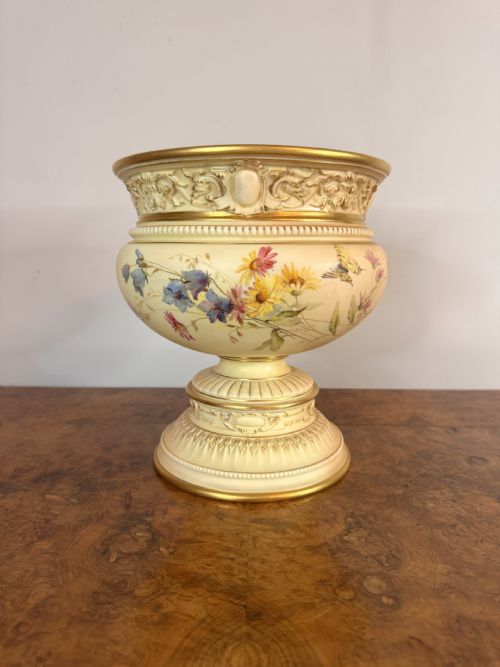
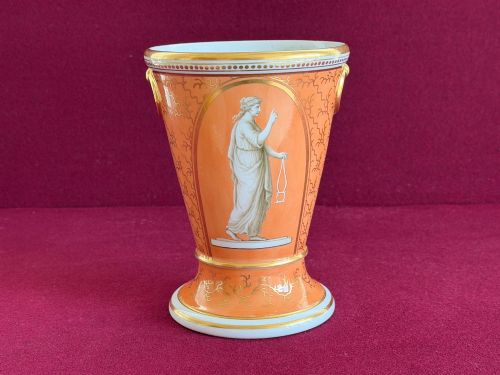
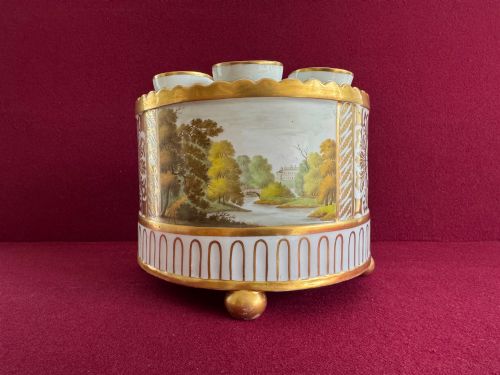


Gilded Ceramic Jardiniere
These gilded ceramic jardiniere pieces bring colour and decorative polish to a room, combining fine porcelain and earthenware bodies with rich gilt highlights.
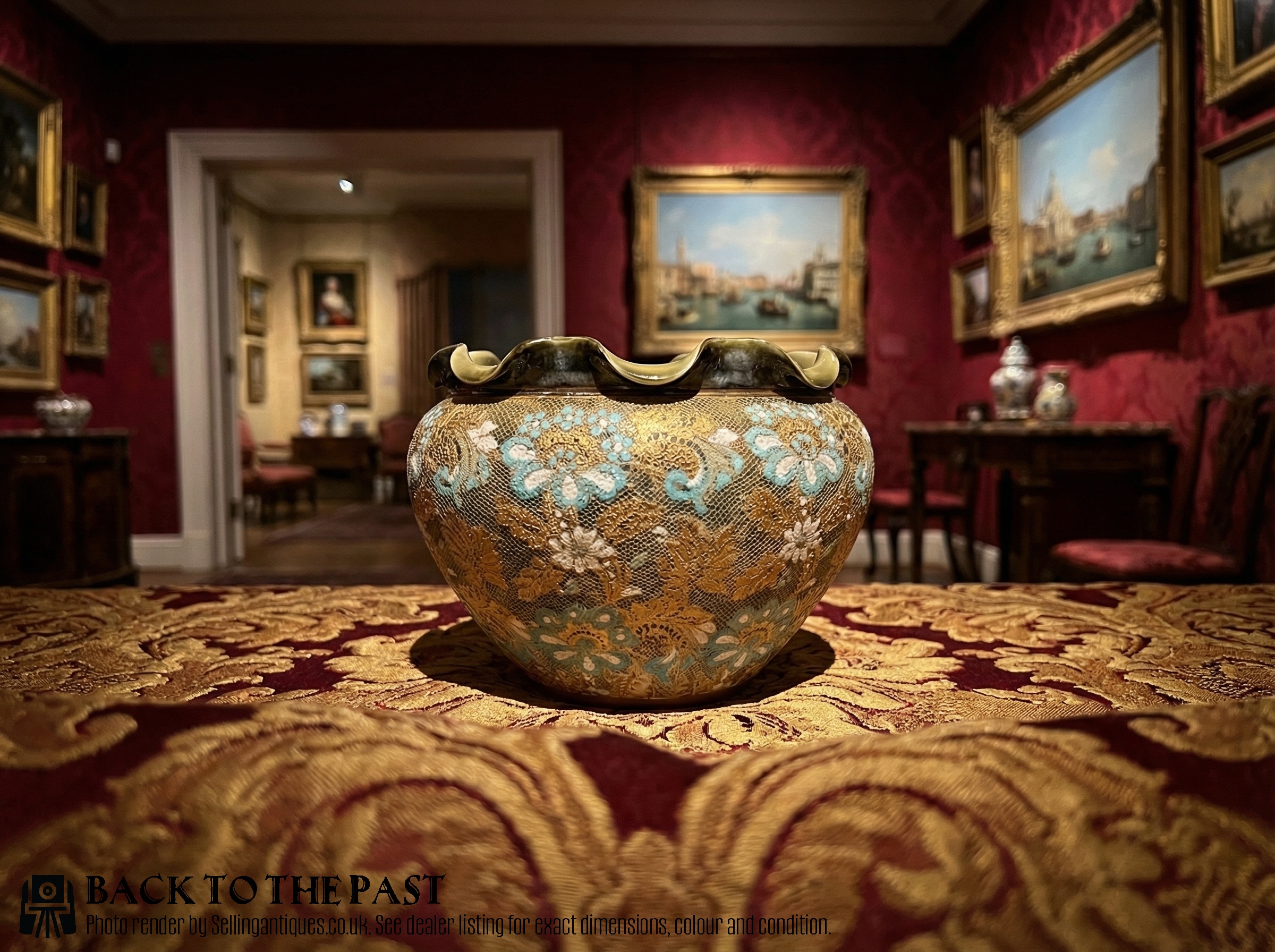
Gilded Ceramic Jardiniere
A gilded ceramic jardiniere serves as an ornamental plant pot or cachepot, designed to house indoor flora while providing a decorative focal point for a table or mantelpiece. The pieces gathered here span several distinct eras, stretching from Georgian works through Victorian production into the early twentieth century.
The forms vary across the selection, appearing as traditional garden planters, bough pots with covers, and centrepiece bowls. Buyers frequently encounter nineteenth-century French and English examples that incorporate handles, shaped rims, and pedestal bases.
Stylistic influences range from Regency and French Rococo Revival to Art Nouveau. Many pieces utilise floral motifs, hand-painted scenes, and sculptural figures to enhance their visual appeal.
Judging Quality
Quality rests upon the crispness of the ceramic moulding and the precision of the hand-painted decoration. Finer pieces demonstrate superior control over the enamel palette and greater depth in the gilding.
The integration of gilt bronze mounts or the application of heavy gold leaf separates standard production from superior examples. Makers who employed skilled painters achieved finer detail in figures and foliage.
Gilded Ceramic Jardiniere Retail Price Guide 2026
Typical asking prices for gilded ceramic jardiniere among the pieces listed under this phrase on Sellingantiques today, from the lower quarter to the upper quarter. They describe what is for sale here now, not the wider market.
Object forms on this page include cachepots, centrepiece bowls, bough pots, and traditional garden planters.
Flight And Barr·Barr Flight And Barr·Royal Doulton·Royal Worcester·James Hadley·Doulton Burslem·Royal Crown Derby·Coalport
The Gilded Ceramic Jardiniere Glossary
- Cachepot
- A decorative flowerpot cover designed to hold a plain growing pot inside. It protects furniture from water while displaying plants attractively.
- Bough Pot
- An ornamental vessel originally made to hold flowering tree boughs or cut flowers. These often include pierced covers to keep stems upright.
- Gilt
- A thin layer of gold applied to the surface of porcelain, earthenware, or bronze. It adds bright metallic contrast to the ceramic body.
- Enamel
- A vitreous composition fused to the ceramic surface at high temperatures. This material provides durable colour for painted scenes and borders.
- Earthenware
- A porous pottery body fired at lower temperatures than porcelain. It requires a complete glaze to become waterproof.
Gilded Ceramic Jardiniere: Frequently Asked Questions
How are these planters cleaned safely?
Dust surfaces gently with a soft dry brush to protect delicate hand-painted enamels and gold leaf.
Avoid using water or chemical cleaners directly on gilded areas to prevent surface wear.
Can live plants go inside them?
These vessels were generally designed to hold potted plants rather than soil directly.
Using an inner plastic liner prevents moisture damage to the antique ceramic body and interior glaze.
What styles do these pieces follow?
The selection includes Regency, Victorian, and Art Nouveau interpretations alongside French Rococo Revival designs.
Each period brought different moulding techniques and floral or figural painted subjects to the vessels.
How do I identify a bough pot?
Bough pots often feature a removable pierced lid designed to arrange cut branches or stems.
They appeared frequently during the Georgian period as decorative table centrepieces.