
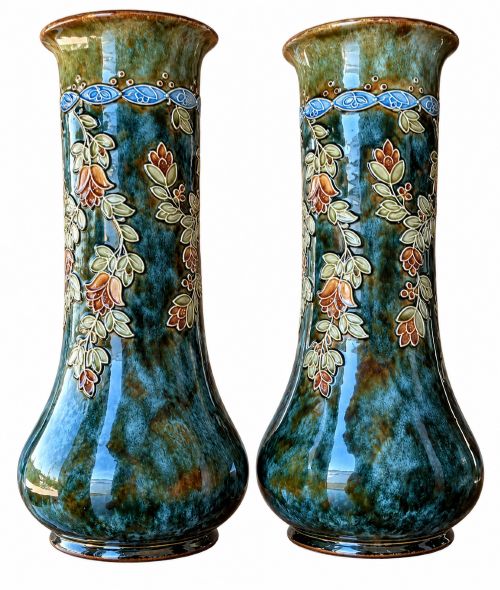
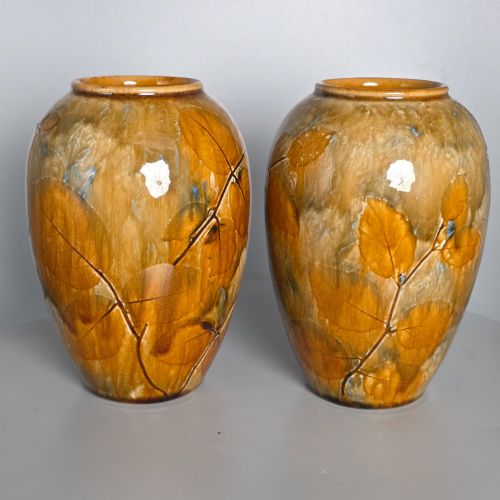
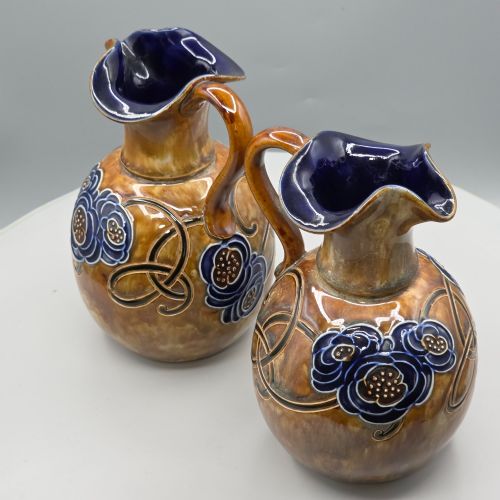
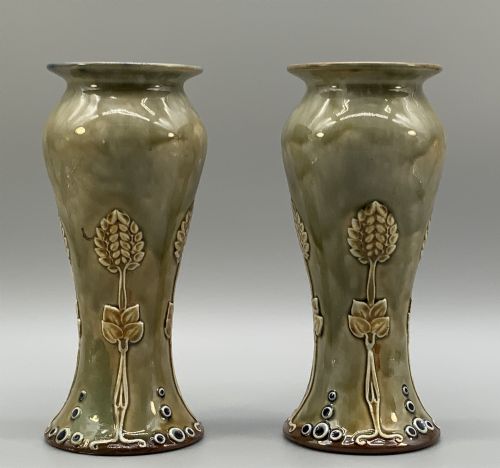
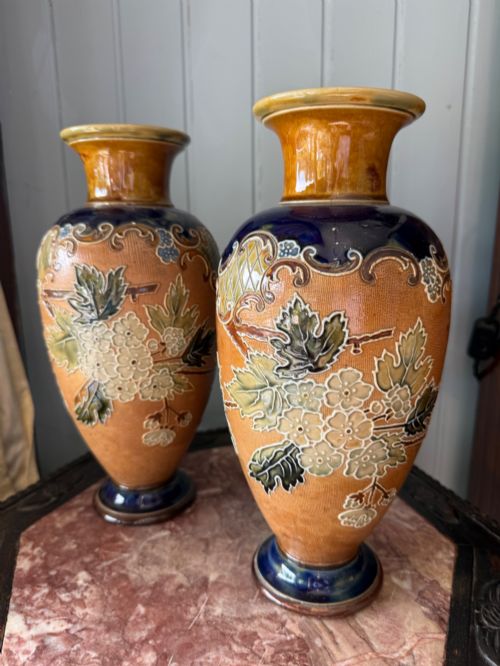
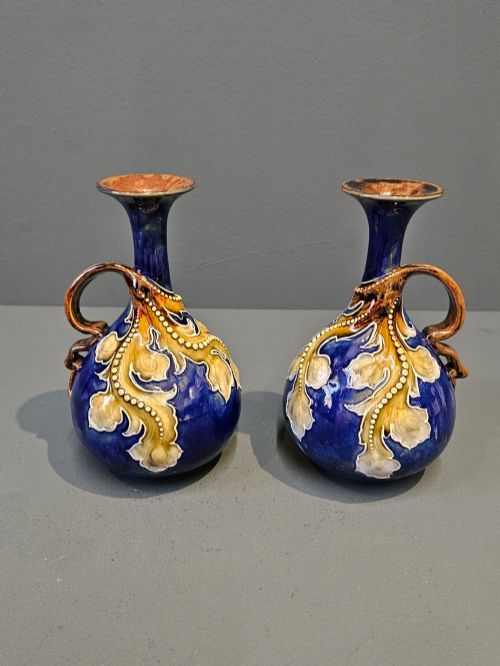
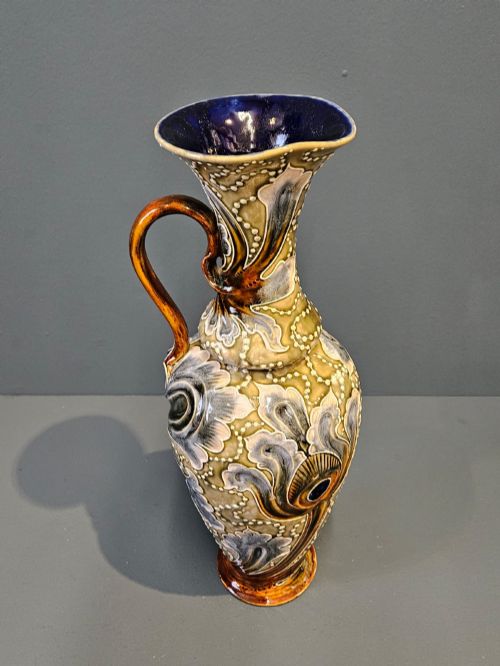
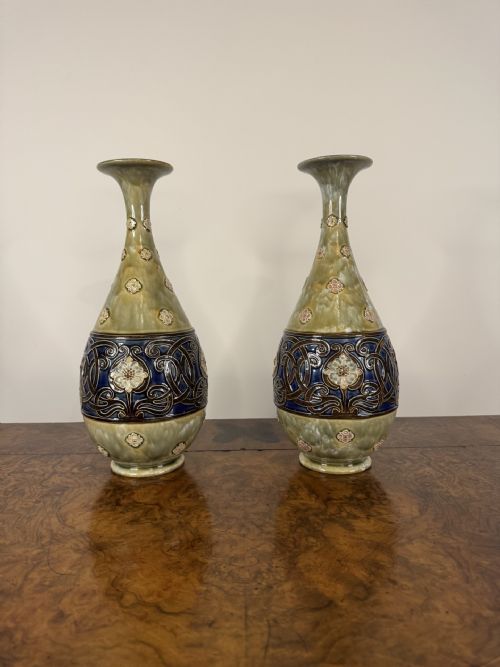


Doulton Stoneware Vase
These doulton stoneware vase pieces combine robust salt-glazed ceramics with intricate artistic decoration, offering collectors a tangible piece of late-Victorian and Edwardian craftsmanship.
Doulton Stoneware Vase
A doulton stoneware vase represents the pinnacle of British studio and factory ceramics from the late nineteenth and early twentieth centuries. When searching for this phrase, collectors encounter robustly potted vessels that merge industrial ceramic techniques with delicate, hand-applied artistry.
The pieces appearing on this page span several key periods, predominantly featuring Victorian, Edwardian, and Art Nouveau aesthetics. Buyers frequently find baluster vases, jugs, and shaped vessels originating from the Lambeth pottery works.
Most examples showcase the transition from utilitarian salt-glazed containers to highly decorative art pottery. These items serve as both historical documents of British manufacturing and striking decorative focal points for a room.
How they were made
Makers utilised durable ceramic clay bodies fired at high temperatures until vitrified, ensuring the material became completely non-porous and exceptionally hard. This dense base often received salt glazing, producing a distinctive pitted texture akin to orange peel.
Artisans applied surface ornament through various techniques, including slip trailing, incising, and sprigging. Many examples incorporate enamel floral decor and gold leaf highlights applied over the fired stoneware body.
Specialist Patent methods, such as those developed by John Slater, introduced textured lace and fabric impressions into the clay surface. This technique created unique patterned grounds that painters then filled with coloured glazes.
Listings incorporate Victorian and Edwardian eras, with materials ranging from standard glazed stoneware to applied gold leaf and enamel.
What varies in quality
The distinction between standard production items and exceptional works rests largely upon the identity of the decorator and the complexity of the surface design. Pieces bearing the monogram or signature of renowned Lambeth artists command greater interest due to their individual artistic merit.
Execution depth also determines a piece's standing, separating simple moulded decoration from deeply incised, hand-modelled foliage and pate-sur-pate work. The precision of the enamel application and the richness of the colour palette further elevate the stature of individual vessels.
Louisa Wakely·Eliza Simmance·Emma Shute·Emily Edwards·Emily Stormer·Ethel Beard·Florence Barlow·Florrie Jones
The Doulton Stoneware Vase Glossary
- Stoneware
- A robust, vitrified ceramic pottery fired at high temperatures until impervious to liquid. It forms the heavy, durable body characteristic of these British art pottery pieces.
- Lambeth
- The London district where the primary Doulton studios operated. Pieces bearing this designation reflect the specific urban artistic movement centred there during the Victorian era.
- Baluster
- A architectural form featuring a rounded body that tapers upward to a narrow neck. This shape provides a stable and classical silhouette for intricate surface decoration.
- Slaters Patent
- A proprietary ceramic decoration technique utilising pressed lace or textiles into damp clay. This method creates textured background patterns unique to these Victorian and Edwardian manufactories.
- Sprigging
- The application of separately moulded clay reliefs onto the unfired body of a vessel. Artisans use this method to build up dimensional floral and geometric motifs.
Doulton Stoneware Vase: Frequently Asked Questions
How do I identify a Lambeth mark?
Look for impressed stamps on the base featuring the Doulton Lambeth crest alongside specific artist monograms and model numbers.
These factory ciphers often indicate the exact year of production and the individual decorator responsible for the surface art.
What defines the Art Nouveau style here?
Art Nouveau examples display fluid, asymmetrical plant motifs and stylised floral patterns that wrap organically around the ceramic body.
Decorators embraced flowing lines and naturalistic colour palettes during the late Victorian and Edwardian transition.
How should I display these pieces?
Position these heavy stoneware vessels on sturdy surfaces away from high-traffic edges to accommodate their substantial weight.
Allow natural light to strike the glazed surfaces and enamel highlights to reveal the depth of the incised textures.
What is salt glazing?
Salt glazing involves throwing common salt into the kiln during the high-temperature firing process to produce a characteristic textured sheen.
This chemical reaction creates a durable, slightly pebbled surface that protects the underlying clay body.