


Blue Stoneware Jug
A blue stoneware jug offers robust utility paired with rich cobalt decoration, anchoring historic tabletop and decorative traditions.
Blue Stoneware Jug
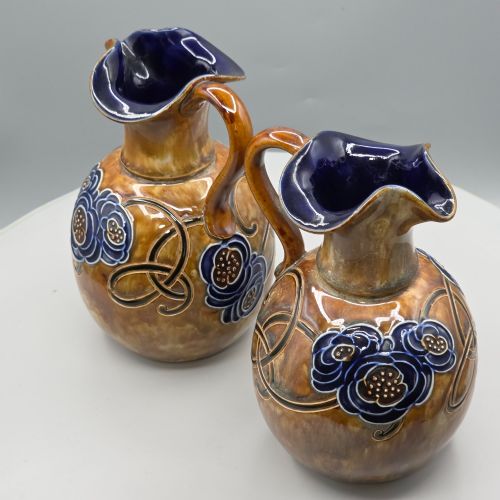
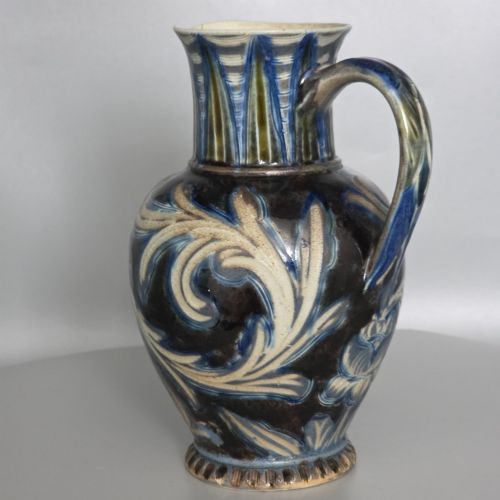
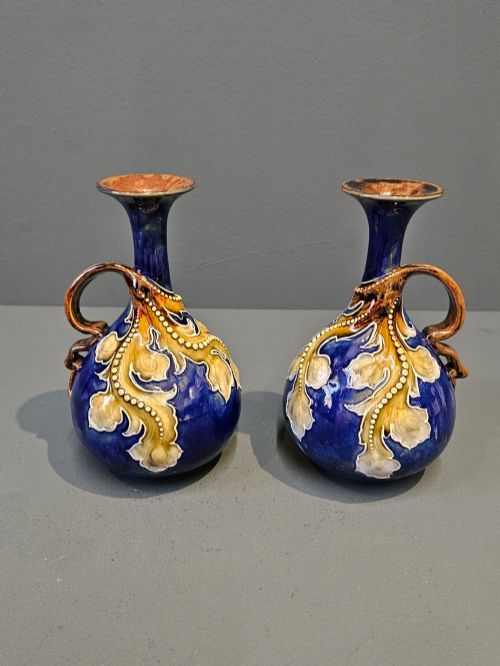
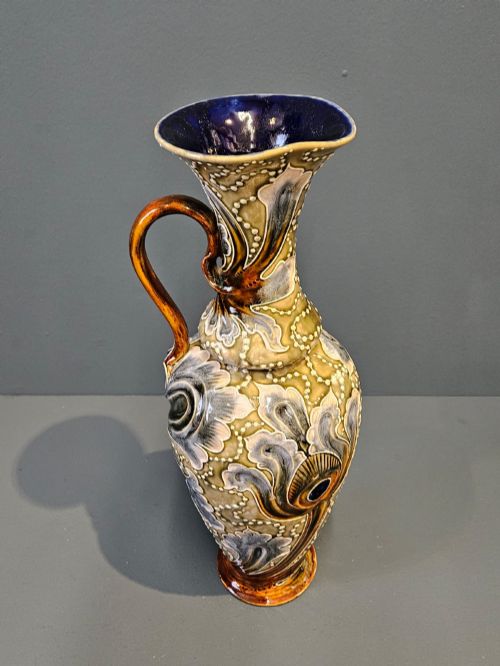
When you search for a blue stoneware jug, you encounter robust vessels spanning from the seventeenth century through the Victorian era and into the early twentieth century. These objects function primarily as jugs, pitchers, ewers, and occasional vases or carafes, combining utilitarian forms with decorative artistry.
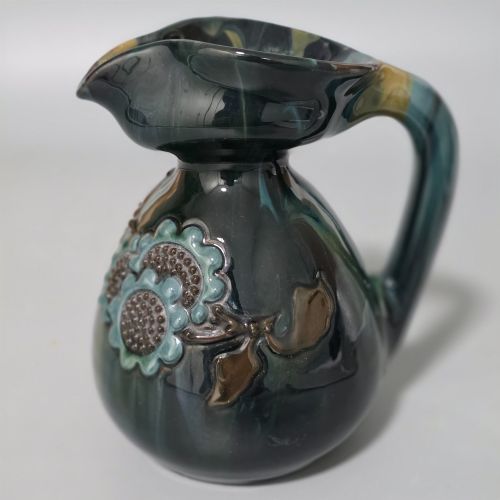
The most common examples on this page are Victorian Doulton Lambeth pieces and German Westerwald productions. You also meet pieces from English potteries like Minton and Staffordshire, alongside Arts and Crafts studio works.
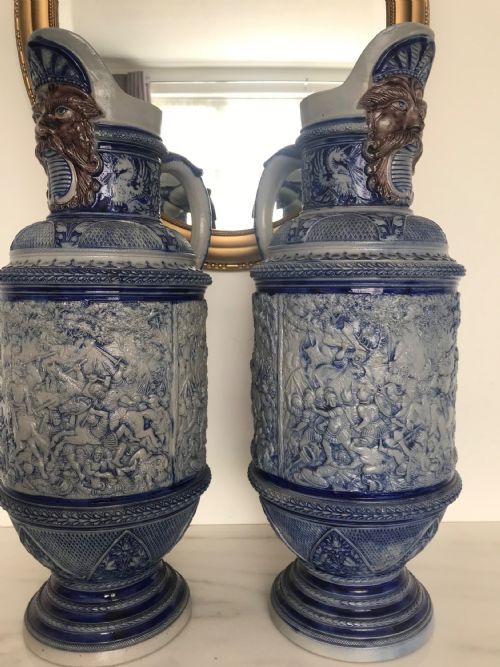
Forms range from small pouring vessels to large exhibition ewers and graduated sets. Their origins span English salt-glazed workshops and continental salt-glazed kilns.
How they were made
Potters shaped dense clay into durable forms, often applying salt during the kiln firing to produce a characteristic pitted, impermeable glaze. Cobalt oxide pigment was painted or incised into the surface before firing to create deep blue coloration.
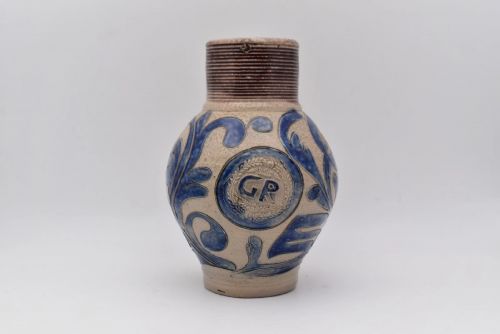
Many English and German pieces utilise intricate relief moulding, incised botanical patterns, or stamped ciphers. Artisans shaped these vessels on wheels or in moulds before subjecting them to high-temperature salt-glazing.
Blue Stoneware Jug Retail Price Guide 2026
Typical asking prices for blue stoneware jug among the pieces listed under this phrase on Sellingantiques today, from the lower quarter to the upper quarter. They describe what is for sale here now, not the wider market.
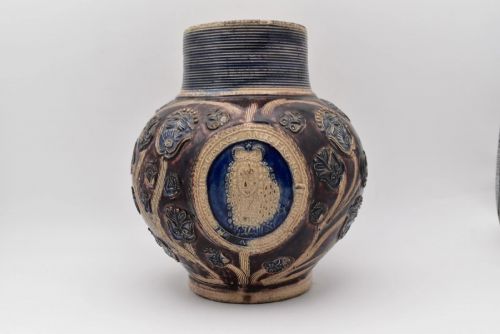
Some seventeenth-century Westerwald jugs proudly bear the royal portraits of William III alongside grinning salt-glazed faces.
What varies in quality
Quality rests in the crispness of the incised or moulded decoration and the depth of the cobalt blue pigment against the grey or glazed body. Pieces carrying named maker signatures, specific royal ciphers, or documented studio attributions display superior artistic execution.
The precision of the throwing and the evenness of the salt-glaze texture distinguish standard production items from exhibition pieces. Finer examples maintain sharp relief details and balanced proportions without distortion from the kiln.
Royal Doulton·Doulton Lambeth·Simon Peter Gerz·Sir Edmund Elton·Emma Shute·Ridgway and Sons·Mason's Ironstone·Minton·Dr Christopher Dresser
The Blue Stoneware Jug Glossary
- Salt Glaze
- A glossy, slightly textured finish achieved by throwing common salt into the kiln during high-temperature firing. The salt vaporises and reacts with the silica in the clay body.
- Cobalt
- A metallic oxide pigment used to produce rich blue decoration under the glaze. It withstands intense kiln temperatures without losing intensity.
- Stoneware
- A heavy, dense ceramic fired at high temperatures until vitrified and completely non-porous. It resists chipping and holds liquids safely without interior glazing.
- Ewer
- A large ornamental jug with a flared spout and an arched handle, traditionally used for washing or formal serving. Many Victorian examples functioned primarily as decorative art.
- Incised
- A technique where patterns or inscriptions are cut directly into the damp clay surface before firing. This method allows for sharp, permanent line work filled with blue pigment.
Blue Stoneware Jug: Frequently Asked Questions
How were salt-glazed jugs used?
These vessels served practical domestic roles for storing and pouring liquids like water, beer, or cider. Their dense, impermeable material kept contents secure.
Later Victorian iterations shifted towards decorative display, functioning as ornamental ewers, vases, or table centerpieces rather than working kitchenware.
How do I identify a Westerwald jug?
German Westerwald jugs typically display distinctive grey salt-glazed surfaces accented with cobalt blue relief patterns. Look for historical motifs, royal ciphers, or battle scenes.
Many examples date from the seventeenth and eighteenth centuries, showing characteristic German provincial manufacturing techniques.
What is Doulton Lambeth ware?
Doulton Lambeth represents the artistic stoneware division of the famous English pottery firm active during the Victorian era. These pieces often feature hand-incised foliage, Art Nouveau styling, and specific artist signatures.
Collaborations with designers like Emma Shute and specialised studio potters produced highly distinct, decorative blue stoneware.
Can I use these antique jugs for serving?
Most historic salt-glazed and stoneware jugs remain structurally sound for holding liquids due to their vitrified clay bodies. However, antique collectors generally limit them to display.
Evaluating the interior condition and checking for historical hairline fractures helps determine if a piece can safely handle modern use.