
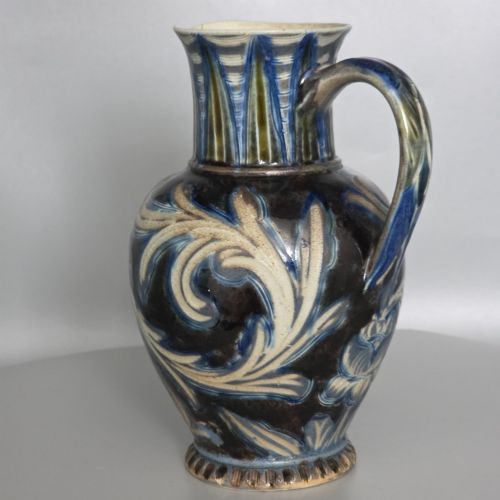
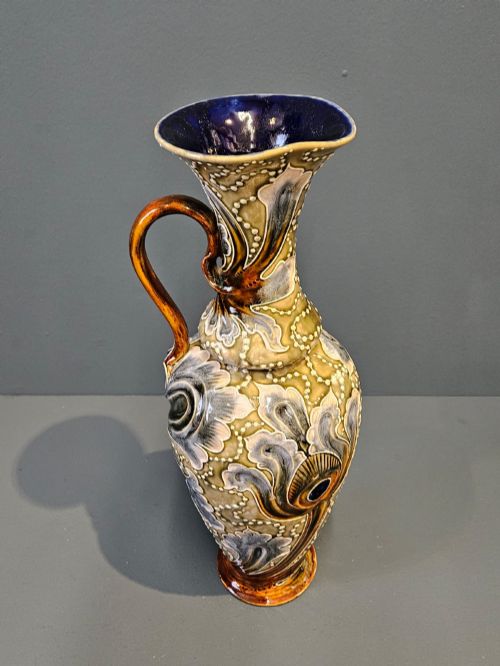


Incised Stoneware Vessel
An incised stoneware vessel is a ceramic container carved into its fired or unfired body, prized by collectors for its tactile surface and historical weight.
Incised Stoneware Vessel
When you search for an incised stoneware vessel, you encounter a diverse range of utilitarian and decorative ceramic forms produced across multiple centuries. These objects span from domestic kitchenware and cooking dishes to elaborately decorated Victorian art pottery jugs, ewers, and vases.
The pieces originating from the Victorian period, particularly those associated with English workshops, represent a prominent category on this page. Alongside these, examples extend to continental salt-glaze tankards, German vessels, and earlier periods including eighteenth-century wares.
Materials and construction
The primary material underpinning these objects is dense, vitrified clay fired at high temperatures to achieve a non-porous body. Artisans often applied salt glazing during the firing process to create a characteristic textured finish across the stoneware surface.
Makers utilised techniques such as hand-carving and incising directly into the damp clay body before firing. Certain domestic and decorative items also incorporate applied enamel details or silver mounts to complement the ceramic structure.
Incised Stoneware Vessel Retail Price Guide 2026
Typical asking prices for incised stoneware vessel among the pieces listed under this phrase on Sellingantiques today, from the lower quarter to the upper quarter. They describe what is for sale here now, not the wider market.
Ducks and lotus flowers carved onto an ancient jar prove that master potters had a soft spot for garden wildlife long before modern ceramics.
Evaluating craftsmanship and detail
Quality in these pieces is dictated by the precision and depth of the carved or incised decoration across the stoneware body. Finer examples display deliberate, crisp lines executed by named artists, whereas simpler domestic kitchenware relies purely on functional utility.
The integration of secondary elements, such as fitted silver mounts or controlled glaze applications, separates standard utility wares from exhibition-grade art pottery. The clarity of maker marks and stamps also influences the standing of individual pieces.
Doulton Lambeth·Florence E Barlow·Eliza Simmance·Emily Stormer·Fulham Pottery
The Incised Stoneware Vessel Glossary
- Stoneware
- A robust ceramic pottery fired at a high temperature until vitrified and rendered impermeable to liquids. This dense material forms the heavy, durable body characteristic of these vessels.
- Salt glaze
- A glassy, slightly textured finish produced by throwing common salt into the kiln during high-temperature firing. The vapour reacts with the silica in the clay body to form a distinctive orange-peel surface.
- Tyg
- A large drinking vessel typically featuring multiple handles designed for communal passing. These ceramic drinking pots often date from the seventeenth to the nineteenth century.
- Ewer
- A large pitcher or jug with a wide spout and a curved handle, traditionally used for holding and pouring water. Many decorative iterations appear in nineteenth-century art pottery.
- Celadon
- A pale green jade-like glaze originating in East Asia, seen on early ceramic pieces. It relies on iron oxide in reduction firing for its subtle coloration.
Incised Stoneware Vessel: Frequently Asked Questions
What is an incised stoneware vessel?
An incised stoneware vessel is a hard, vitrified ceramic container decorated with patterns or motifs carved directly into the clay body. These pieces range from utilitarian kitchenware to decorative Victorian art pottery.
They reflect diverse manufacturing traditions across British, continental, and Asian origins spanning several centuries.
How were these vessels used historically?
These ceramic items served both practical domestic roles and purely ornamental functions in historical settings. Forms like jugs, tankards, and cooking dishes handled daily food preparation and beverage consumption.
Larger ewers and vases functioned as decorative display pieces within nineteenth-century drawing rooms and parlours.
How should I clean my stoneware?
Cleaning vitreous stoneware requires gentle washing with warm water and mild soap using a soft cloth. Avoid harsh chemical cleaners or abrasive scouring pads that might damage the salt glaze or historical surface.
Take particular care with pieces that incorporate applied silver mounts or delicate enamel decoration during handling.