


Victorian Stoneware Vase
A victorian stoneware vase is a robust and enduring vessel that brings nineteenth-century craftsmanship directly into a modern room.
What They Are
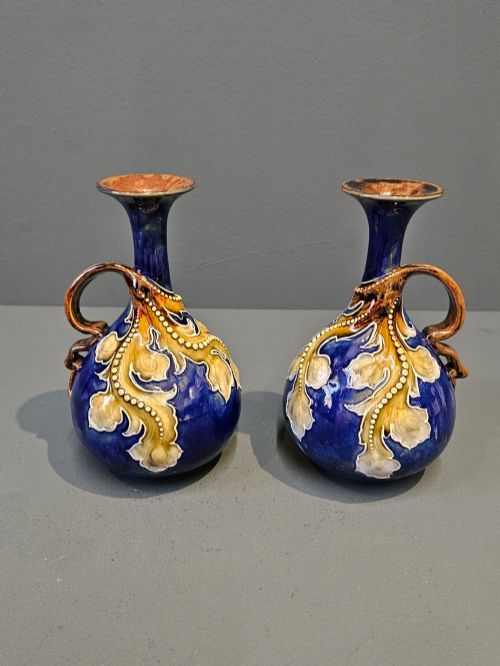
A victorian stoneware vase represents the solid output of nineteenth-century kilns, principally produced around eighteen eighty. These pieces take the form of sturdy vessels designed for domestic display and practical utility. The examples recorded here span both the broader Victorian Arts and Crafts movement and the specific output of major potteries.
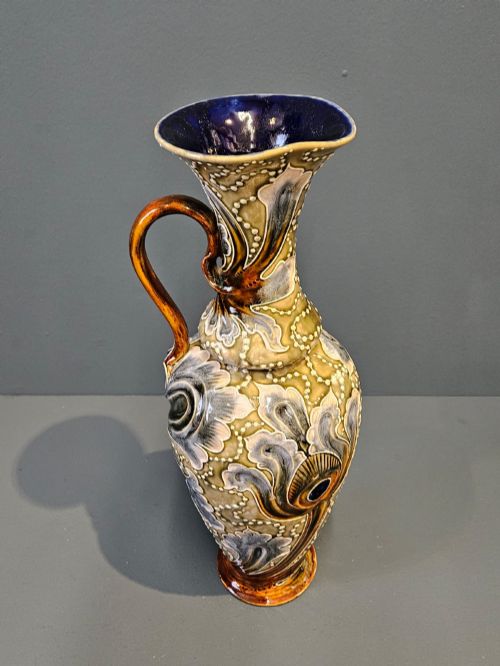
Buyers browsing this selection will frequently encounter the distinctive output of Doulton Lambeth. The forms range from standard cabinet vases to pieces bearing Slaters patent decoration, alongside examples from the Lipscombe and Co London pottery. Such pieces demonstrate the heavy, vitrified bodies characteristic of the period.
The historical span represented in these records extends from sixteenth-century influences noted in the listings down to the Victorian core of eighteen eighty. This mix shows how later makers drew on earlier ceramic traditions while employing contemporary manufacturing techniques. Every piece carries the weight and permanence typical of nineteenth-century utilitarian and decorative ceramics.
How They Were Made
These items are constructed from dense stoneware fired at high temperatures to achieve a vitrified, impermeable body. Potters applied ceramic glazes over the clay surface, often combining smooth finishes with textured areas to create contrast. The material itself provides natural strength, allowing for both simple utilitarian forms and more elaborate decorative treatments.
Decoration often involved specialised techniques such as Slaters patent methods, which pressed lace or other textured fabrics directly into the damp clay before glazing. Workshops utilised skilled hands to shape each vessel on the wheel or in moulds before applying the final glaze coats. This combination of structural stoneware and applied surface detail defines the physical manufacture of the pieces.
The archive and current listings record items spanning from the sixteenth century to eighteen eighty, executed entirely in stoneware with ceramic glazes.
What Varies in Quality
Quality in a victorian stoneware vase rests upon the crispness of the applied decoration and the control demonstrated during the firing process. Pieces featuring Slaters patent work depend on the sharp, clean impression of lace or botanical elements into the clay body. A well-executed example maintains clear definition in its patterned fields without blurring in the glaze.
The reputation of the pottery also shapes the standing of an individual piece, with Doulton Lambeth and Lipscombe and Co items showing particular refinement in their throwing and finishing. Superior vessels display a balanced proportion between the heavy stoneware body and the decorative surface treatments. Lesser examples may exhibit uneven glaze pooling or weaker definition in the moulded and impressed details.
Doulton Lambeth·Royal Doulton·Lipscombe and Co
The Victorian Stoneware Vase Glossary
- Stoneware
- A heavy, durable ceramic pottery fired at high temperatures until the clay body vitrifies and becomes non-porous. This material forms the durable foundation of nineteenth-century decorative vessels.
- Ceramic Glaze
- A vitreous coating fused to the stoneware body through firing to colour, decorate, and seal the surface. Glazes in this period range from simple transparent layers to rich, textured applications.
- Victorian Arts and Crafts
- A design movement spanning the nineteenth century that emphasised handcraftsmanship, material honesty, and traditional decorative techniques. It heavily influenced the output of British potteries.
- Slaters Patent
- A specific manufacturing technique developed by Doulton where lace or textiles were pressed into wet clay to create textured patterns. This method produced distinct, patterned surfaces across many Victorian vases.
Frequently Asked Questions
What is a victorian stoneware vase made from?
These pieces are formed from dense stoneware clay that is fired at high temperatures until it vitrifies into a solid, durable body. Artisans then apply ceramic glazes to seal the surface and add decorative colour.
The resulting material provides exceptional weight and permanence, allowing the vessels to survive utility and display across generations without losing their structural integrity.
How do I identify a Doulton Lambeth vase?
Identification relies on examining the impressed factory marks and the distinctive decorative styles associated with the Lambeth works. Many pieces feature specialised surface treatments such as Slaters patent lace impressions.
Looking closely at the clay body and glaze characteristics helps distinguish these factory-produced items from generic nineteenth-century ceramics.
Where were these pieces produced?
The recorded pieces originate primarily from established British potteries active during the nineteenth century, including London-based operations like Lipscombe and Co and the Doulton works at Lambeth. These urban factories employed skilled modellers and decorators.
Production centres in Britain drove the development of innovative ceramic techniques during the Victorian era, combining industrial scale with artisanal surface design.
How should I display a stoneware vase?
These heavy vessels sit securely on solid tables, cabinets, or mantelpieces where their substantial weight and textured glazes can be appreciated up close. Their robust stoneware construction makes them stable display pieces.
Placing them away from high-traffic edges ensures the safety of both the vessel and its surroundings while highlighting the nineteenth-century craftsmanship.