




Hand Painted Botanical Vase
These hand painted botanical vase examples bring floral artistry into domestic spaces, offering finely rendered plant studies across ceramic and glass forms.
Hand Painted Botanical Vase
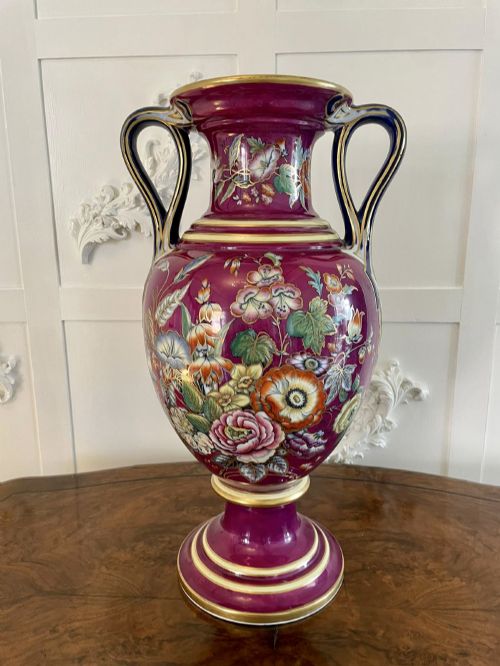
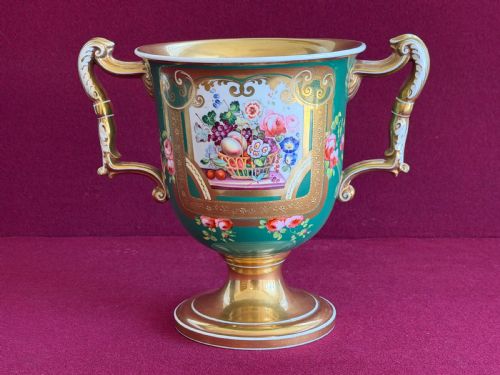
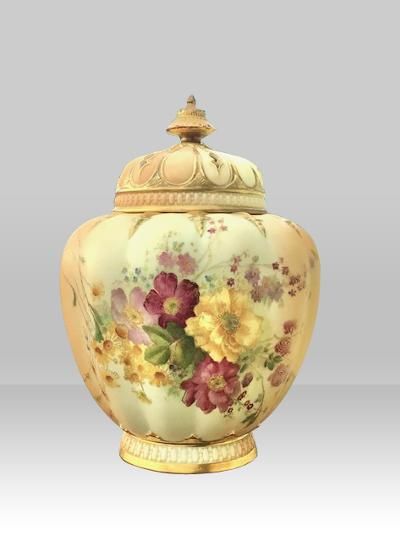
When you search for a hand painted botanical vase, you are looking at decorative vessels adorned with detailed depictions of flowers, foliage, and plants. These pieces span periods from the Regency era through to the early twentieth century, capturing changing tastes in floral illustration across various ceramic and glass bodies.
On this page, you are most likely to meet Victorian porcelain and bone china vessels, alongside factory-produced earthenware and specialised art glass. Forms range from twin-handled urns and pedestal ewers to loving cups and converted table lamps, each serving as a canvas for botanical painting.
The origins of these vessels trace through prominent English and continental manufactories, reflecting both neoclassical revival designs and later aesthetic movement sensibilities. Such pieces were created primarily for display in domestic interiors, holding cut flowers or standing alone as ornamental focal points.
How they were made
Makers utilised porcelain, bone china, earthenware, and opaque or Burmese glass as the foundational substrates for these vessels. These materials were shaped either by throwing on a wheel, pressing into moulds, or blowing glass, prior to undergoing initial kiln firings.
The botanical decoration was applied by hand using mineral and metallic enamels, often enhanced with gold leaf, gilding, or enamel highlights. Subsequent firings fused the pigments to the glaze, while specialised techniques such as blush ivory grounds or slaters patent texturing added further surface depth.
Listings span from the Regency period through to 1910, encompassing porcelain, stoneware, bone china, and Burmese glass.
What varies in quality
The standard of painting on these vessels varies significantly, distinguishing mass-produced wares from master-painted works. Superior pieces exhibit botanical accuracy, delicate shading, and confident brushwork that treats each flower and leaf with individual attention rather than generic repetition.
Material quality and finishing also dictate value and refinement, seen in the purity of the porcelain body, the weight and clarity of the glass, and the precision of any applied gilding. Well-balanced forms with harmonious proportions and intact, original gilding represent the higher tiers of the range.
H & R Daniel·Flight Barr and Barr·Spode China·Doulton Lambeth·Thomas Webb·Royal Worcester
The Hand Painted Botanical Vase Glossary
- Porcelain
- A hard, white, translucent ceramic fired at high temperatures, providing a smooth surface ideal for detailed enamel painting.
- Ewers
- A large jug with a wide spout and handle, frequently produced in matched pairs during the nineteenth century for decorative display.
- Blush Ivory
- A specialised ceramic ground developed by Royal Worcester featuring a soft, matte cream finish that mimics ivory and complements floral motifs.
- Urn
- A classical vessel shape featuring a rounded body on a pedestal foot, often fitted with handles and used as a substantial ornamental centrepiece.
- Enamel
- Opaque or translucent glass-based pigments applied to ceramics or metal and fired to create permanent, vibrant coloured decoration.
Hand Painted Botanical Vase: Frequently Asked Questions
Where should I display my vase?
Position your vessel away from direct sunlight to prevent the hand-painted botanical pigments and gilding from fading over time.
Choose a stable surface where the piece is safe from accidental knocks, allowing adequate space to appreciate the painted details from various angles.
How do I identify the period?
Examine the base for factory marks, pattern numbers, or registration symbols that can be cross-referenced with manufacturer dating guides.
Consider the manufacturing body, handle style, and painting technique, as Regency wares differ substantially in weight and palette from later Victorian pieces.
Were these vases meant for flowers?
Many nineteenth-century examples functioned primarily as decorative ornaments for mantelpieces and side tables rather than practical flower holders.
Certain forms like rose water sprinklers or pot pourri vessels had specific aromatic functions, while others were simply intended to showcase artistic painting.