


Beige Ceramic Vase
These beige ceramic vase pieces span centuries of earthenware, stoneware, and porcelain craftsmanship.
Beige Ceramic Vase
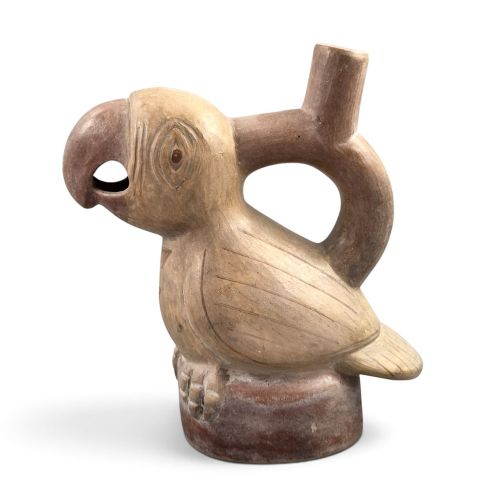
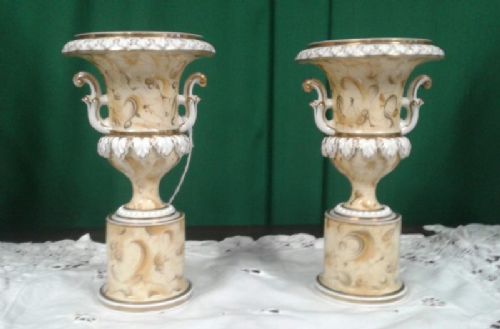
When searching for a beige ceramic vase, you encounter a diverse array of forms ranging from campana shapes and monumental pottery vessels to jardinières and miniature garland sets. The selection draws together pieces spanning Victorian, Edwardian, Art Nouveau, and Art Deco periods, alongside pre-Columbian artefacts and Japanese stoneware.
The aesthetic vocabulary shifts from Victorian neoclassical symmetry and Arts and Crafts ideals to flowing Art Nouveau contours and geometric Art Deco styling. While many examples function purely as decorative vases, others take the form of ornithomorphic vessels or painted still-life canvases.
Materials and techniques
Makers utilised stoneware, earthenware, terracotta, porcelain, and ceramic as primary bodies, applying reactive glazes, enamels, and surface gilding to achieve distinctive finishes.
Techniques range from hand-painted decoration and Slaters patent texturing to bisque firing and detailed moulding, reflecting the technical repertoire of European potteries and international workshops.
An angel of the night rests quietly alongside sweet williams painted in oil.
Assessing quality
Quality reveals itself in the precision of hand-painted detailing, the depth and consistency of glaze application, and the fineness of the ceramic body.
Pieces bearing distinct maker attributions, patented innovations like Slaters patent, or ambitious sculptural forms consistently demonstrate superior artistic execution.
Ridgeways·Amphora Austria·Mettlach Pottery·Doulton Lambeth·Gallilleo Chini·Makuzu Kozan II·P Ipsens Enke·Cranston·Charlotte Rhead·Roger Guerin
The Beige Ceramic Vase Glossary
- Campana
- A classical bell-shaped vessel with a flared rim and pedestal foot. These urn-like forms are frequently seen in Victorian pairings.
- Jardinière
- A large decorative pot or stand designed to hold growing plants or floral arrangements. They appear in Japanese stoneware and European pottery.
- Bisque
- Unglazed pottery fired once to a porous state, offering a matte texture suited to sculptural figures and delicate reliefs.
- Terracotta
- Fired clay containing iron oxide, ranging in colour from orange to buff brown. Ancient pre-Columbian vessels utilise this robust earthen material.
Beige Ceramic Vase: Frequently Asked Questions
What periods do these vases come from?
The selection encompasses pre-Columbian history, Victorian and Edwardian eras, and stretches through the Art Nouveau and Art Deco movements of the early twentieth century.
Individual pieces trace stylistic shifts from nineteenth-century neoclassical and Arts and Crafts designs to Japanese stoneware and European art pottery.
How were these vessels used originally?
Many served as decorative display pieces, mantel garnitures, or campana urns within period interiors. Larger jardinières held indoor plants and floral displays.
Some early earthenware served ritual or utilitarian functions before transitioning into collected cabinet pieces.
Are these pieces purely ceramic?
While the core material is ceramic, earthenware, stoneware, terracotta, or porcelain, many incorporate surface glazes, enamel work, and gilding.
The listings also include related artistic mediums such as oil paintings depicting floral arrangements in vases.
How do I identify different styles?
Art Nouveau examples display organic, flowing lines and natural motifs, while Art Deco pieces favour geometric precision and stylised patterns. Victorian items often lean toward classical symmetry or textured relief work.
Maker marks, regional pottery signatures, and specific glaze techniques help determine the exact period and origin.