
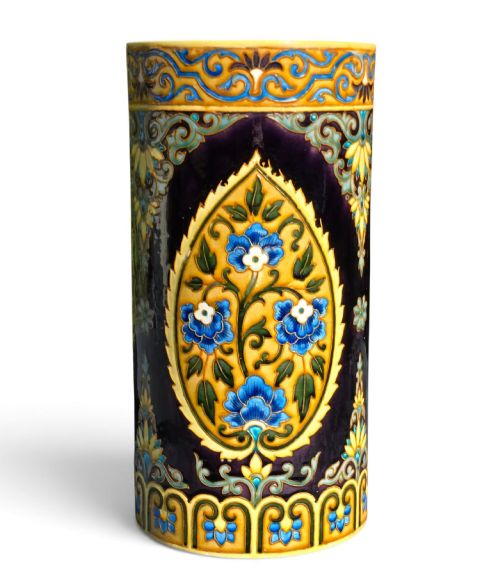
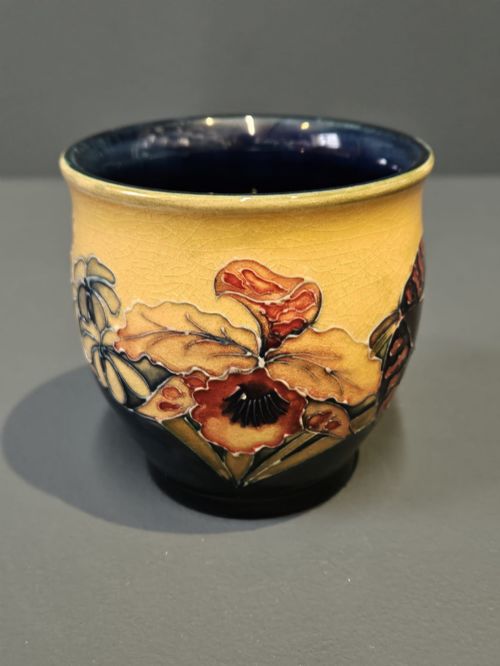


Yellow Floral Ceramic Vase
These yellow floral ceramic vase examples bring bright ground colours and botanical motifs together, offering instant decorative character for any interior scheme.
Yellow Floral Ceramic Vase
A yellow floral ceramic vase encompasses works spanning the nineteenth century through the twentieth century, taking the form of umbrella stands, posy vessels, and baluster shapes. These pieces frequently draw upon Edwardian Chinoiserie, Art Deco, and Iznik Revival aesthetics to create striking visual displays.
Buyers will encounter earthenware and porcelain bodies decorated with handpainted glazes and enamel work. The selection ranges from substantial Victorian umbrella stands to delicate cabinet vases featuring exotic birds and botanical arrangements.
How they were made
Potters utilised earthenware and porcelain as primary bodies, applying rich yellow ground glazes by hand before secondary firing. Specialist techniques such as Slaters Patent surface texturing and intricate enamel painting defined the manufacturing process.
Gilt highlights and handpainted floral details were frequently added over the initial glaze layer. Workshops employed specialised decorators to execute complex botanical and avian motifs across the ceramic surface.
One oil painting sneaks into the ceramic lineup, reminding us that spring flowers belong on canvas as much as clay.
What varies in quality
Quality rests upon the precision of the handpainting and the complexity of the glaze chemistry, distinguishing standard production from artist-signed works. Studio attribution and named decorators elevate specific pieces above typical commercial output.
The sophistication of the stylistic revival, whether Iznik or Chinoiserie, dictates the overall refinement of the piece. Crisp execution of moulded details and vibrant enamel retention determine the standing of individual examples.
Théodore Deck·Mason·Doulton Lambeth·Royal Doulton·Burmantofts·Royal Bonn·Royal Worcester
The Yellow Floral Ceramic Vase Glossary
- Earthenware
- Porous pottery fired at lower temperatures, requiring a glazed surface to hold liquids. It forms the structural base for many decorative vessels on this page.
- Enamel
- Opaque vitreous composition fused to ceramic surfaces through firing. This technique provides rich, permanent colour definition to floral motifs.
- Faience
- Tin-glazed earthenware decorated with painted designs before a final glaze firing. The method supports detailed pictorial work across nineteenth-century pieces.
- Iznik Revival
- Nineteenth-century European imitation of traditional Ottoman ceramics. It utilises distinctive floral palettes and dense botanical patterns.
- Posy Vase
- A small vessel specifically designed to hold short-stemmed floral arrangements. These compact pieces often feature elaborate painted decoration.
Yellow Floral Ceramic Vase: Frequently Asked Questions
What periods do these pieces date from?
The listings span the nineteenth century and the early twentieth century, incorporating Victorian, Edwardian, and Art Deco eras.
Production dates reflect distinct stylistic revivals, including Iznik and Chinoiserie movements.
How do I identify yellow ground ceramics?
Yellow ground pieces feature an all-over pigmented glaze applied beneath or over the primary decoration. They frequently serve as a contrasting backdrop for floral or avian motifs.
Potters utilised this technique across various bodies, including ironstone and faience.
Where were these ceramic vases made?
Manufacturing locations include prominent English potteries alongside continental European workshops. Makers employed regional techniques ranging from patent ironstone to specialised faience glazing.
Certain designs also draw inspiration from Chinese porcelain traditions.
How should I clean my ceramic vase?
Dust gently with a dry, soft cloth to protect delicate enamel and gilt highlights. Avoid abrasive cleaners or prolonged immersion in water.
Handpainted surfaces require careful maintenance to preserve original glaze integrity.