
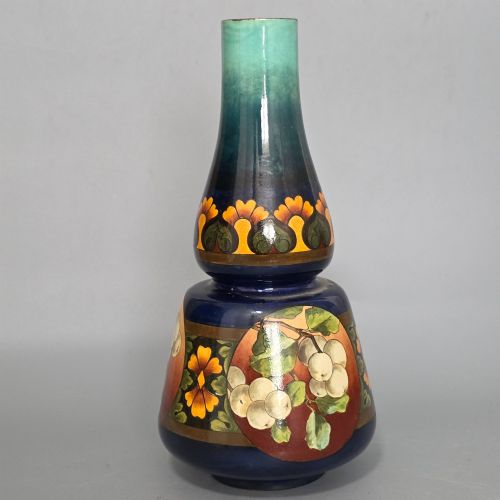
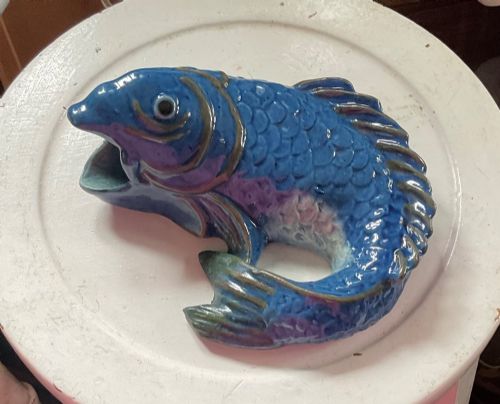


Victorian Art Pottery Vase
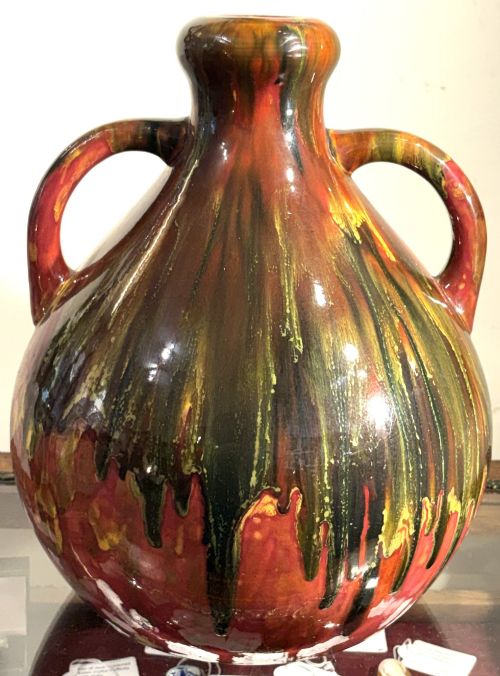
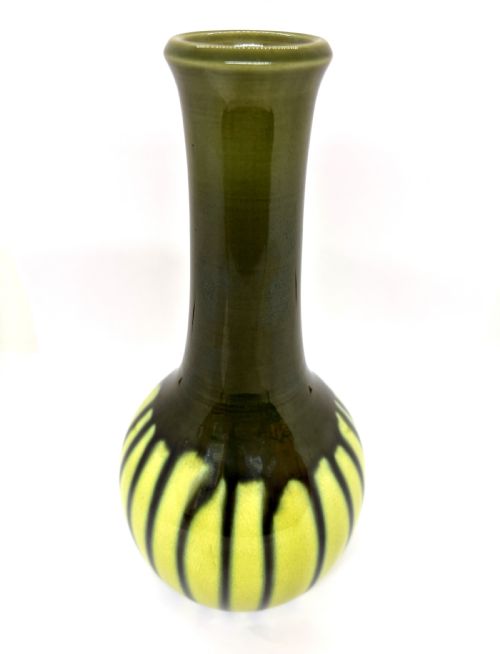
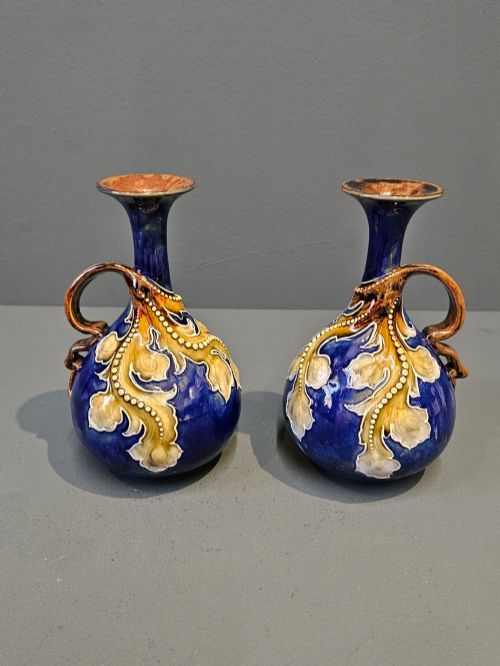
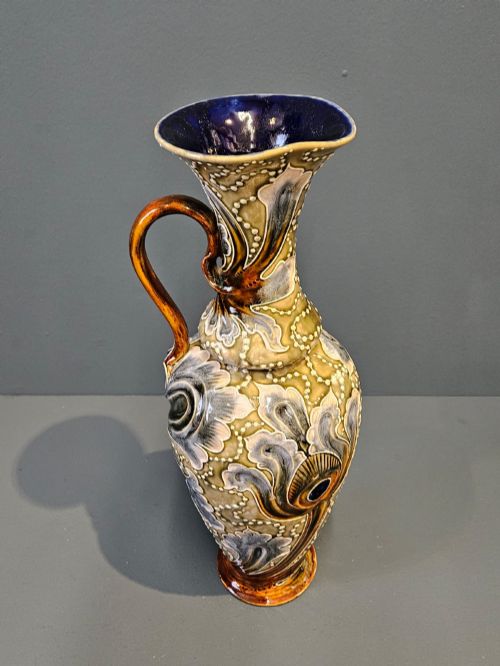
A victorian art pottery vase brings textured glazes, organic motifs, and handcrafted character into a room.
Victorian Art Pottery Vase
A victorian art pottery vase encompasses heavily decorated vessels, ewers, wall pockets, and jugs produced during the nineteenth century. These objects bridge traditional pottery techniques and the decorative impulses of the late Victorian era.
The most common examples on this page are produced by major British potteries such as Doulton Lambeth, alongside continental and studio pieces. Forms range from small decorative vases to large ewers and umbrella stands, often decorated with floral or abstract patterns.
Pieces frequently align with wider stylistic movements including Art Nouveau, Arts and Crafts, and the Aesthetic Movement. Collectors encounter both utilitarian forms adapted for display and strictly decorative cabinet pieces.
Assessing the pieces
Quality rests upon the crispness of the modelled relief, the control of the glaze, and the artistic merit of the hand-painted or incised decoration. Pieces signed by notable studio artists command attention for their individual execution.
The complexity of the manufacturing process, such as multi-fired faience or pâte-sur-pâte work, separates standard commercial output from superior exhibition pieces. Condition and the preservation of delicate surface enamels or gold leaf also influence the standing of an individual object.
Several Victorian art pottery vases have traded their original floral displays for modern electrical wiring, living new lives as table lamps.
Doulton Lambeth·Burmantoft's Pottery·Sir Edmund Harry Elton·William Moorcroft·Ernst Wahliss
The Victorian Art Pottery Vase Glossary
- Faience
- Earthenware decorated with opaque coloured glazes. It provides a smooth canvas for detailed hand-painted floral or figural scenes.
- Ewer
- A large jug with a wide spout and a looped handle. Originally designed for pouring water, these served predominantly decorative purposes in the Victorian interior.
- Stoneware
- A dense, hard ceramic fired at high temperatures until vitrified. This material is naturally impermeable and accepts salt-glaze and incised decoration exceptionally well.
- Slip
- Liquid clay applied to the pottery surface for decoration. It can be piped on for raised effects or brushed in thin layers.
- Wall pocket
- A flat-backed vessel designed to hang directly on a wall. These were frequently filled with dried flowers or foliage.
Victorian Art Pottery Vase: Frequently Asked Questions
What is art pottery?
Art pottery refers to ceramic pieces produced during the late nineteenth and early twentieth centuries that prioritised artistic design over mass-produced utility. Makers focused on experimental glazes and hand-modelled decoration.
These works were often created by named artists working within established potteries or independent studios, bridging the gap between fine art and everyday ceramics.
How do I identify Doulton Lambeth?
Doulton Lambeth pieces are typically identified by distinctive impressed factory stamps on the base, often accompanied by the incised monograms of individual studio artists. The pottery is renowned for salt-glazed stoneware and detailed slip decoration.
Many examples feature elaborate floral incising, pâte-sur-pâte decoration, or applied pate motifs executed by notable decorators such as Hannah Barlow or Eliza Simmance.
Where should I display my vase?
Display these vases in spaces away from direct, harsh sunlight to protect delicate hand-painted enamels and gold leaf highlights. Placing them on sturdy sideboards or mantelpieces allows their textured glazes and forms to be appreciated closely.
Due to the weight and varied bases of stoneware and earthenware, ensure they rest on stable surfaces where they will not be easily knocked.
How can I tell the period?
Dating relies heavily on factory registration numbers, impressed base marks, and stylistic indicators associated with the Aesthetic Movement or Art Nouveau. Aesthetic preferences shifted from geometric patterns to flowing, organic plant forms as the nineteenth century progressed into the Edwardian era.
Changes in glaze technology and the evolution of studio signatures also provide reliable clues for narrowing down the decade of production.