


Late Victorian Earthenware Vase
These late victorian earthenware vase examples bring studio craft and international revival styles directly to a mantelpiece.
Late Victorian Earthenware Vase
Makers utilised earthenware bodies as canvases for experimentation, applying rich glazes and hand-painted motifs across baluster profiles and umbrella stands. Arts and crafts principles and aesthetic movement sensibilities heavily influence the decorative schemes found on these objects. Collectors regularly locate works bearing specific registry numbers or factory ciphers dating to the final decades of the nineteenth century.
Materials and production methods
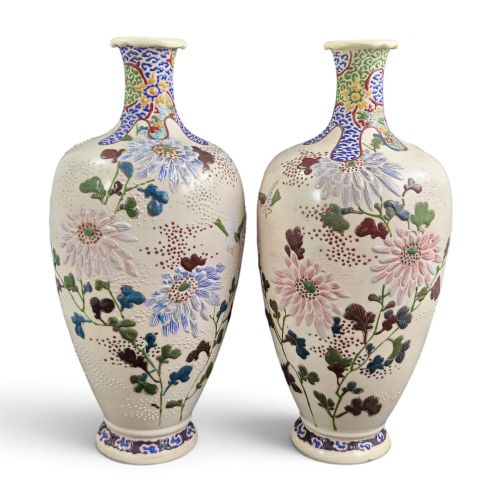
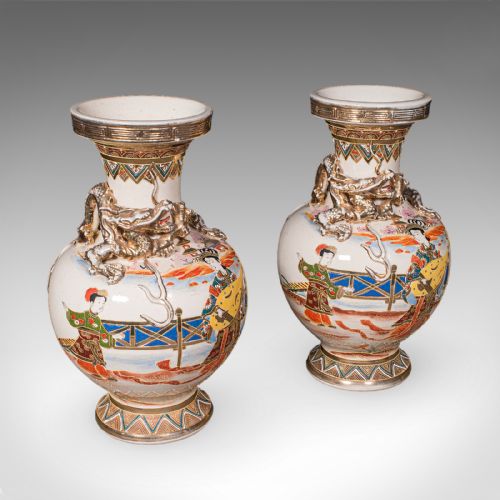
Makers formed these vessels from fired earthenware clay, often finishing the surfaces with thick ceramic glazes and coloured enamels. Techniques such as moriage relief work and intarsio glazing created tactile, textured exteriors that catch the light. Workshops also incorporated gold leaf accents to highlight intricate floral and geometric patterns.
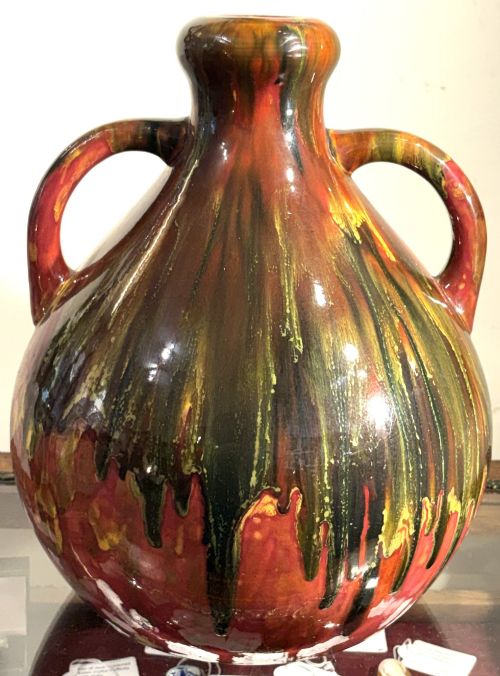
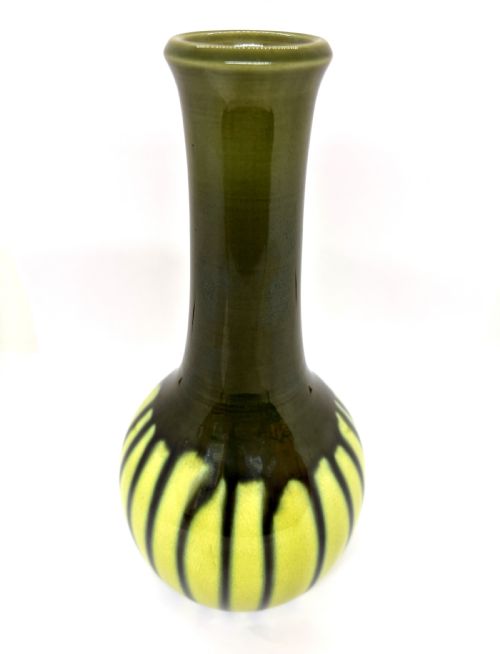
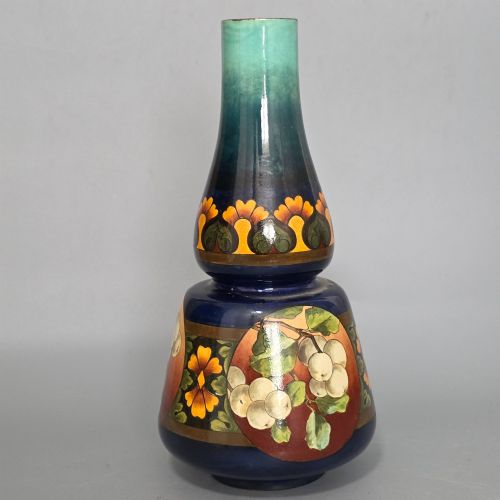
Potters threw pieces on wheels or cast them in moulds before applying slip and glaze layers, sometimes firing the ceramic multiple times to achieve deep colour saturation. English potteries like Burmantofts and Doulton Lambeth refined these chemical glazes to produce sunburst and floral effects. French and Japanese workshops employed distinct regional glazing traditions on their respective ceramic bodies.
Listings feature earthenware materials treated with coloured enamel, gold leaf, and ceramic glaze across nineteenth century periods.
Judging execution and finish
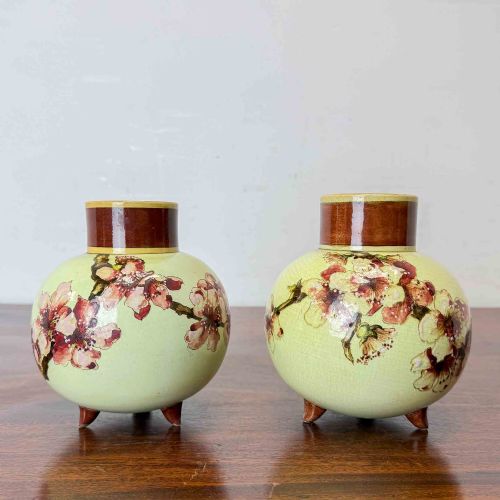
The sophistication of the glaze chemistry and the precision of the hand-painted decoration distinguish superior examples from standard production pieces. Finer specimens display controlled colour runs, crisp relief work, and balanced proportions across the body and handles. Elaborate surface treatments, such as detailed cherry blossom or sunflower motifs executed by named artists, elevate a piece above simpler utilitarian wares.
The integrity of the earthenware body and the crispness of moulded or incised details dictate the overall standard of the vessel. Pieces featuring combined techniques, such as enamel work paired with gold leaf gilding, demonstrate greater workshop ambition. Condition remains paramount, with unblemished glazes commanding stronger interest among discerning collectors.
Fourmaintraux Courquin·Alice Euphemia Thatcher·Sir Edmund Elton·Brannam Art Pottery·Carlton Ware
The Late Victorian Earthenware Vase Glossary
- Earthenware
- Porous pottery fired at lower temperatures than stoneware or porcelain, requiring a glaze to achieve water resistance. It serves as the foundational material for the majority of nineteenth-century art pottery.
- Faience
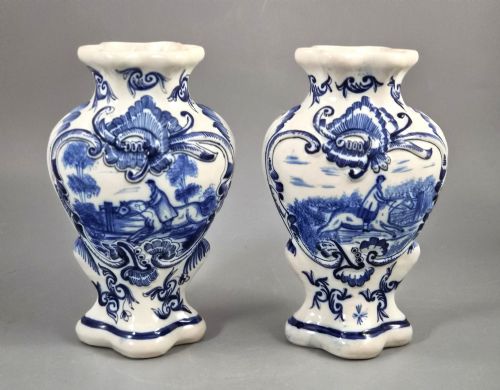
- Tinned-glazed earthenware originating in Europe, known for bright painted decoration over an opaque white or coloured ground. French potteries produced notable examples in historical revival styles.
- Moriage
- A Japanese ceramic decoration technique where clay is piped onto the vessel surface in dots or lines to create raised relief patterns. This method appears frequently on Satsuma export wares.
- Intarsio
- A slip-decorated earthenware technique developed by Doulton Lambeth that resembles inlaid wood marquetry. It produces complex, multicoloured pictorial designs beneath a glossy glaze.
- Baluster
- A vase profile featuring a rounded lower body that tapers upward into a narrow neck and flared rim. This classical form supports varied surface ornamentation.
Late Victorian Earthenware Vase: Frequently Asked Questions
How do I date these vases?
Most pieces carry stylistic indicators pointing to the eighteen-eighties and eighteen-nineties, corresponding with the Victorian period.
Specific registry numbers, impressed factory marks, and artist signatures found on the base provide exact manufacturing years.
What is art pottery?
Art pottery refers to ceramic vessels produced during the late nineteenth century that prioritised artistic design over mass-produced utility.
Independent studios and factory art departments experimented heavily with novel glazes and hand-finished decoration during this time.
Are these pieces waterproof?
While the interior glaze generally seals the porous earthenware body, age and hairline crazing can develop over the decades.
Collectors usually display these vessels dry or utilise a discreet glass liner if holding fresh flowers.
Where were these ceramics made?
The evidence records production across British potteries, French regional workshops, and Japanese export kilns.
Each region applied distinct glazing methods and stylistic influences, ranging from British arts and crafts to French rococo revival.