

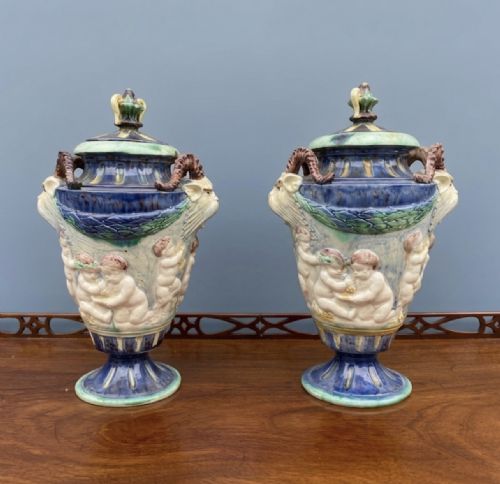


Victorian Relief Glazed Vase
A victorian relief glazed vase brings tactile depth and rich surface ornament to any room, anchoring a space with nineteenth-century craftsmanship.
Victorian Relief Glazed Vase
When you search for a victorian relief glazed vase, you encounter a variety of nineteenth-century vessels that use raised surface decoration to create strong visual interest. These objects range from earthenware and stoneware to decorative ceramics produced during the Victorian period.
The pieces on this page span several distinct stylistic influences, including Victorian Chinoiserie, the Aesthetic Movement, and early Arts and Crafts designs. Forms vary from monumental majolica urns and baluster shapes to tall umbrella and stick stands meant for grand hallways.
How they were made
Potters utilised earthenware and stoneware bodies, often applying thick lead glazes and enamel to accentuate raised sprigged patterns and moulded motifs. Artisans built up surface texture through slip trailing or applied sprigging before firing the ceramic vessels in kilns.
Selected pieces display additional detailing such as hand-painted enamel work and occasional touches of gold leaf over the fired glaze. This combination of sculptural moulding and reactive glazing gave nineteenth-century art pottery its characteristic tactile weight.
Even large umbrella stands received elaborate artistic treatment, ensuring muddy walking sticks rested against high Victorian aesthetic ambition.
What varies in quality
Quality rests upon the crispness of the moulded relief work and the depth of the glaze running across the surface. Finer examples display precise detailing in hand-applied sprigging and a balanced distribution of colour through the glaze.
The ambition of the form also dictates the tier of the piece, moving from standard domestic jugs to monumental exhibition vessels with complex figural or botanical ornament. Maker attribution and well-executed decorative schemes elevate individual pieces above standard production wares.
Emma Shute·Bretby Vases·Minton Majolica·Burmantofts Faience·Mason Stoneware
The Victorian Relief Glazed Vase Glossary
- Majolica
- A type of earthenware coated with an opaque tin glaze and painted with metallic oxide colours. It achieved immense popularity during the Victorian era for brightly coloured, ornate decorative vessels.
- Baluster
- A vase form characterised by a rounded lower body that tapers upward to a narrow neck. This traditional shape supports sculptural relief decoration effectively.
- Sprigging
- A technique where moulded clay shapes are applied directly to the unfired body of a vessel. It creates the raised surface patterns characteristic of many relief-glazed pieces.
- Faience
- Tins-glazed earthenware popular in nineteenth-century art pottery workshops. It provided a smooth ground for complex coloured glazes and hand-painted motifs.
Victorian Relief Glazed Vase: Frequently Asked Questions
What is a relief glazed vase?
A relief glazed vase is a nineteenth-century ceramic vessel featuring raised surface decoration beneath a coloured glaze. The moulding creates strong tactile contrasts across the body of the piece.
These pieces were produced across various British and Continental potteries during the Victorian era to serve as decorative display items in domestic interiors.
How do I identify a Victorian piece?
Victorian ceramics typically display characteristic nineteenth-century aesthetic influences, such as majolica glazes, Aesthetic Movement motifs, or early Arts and Crafts designs. The weight of the earthenware and the composition of the glaze offer strong clues to the period.
Looking at the base and any impressed registry marks can also help confirm nineteenth-century manufacture dates.
Where were these vases used?
These decorative vessels were designed for prominent display in Victorian drawing rooms, entrance halls, and formal reception spaces. Larger umbrella stands and monumental urns found a practical home in grand hallways.
Their substantial weight and decorative presence made them ideal focal points for interior decoration.
How do I care for antique ceramics?
Antique ceramic pieces require gentle dusting with a soft, dry cloth to protect the glazed surface from abrasion. Avoid using harsh chemical cleaners or submerging pieces with delicate enamel or gold leaf details.
Display the vessels away from direct sunlight and areas prone to sudden temperature fluctuations to preserve the glaze.