




Antique Slipware Art Ceramic
These antique slipware art ceramic pieces are earthenware vessels and bowls carrying fluid clay decoration, offering tactile historical depth to a room.
Antique Slipware Art Ceramic
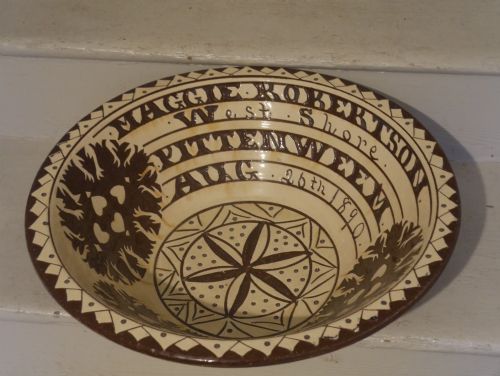
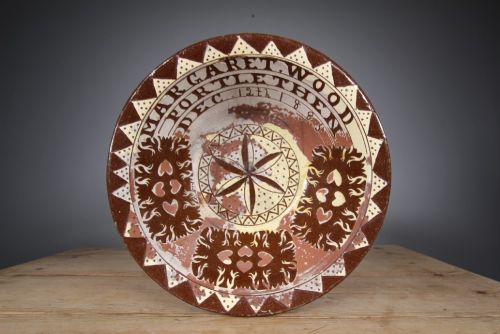
When you search for antique slipware art ceramic, you are looking at earthenware vessels and bowls decorated with liquid clay, spanning periods from the seventeenth century through to the early twentieth century. The selection ranges from early Dutch utility forms and seventeenth-century strawberry jars to nineteenth-century dairy bowls and studio pottery jugs.
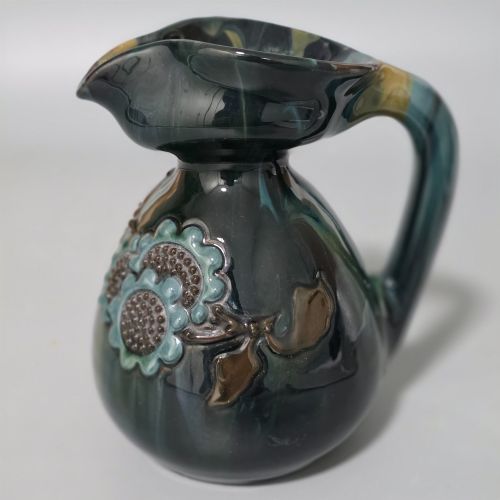
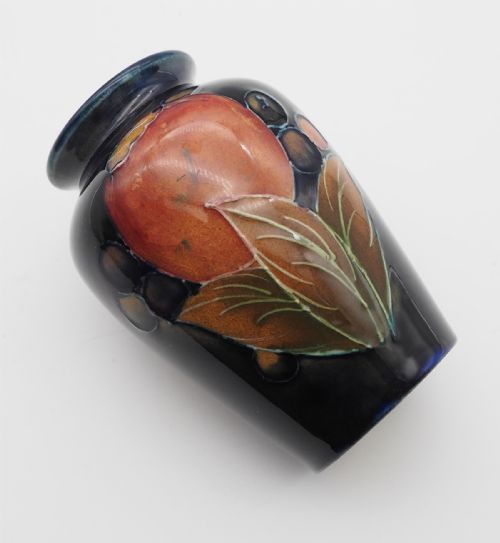
You are most likely to meet nineteenth-century Arts and Crafts pieces and studio pottery alongside regional vernacular items like Seaton Pottery dairy bowls. Forms include vases, decorative bowls, pitchers and jugs, and amphorae shaped from clay and finished with lead glaze.
The aesthetic bridges utilitarian folk art traditions and the refined studio pottery movement of the late Victorian era. Buyers encounter Dutch folk art alongside British provincial production, uniting simple earthenware bodies with expressive surface slips.
How they were made
Makers shaped earthenware clay on the potter's wheel or formed them by hand into vessels, jugs, and large bowls. The body was then coated or trailed with slip, which is a liquid clay mixture used to create surface patterns and designs.
Potters applied transparent or coloured lead glazes over the slip decoration before firing the ceramic in a kiln. This technique produced glossy surfaces that sealed the porous earthenware body while highlighting the fluid movement of the slip.
Early dairy bowls once held milk to settle cream before finding new life as decorative art ceramics in modern homes.
What varies in quality
Quality rests upon the expressiveness of the slip decoration and the control shown during the throwing process. Stronger pieces display confident brushwork or trailing that integrates naturally with the form of the vessel.
The depth and clarity of the lead glaze further distinguish finer items, allowing the underlying clay body and slip colours to show without clouding. The visual impact depends on how successfully the maker balanced functional form with decorative surface treatment.
Sir Edmund Elton·Seaton Pottery·Burmantofts Faience·William Moorcroft
The Antique Slipware Art Ceramic Glossary
- Slip
- Liquid clay used for decorating pottery surfaces before firing. It can be trailed, painted, or dipped onto the earthenware body to create patterns.
- Lead glaze
- A shiny coating containing lead oxide applied to earthenware to render it waterproof and enhance the colours of the clay and slip beneath.
- Earthenware
- Porous pottery fired at relatively low temperatures. It forms the traditional body for the slipware and art ceramics found in this selection.
- Arts and Crafts
- A design movement valuing handcraftsmanship and traditional materials. Many pieces in this tradition reflect its revival of historic pottery techniques.
Antique Slipware Art Ceramic: Frequently Asked Questions
What is slipware pottery?
Slipware pottery is earthenware decorated with a liquid clay mixture known as slip. This technique creates raised patterns or smooth surface designs beneath a translucent glaze.
Makers apply the slip by trailing, dipping, or painting before the piece undergoes its kiln firing.
How old are these ceramics?
The items range from seventeenth-century Dutch utility vessels to nineteenth-century dairy bowls and early twentieth-century studio pieces. Each era brings distinct manufacturing methods and decorative styles.
Dating relies on recorded evidence from specific potteries and stylistic markers typical of periods like the Arts and Crafts movement.
How were these vessels used?
Many early pieces served practical purposes in dairies and households, such as large bowls for milk processing and jugs for pouring liquids. Later studio works were created primarily for display and artistic appreciation.
Their survival reflects both their sturdy earthenware construction and their decorative appeal.
How do I care for antique earthenware?
Antique earthenware benefits from gentle dusting with a soft, dry cloth to protect the lead glaze and porous clay body. Avoid using water or cleaning agents, especially on older or more delicate pieces.
Keep them in stable environmental conditions away from direct sunlight and sudden temperature changes.