
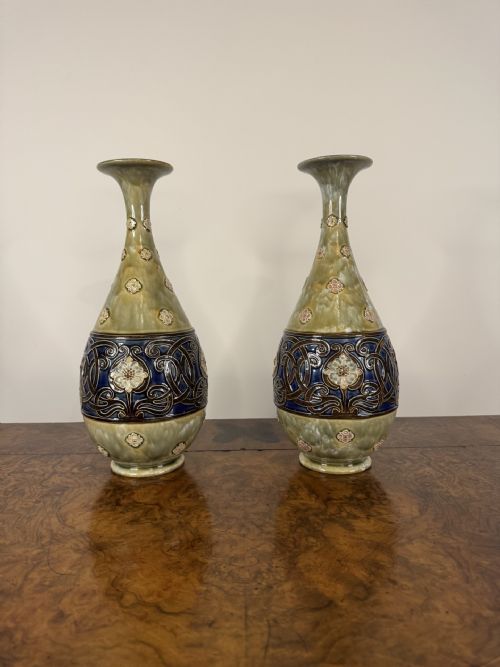


Blue Glazed Stoneware Vase
A blue glazed stoneware vase brings tactile weight and rich surface depth to a room, drawing the eye instantly.
Blue Glazed Stoneware Vase
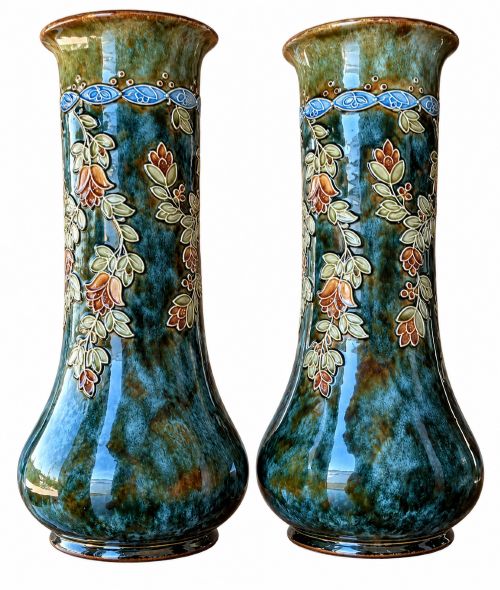
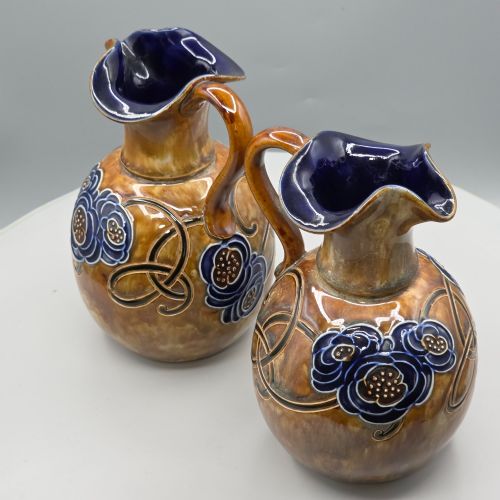
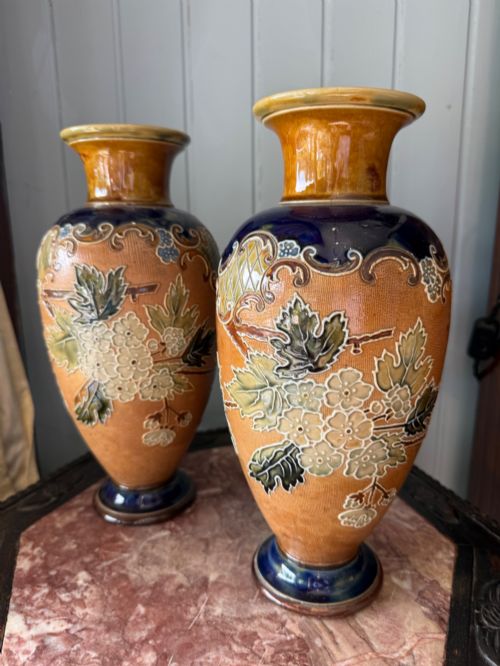
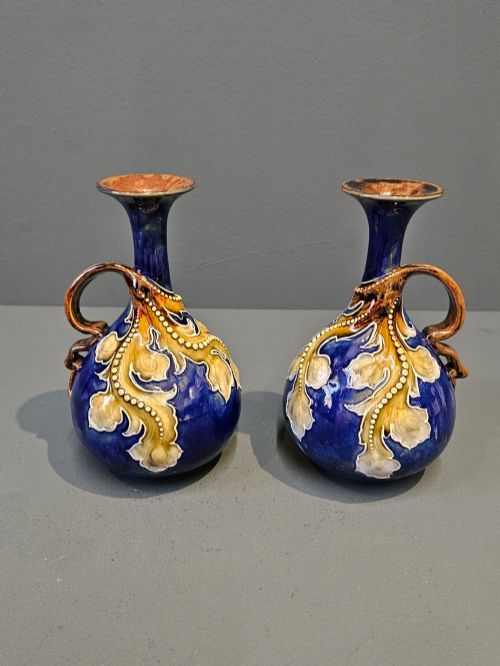
A blue glazed stoneware vase offers a solid, weighty vessel shaped from dense clay and finished in distinctive blue glazes. When you search for a blue glazed stoneware vase, you encounter works spanning the Victorian era through the early twentieth century.
What varies in quality
Quality rests in the crispness of the incised or moulded decoration and the control evident in the glaze run. Superior examples demonstrate deliberate artistry where the reactive blues pool evenly across the dense stoneware body.
Hand-painted or hand-tooled details by named studio artists distinguish exceptional pieces from standard production wares. The balance of form and the depth of the glaze surface dictate the standing of each vessel.
Listings span the Victorian era, Arts and Crafts movement, and Art Nouveau period, utilising stoneware, earthenware, and enamel.
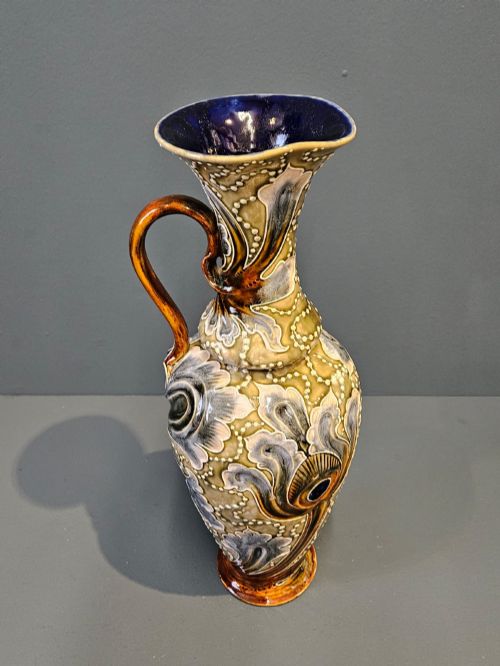
Royal Doulton·Doulton Lambeth·Louisa Wakely·Emma Shute·Emily Edwards·Emily Stormer·Ethel Beard·Florence Barlow
The Blue Glazed Stoneware Vase Glossary
- Stoneware
- A robust, vitrified ceramic fired at high temperatures until non-porous. It rings slightly when struck and resists scratching.
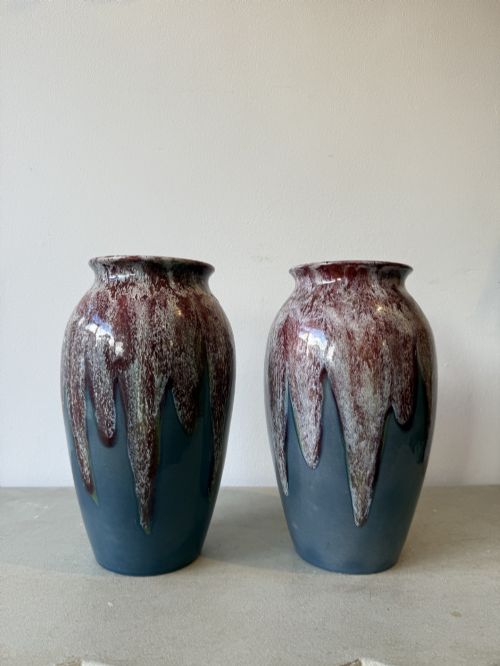
- Flambé glaze
- A streaky, variegated metallic glaze containing copper oxides. It creates dramatic transitions of blue, purple, and red during kiln firing.
- Baluster form
- A jar or vase shape with a rounded body that tapers toward the base and swells near the lower centre.
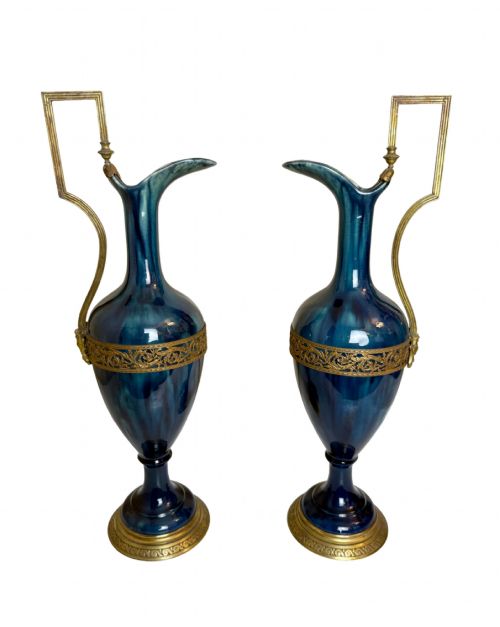
- Ewer
- A large jug with a bulbous body, flared spout, and looped handle, originally designed for pouring water.
Blue Glazed Stoneware Vase: Frequently Asked Questions
Are these vases waterproof?
Most stoneware vessels are naturally vitrified and hold water safely for fresh stems. However, older ceramic bodies can develop microscopic hairline fractures over decades of use.
Place a small glass or protective liner inside delicate pieces if you plan to display fresh floral arrangements regularly. This precaution safeguards the interior glaze from mineral deposits.
How do I date a Doulton piece?
Examine the impressed factory marks and artist ciphers located on the unglazed base of the vessel. Different stamp configurations and crown motifs correspond to specific production decades.
Cross-reference these base stamps with known operational dates for individual studio decorators. Stylistic clues like Arts and Crafts motifs also help narrow down the timeframe.
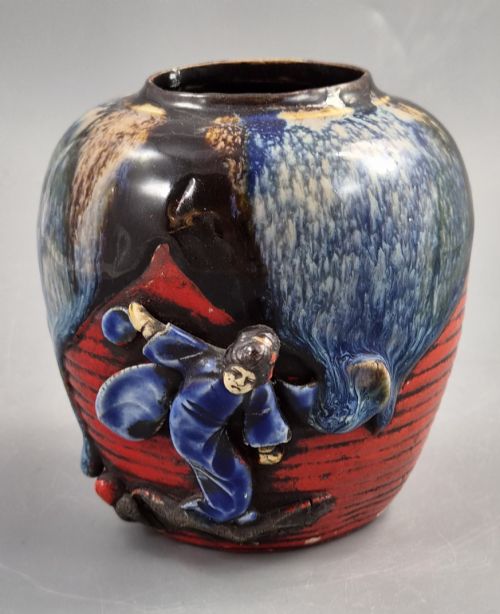
What is Sumida Gawa pottery?
Sumida Gawa refers to Japanese export ceramics produced around Tokyo during the late nineteenth and early twentieth centuries. These pieces typically feature heavily textured glazes and distinct modelled figures climbing the exterior.
Artisans applied tinted clays directly onto the stoneware body to create high-relief sculptural narratives. Each figure was hand-modelled, making individual examples distinct.