

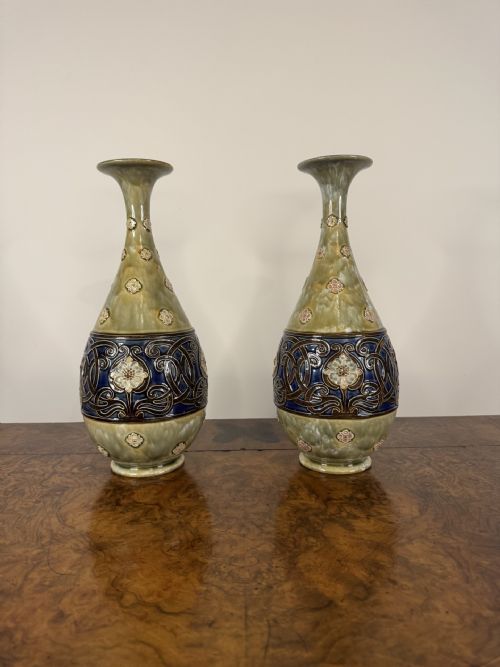


Doulton Lambeth Vessel
A doulton lambeth vessel brings tactile ceramic artistry into a room, combining robust utility with intricate surface ornament from the late nineteenth and early twentieth centuries.
Doulton Lambeth Vessel
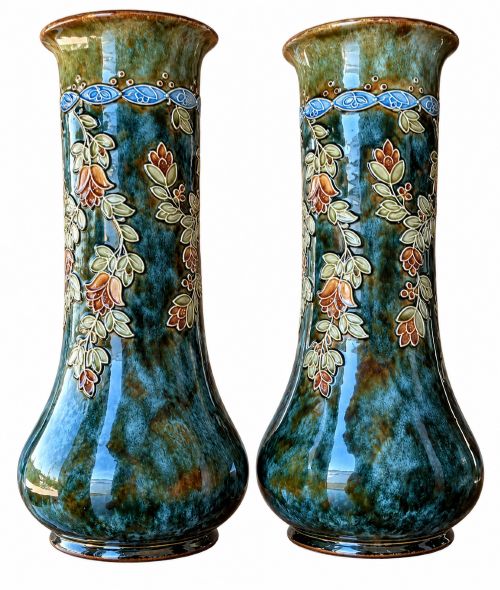
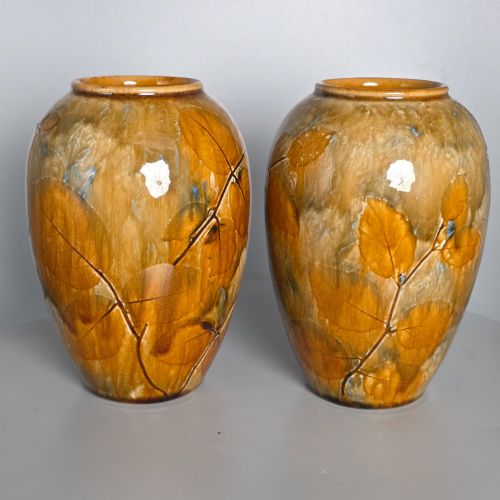
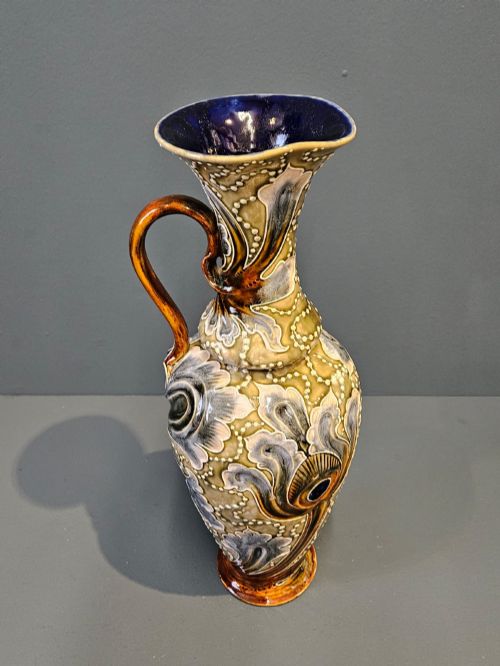
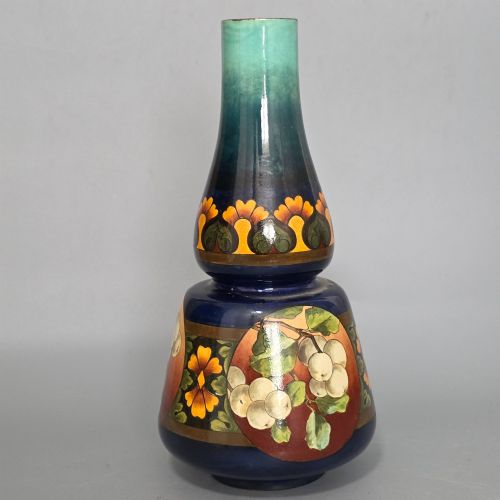
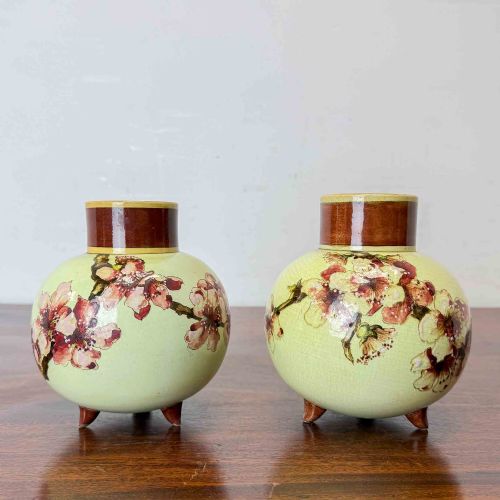
A doulton lambeth vessel encompasses a range of decorative and functional forms, including vases, jugs, pitchers, jardiniere planters, ewers, and tygs originating from the historic London pottery. These pieces emerge predominantly from Victorian and Edwardian periods, stretching from the eighteen-seventies through to the nineteen-tens.
Collectors encounter diverse shapes varying from tall baluster vases and large floor planters to intimate drinking vessels and puzzle jugs. The output reflects distinct aesthetic movements, moving from heavy Victorian ornamentation into the flowing organic lines of Art Nouveau and Arts and Crafts design.
Materials and Techniques
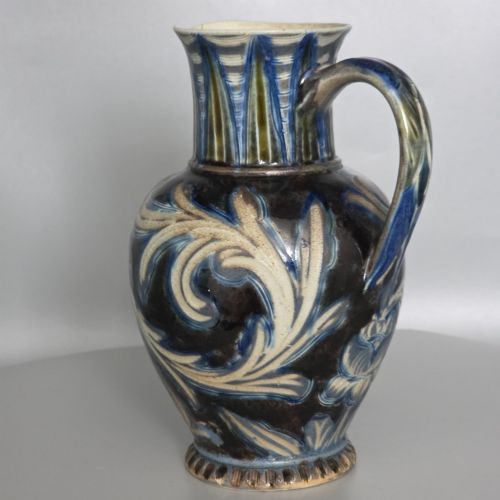
Makers utilised durable stoneware and earthenware bodies, frequently employing salt glaze techniques where salt thrown into the kiln during firing produces a characteristic textured orange-peel surface. These robust clay structures provide a stable canvas for complex decorative treatments.
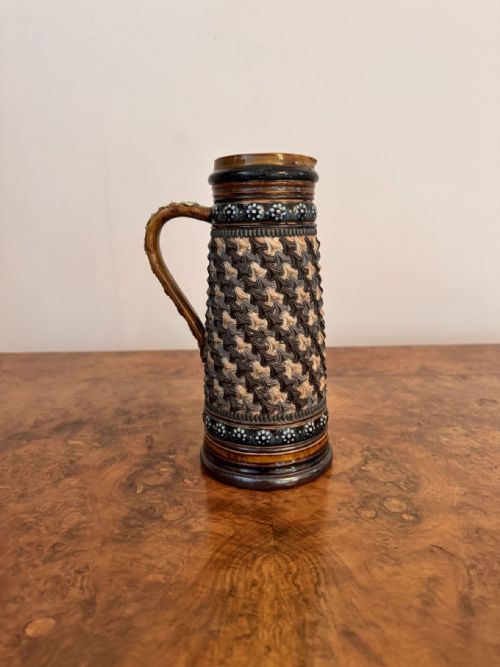
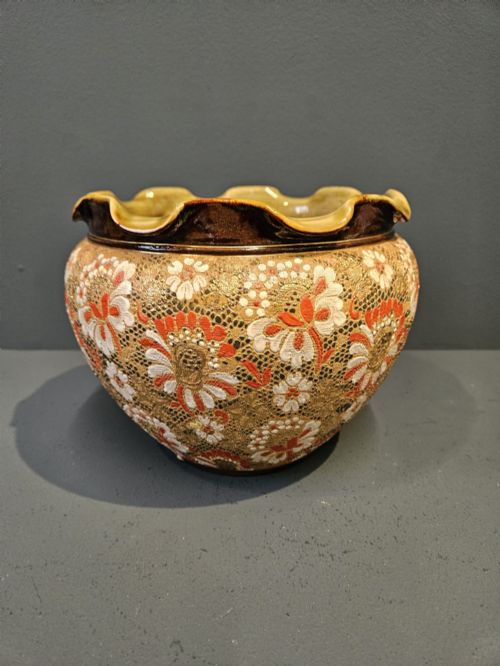
Decoration relies heavily on incised patterns, applied slip, enamelling, and specialised innovations like Slaters Patent, which utilised lace or fabric pressed into the wet clay to create intricate textured backgrounds. Many pieces also incorporate painted floral or figural panels executed by notable studio artists.
Materials documented in these listings include stoneware, salt glaze, earthenware, and applied enamel over ceramic bodies.
Distinguishing Quality
The distinction between standard production items and exceptional pieces rests upon the crispness of the incised ornament and the identity of the decorator. Works carrying signatures or monograms from recognised studio artists command greater interest due to their individual artistic execution.
Complexity of form and surface treatment further define the upper tier of objects, such as pieces combining raised pate-sur-pate work, intricate enamel highlights, or functional sterling silver rims mounted directly to the ceramic body.
Alice Euphemia Thatcher·Florence E Barlow·Louisa Wakely·Eliza Simmance·Emily Stormer·Ethel Beard
The Doulton Lambeth Vessel Glossary
- Stoneware
- A hard, vitrified pottery body fired at high temperatures until impervious to liquid. This durable material forms the structural foundation for the majority of the studio's output.
- Salt Glaze
- A glossy, slightly textured finish achieved by introducing common salt into the kiln at peak firing temperature. The chemical reaction creates a distinct pebble-dash surface texture.
- Tyg
- A large drinking vessel featuring multiple handles designed for communal passing around a table. These medieval-inspired forms often appear in commemorative contexts.
- Faience
- Tin-glazed earthenware used for painted decorative wares rather than utilitarian kitchen vessels. This technique permitted vibrant colour application beneath a clear glaze.
- Baluster
- A architectural vase profile characterised by a narrow neck that swells outward towards a rounded lower body. This classic silhouette provides balance to tall decorative vessels.
Doulton Lambeth Vessel: Frequently Asked Questions
How do I date a piece?
Dating relies on impressed factory marks, studio monograms, and stylistic indicators such as Victorian revival motifs or flowing Art Nouveau lines.
Changes in the typography of the base stamps and the presence of specific patent inscriptions help narrow the decade of manufacture.
What is Slaters Patent?
Slaters Patent is a decorative technique involving the impression of textiles or lace into damp clay to create patterned textures.
Invented by patent holder Doulton, this method left distinctive geometric and floral imprints across the body of the ceramic.
How were these vessels used?
Many examples served utilitarian functions such as pouring liquids, holding ale, or containing cut flowers within Victorian and Edwardian domestic interiors.
Others functioned purely as decorative ornaments, commemorative items, or large jardiniere planters for conservatories and orangeries.
Are marked pieces common?
Most production wares bear impressed factory ciphers, assistant stamps, and artist monograms located on the unglazed base.
These marks serve as direct evidence of the hands that shaped and decorated the object in the London studios.