


English Stoneware Pitcher
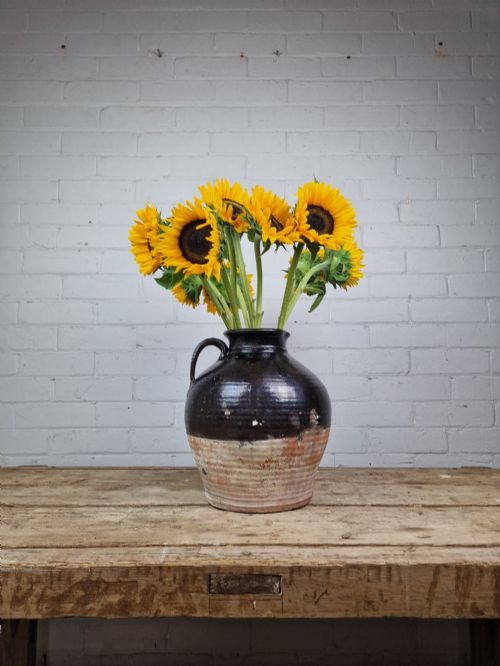
An English stoneware pitcher is a sturdy, salt-glazed vessel made for daily service and tavern use across the nineteenth century.
English Stoneware Pitcher
When you search for an English stoneware pitcher, you encounter durable ceramic vessels designed for holding liquids, ale or water. The pieces on this page span the nineteenth century, including Georgian examples, Victorian country items and intricate Art Nouveau studio works.
Most entries are utilitarian jugs and pitchers shaped from dense clay, though specialised forms like harvest jugs, puzzle jugs and tygs also appear. These vessels range from simple salt-glazed tavern equipment to heavily decorated exhibition pieces bearing moulded or sprigged details.
The aesthetic stretches from rustic country pottery to refined Victorian designs, often featuring applied silver rims, pewter fittings or contrasting glaze treatments. Collectors find everything from plain salt-glazed utility pieces to elaborate commemorative jubilee jugs.
Materials and construction methods
Potters built these vessels using dense stoneware and earthenware clays, fired at high temperatures to achieve a vitrified, non-porous body. Salt glazing was applied by throwing common salt into the kiln during the high-heat stage, producing a distinctive textured surface resembling orange peel.
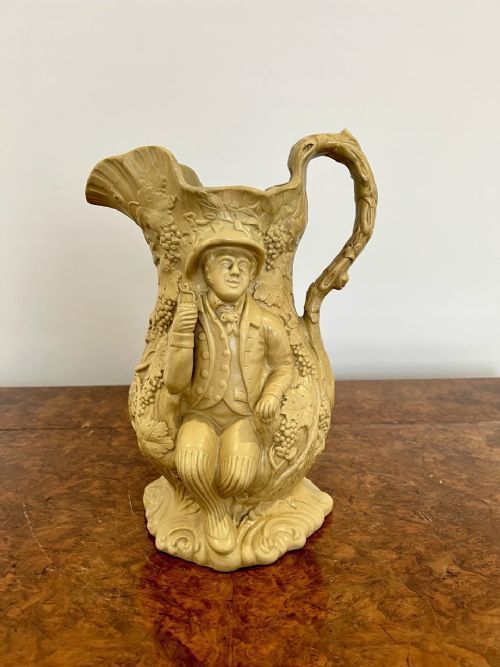
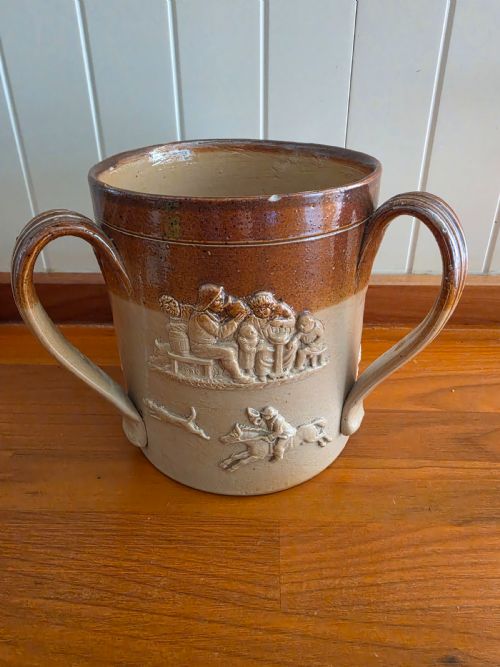
Many nineteenth-century examples incorporate relief moulding, where intricate classical or rustic scenes were pressed into the clay body before firing. Potters frequently added sprigged motifs, distinct glaze combinations or metallic rims made of pewter and silver plate to finish the pieces.
Some puzzle jugs secretly trick drinkers into spilling ale down their chins unless they plug hidden holes with their fingers.
Judging quality and craftsmanship
Superior quality in these pitchers is marked by crispness in the relief moulding and uniformity in the salt glaze texture. Finer specimens display well-balanced proportions, sharp detailing on sprigged ornaments and secure attachment of handles and collars.
Makers known for exceptional studio execution, such as those working at Doulton Lambeth or producing specialised relief designs, achieved greater refinement in their clay bodies. Pieces that retain original silver rims or display complex decorative programmes distinguish themselves from standard tavern ware.
Doulton Lambeth·Emma Shute·Charles Meigh·Phillips and Bagster·Minton
The English Stoneware Pitcher Glossary
- Salt glaze
- A vitreous coating formed by throwing common salt into the kiln at peak temperature, creating a pitted, glossy surface. This technique protects the porous clay beneath and defines traditional utilitarian stoneware.
- Relief moulded
- A decorative technique where damp clay is pressed into metal moulds to raise ornamental scenes above the vessel body. These motifs often depict hunting, classical dances or historical events.
- Tyg
- A large drinking vessel featuring three or more handles designed to be passed around a group. They frequently appear in sturdy stoneware from the nineteenth century.
- Sprigged
- An applied ornament moulded separately and affixed to the main body of the pot with slip before firing. It provides a contrasting decorative layer against the background clay.
- Puzzle jug
- A vessel with a perforated neck and multiple spouts that requires the drinker to cover secret holes in a specific way to imbibe the liquid without spilling. They tested tavern patrons' dexterity.
English Stoneware Pitcher: Frequently Asked Questions
What are English stoneware pitchers used for?
These vessels served primarily for storing, pouring and serving liquids such as ale, beer or water in homes and taverns. Their dense, vitrified construction kept contents cool and protected against leaks.
Over time, many also functioned as decorative display pieces or commemorative items for royal jubilees and harvest celebrations.
How do I date a stoneware pitcher?
Dating relies on stylistic clues, manufacturing techniques and potter's marks stamped into the base or body. Nineteenth-century pieces often feature patent numbers, registration diamonds or specific Victorian design motifs.
Georgian examples tend to show simpler salt-glazed surfaces or early relief moulding, while later Victorian items embrace complex Art Nouveau or aesthetic styles.
Are these pitchers waterproof?
Stoneware is naturally non-porous due to the high kiln temperatures used during firing and the sealing effect of salt glazing. Most pitchers remain fully functional for holding liquids today.
Pieces with integrated metal rims or added silver plating should be handled with care to preserve the original fittings during use.
What is a harvest jug?
A harvest jug is a large stoneware vessel traditionally filled with ale and carried into the fields during the seasonal gathering of crops. They often feature elaborate relief scenes of hunting, drinking or farming.
These pieces frequently display warm brown salt glazes and occasionally bear mounted silver rims to reinforce the pouring lip.