


Antique Ale Pitcher
An antique ale pitcher brings tactile warmth to a sideboard, serving as a robust metal or ceramic vessel once used for pouring bulk malt liquor.
Antique Ale Pitcher
When you search for an antique ale pitcher, you encounter functional vessels designed for serving, measuring, and transporting beer in homes, inns, and taverns. The selections span periods from the seventeenth century through the Edwardian era, encompassing Georgian and Victorian iterations in various capacities.
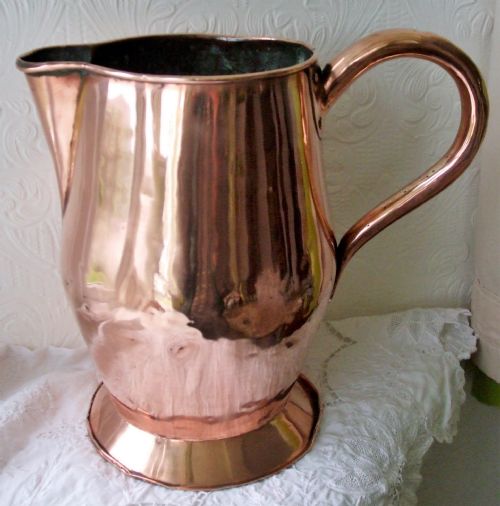
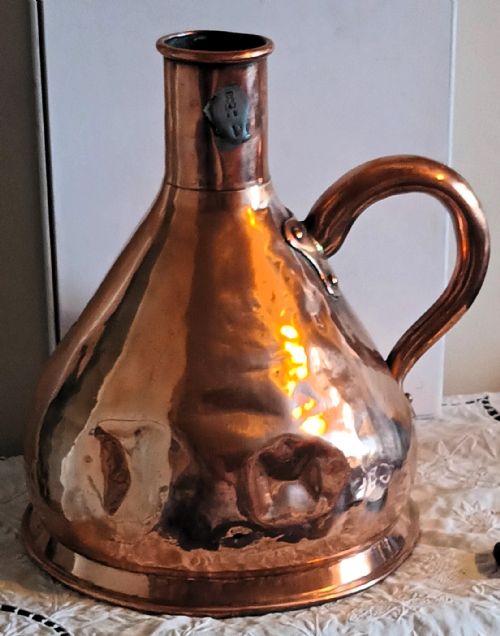
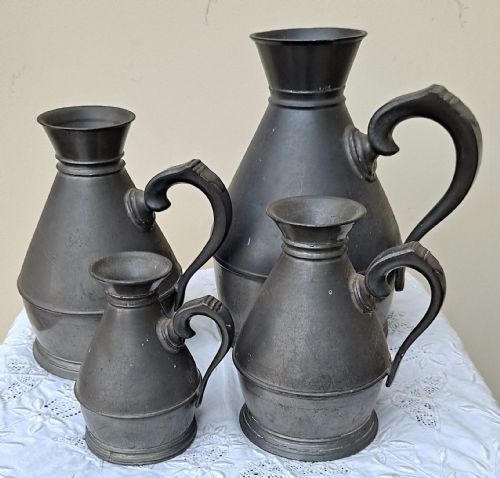
The most frequent examples on this page are metal measures and jugs fashioned from copper, pewter, and brass, alongside ceramic pieces such as salt-glazed stoneware and earthenware slipware. Forms range from simple tavern jugs and liquid measures to distinctive regional shapes like Irish haystack measures and Scottish tappit hens.
Form follows function closely in these drinking vessels, meaning many survivors were built strictly for trade or tavern use rather than domestic display. You will find large multi-gallon flagons alongside modest noggin and pint measures, reflecting the practical realities of historical hospitality.
Materials and construction methods
Metal vessels rely on sheet copper, brass, and pewter alloys shaped by hammering, seaming, and soldering. Coopered examples utilise wooden staves bound with brass bands to create large, durable wooden jugs.
Ceramic pieces involve earthenware and stoneware bodies shaped on a potter's wheel or moulded in relief, then finished with salt glazes or slip decoration. Metal components such as silver-plated rims and hinged lids are frequently added to ceramic jugs to reinforce high-wear areas.
Antique Ale Pitcher Retail Price Guide 2026
Typical asking prices for ale pitcher among the pieces listed under this phrase on Sellingantiques today, from the lower quarter to the upper quarter. They describe what is for sale here now, not the wider market.
Some vessels hold up to four gallons, proving that past generations took their tavern socialising very seriously indeed.
Assessing quality and craftsmanship
Quality shows in the precision of the metal seams, the crispness of relief moulding on ceramic bodies, and the preservation of original touchmarks or capacity stamps. Finer metal examples display harmonious proportions, substantial weight in the gauge of copper or pewter, and clean soldering without clumsy repairs.
Provenance and maker marks elevate certain pieces above standard utility ware, particularly when stamped by known makers or verified through official capacity verification marks. The survival of original lids, spouts, and silver-plated mounts intact marks the difference between a standard survivor and a notable collector piece.
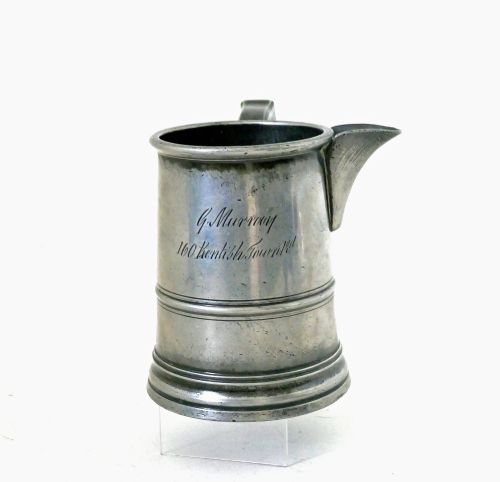
G.Murrouy·J. Bower·Loftus of Oxford Street London·Doulton Lambeth
The Antique Ale Pitcher Glossary
- Haystack measure
- An Irish pewter or brass measuring vessel characterised by its flared, bellied profile resembling a stacked haystack.
- Tappit hen
- A traditional Scottish pewter measuring jug featuring a specific lidded, tapered form and named for its distinctive thumbpiece.
- OldSheffieldPlate
- A composite material made by fusing a thin sheet of silver to a thicker copper base, common in eighteenth-century hollowware.
- Slipware
- Earthenware pottery decorated with liquid clay slip applied before firing, often producing rich trails and patterns.
- Coopered
- Constructed from curved wooden staves held together by metal hoops, much like a traditional cask or barrel.
Antique Ale Pitcher: Frequently Asked Questions
What is an antique ale pitcher used for?
These vessels served to measure, hold, and pour beer and ale in domestic settings and busy public taverns. Larger examples functioned as bulk liquid measures for commercial trade.
Today, they serve primarily as decorative display items, umbrella stands, or striking floral vases in traditional and contemporary interiors alike.
How do I clean metal ale jugs?
Metal surfaces require gentle dusting and occasional cleaning with appropriate non-abrasive metal polishes suited to copper, brass, or pewter. Avoid stripping historic patinas that accumulate over centuries of handling.
Preserving the natural oxidation helps maintain the character and historical integrity of copper and brass measures.
Are these pitchers safe for drinking?
Many historic metal measures contain lead or other alloys that leach into liquids, making them unsuitable for modern food consumption. Additionally, old solders and linings can degrade over time.
It is best to treat these vessels as decorative antiques rather than functional kitchenware for daily beverage service.
How do I identify a Georgian ale jug?
Georgian pieces often exhibit classic proportions, heavy-gauge copper construction, and distinct touchmarks or capacity stamps from the eighteenth or early nineteenth century. Stylistic cues include plain rolled rims and soldered handle joints.
Comparing the manufacturing technique against known period examples helps confirm the approximate date of manufacture.