
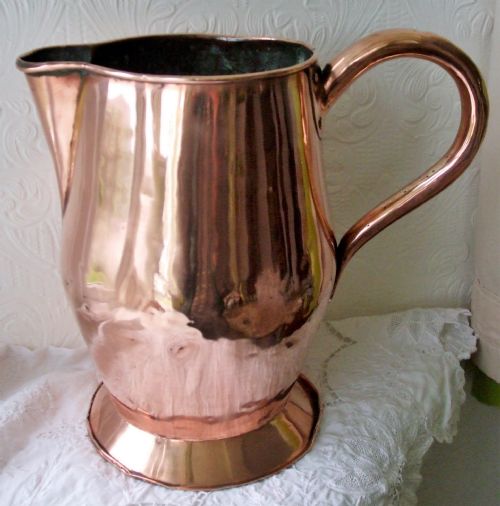
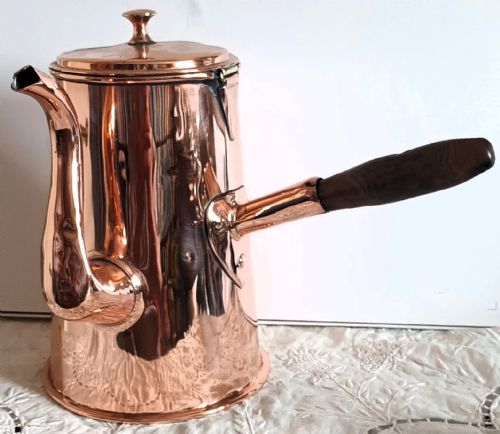


Polished Copper Pitcher
A polished copper pitcher brings rich metallic warmth and robust historical utility to any room, and these functional vessels remain prized for their honest craft.
What these pieces are
A polished copper pitcher appears in various capacious forms designed for measuring, carrying, or serving liquids, ranging from small milk jugs to large gallon measures. These vessels reflect practical domestic and tavern use from past eras.
The selections available here date from the mid-nineteenth century and the Georgian period, embodying styles such as Victorian, Rustic Farmhouse, and Georgian design. Buyers frequently encounter robust tavern jugs, Jersey cans, and standard milk jugs among the listings.
Originating primarily from English workshops, these pitchers serve as both functional containers and striking decorative objects. Each piece demonstrates the heavy-duty utility demanded by historical households and public houses.
How they were made
Metalworkers constructed these pitchers primarily from sheet copper, often incorporating brass, tin, and lead details for reinforcement and construction. The fabrication relied heavily on hand-beating and skillful joining techniques.
Makers formed sturdy handles, spouts, and bodies to withstand daily physical demands in homes and taverns. Subsequent polishing enhances the natural metallic lustre of the copper surface.
Retail Price Guide 2026
Typical UK retail prices for polished copper pitcher, calculated from the Sellingantiques database of over a million retail prices indexed since 2003. This retail price guide relies exclusively on Sellingantiques data; no external sources or auction records are used, so the figures do not describe the wider market.
Current listings span the Georgian period, 1850, 1860, and the wider nineteenth century, utilising copper, brass, tin, and lead.
What varies in quality
Quality rests in the proportional balance of the vessel, the clean sweep of the handle, and the integrity of the metal sheet work. Superior examples exhibit deliberate hand-shaping and harmonious form rather than mass-produced uniformity.
The character of the metal surface, developed through age and conscientious polishing, distinguishes finer decorative pieces from simpler utility items. Subtle variations in the joins and rivets reveal the distinct hand of the individual metalworker.
The Polished Copper Pitcher Glossary
- Copper
- A malleable, reddish-brown metallic element prized for its durability and thermal conductivity. It forms the primary body material for all pitchers listed here.
- Jersey Can
- A traditional vessel type originating from the Channel Islands, traditionally utilised for storing or measuring milk and cream. These cans feature distinctive proportions and secure spouts.
- Gallon Measure
- A standardised large-capacity container used for commercial or tavern measurement. These heavy pieces indicate volume standards of the nineteenth century.
- Tavern Jug
- A robust public house vessel designed for serving ale or beer in busy drinking environments. They possess sturdy handles for frequent lifting.
Frequently Asked Questions
What were copper pitchers used for originally?
These vessels served practical roles in domestic kitchens, dairies, and public houses for carrying liquids, measuring volumes of ale or milk, and general household storage.
Their robust construction allowed them to withstand the rigorous daily demands of nineteenth-century life before transitioning into decorative items.
How do I care for polished copper?
Maintaining the shine requires regular treatment with a suitable metal cleaner formulated specifically for copper surfaces. Soft cloths help prevent scratching during the polishing process.
Storing the pitcher in a dry environment reduces natural oxidation and preserves the reflective finish over time.
How do I identify a Georgian copper jug?
Georgian pieces typically display distinct proportions, heavier gauge metal, and construction characteristics typical of the eighteenth and early nineteenth centuries. Examination of the seams and handles often reveals earlier hand-working methods.
Documentation or stylistic markers alignment with the period help confirm the era of manufacture.
Can these pitchers hold liquids safely today?
While many historical vessels feature tin linings intended for safe liquid storage and food use, original linings degrade over time. Assessing the interior condition determines whether a piece remains suitable for holding beverages.
Most buyers today utilise them primarily for dry floral displays or as decorative interior accents.