
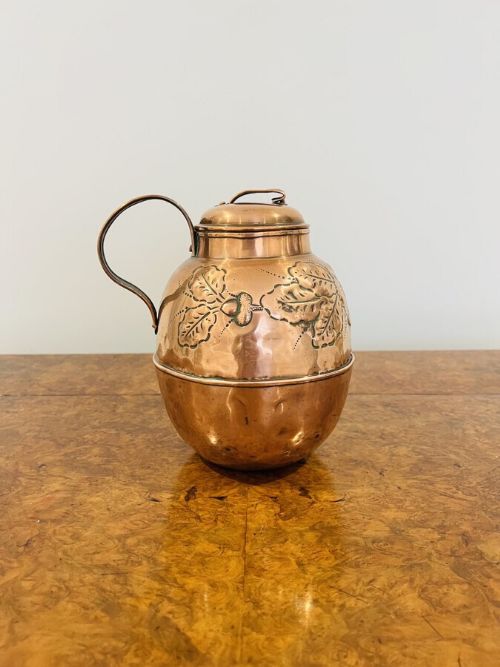


Victorian Copper Jug
A victorian copper jug brings warmth and utility to a room, serving as both a practical vessel and a striking decorative piece.

Victorian Copper Jug
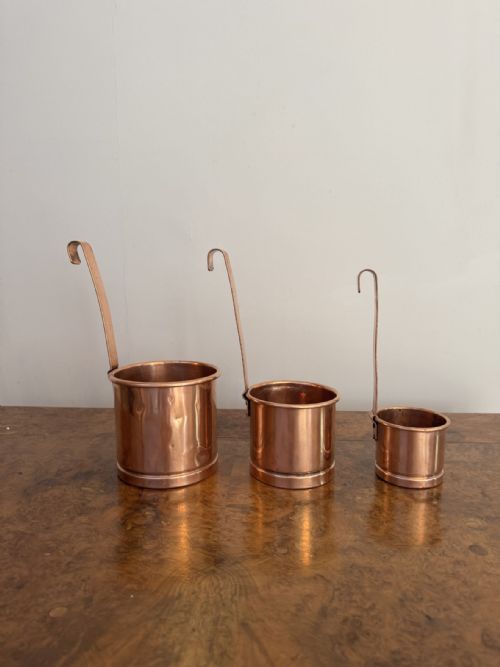
When you search for a victorian copper jug, you encounter utilitarian kitchenware, tavern measures, and decorative vessels spanning the nineteenth century. The selection ranges from plain household service pieces to substantial harvest jugs and calibrated measures bearing royal ciphers.
The origins stretch from provincial English workshops to Scottish measures and Arts and Crafts studios, reflecting daily service, hospitality, and dairy work.
How they were made
Makers shaped sheet copper by hand, joining seams with dovetailing or brazing and reinforcing rims with brass collars for daily service. Many vessels incorporate brass handles and bases, adding durability and structural contrast to the warm metal body.
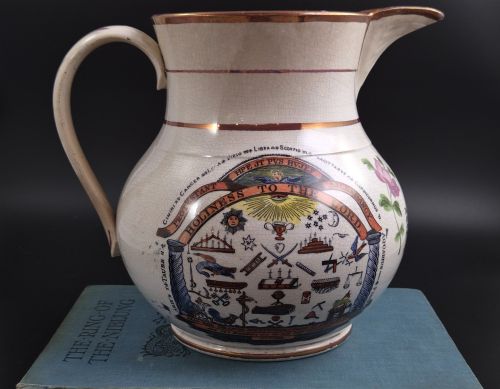
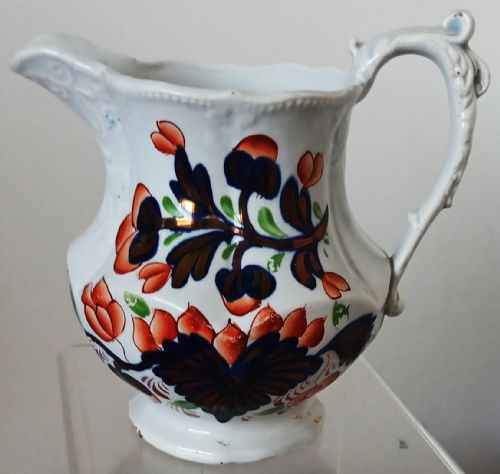
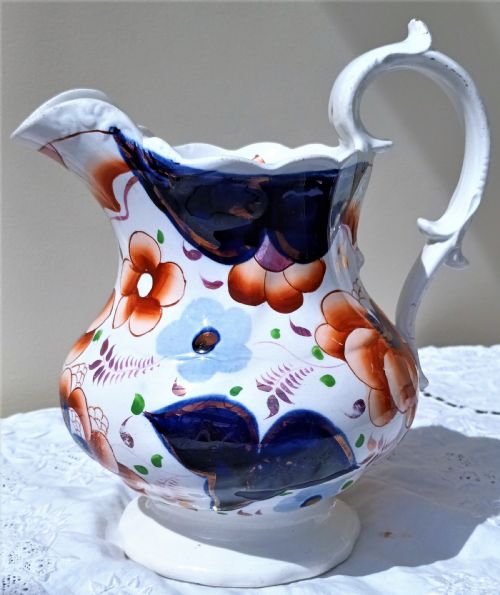
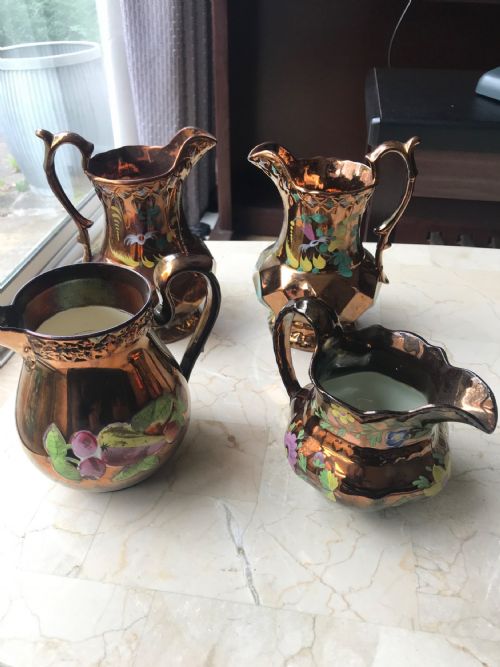
Surface finishing involved hand-beating or leaving smooth planes that developed a natural patina over decades of use. Ceramic equivalents utilised earthenware bodies finished with copper lustre glazes and hand-painted polychrome decoration.
Victorian Copper Jug Retail Price Guide 2026
Typical asking prices for victorian copper jug among the pieces listed under this phrase on Sellingantiques today, from the lower quarter to the upper quarter. They describe what is for sale here now, not the wider market.
Miniature apprentice pieces appear among the full-sized flagons, offering perfectly scaled down versions of standard tavern measures.
What varies in quality
Quality rests in the gauge of the metal and the integrity of construction, where heavier walls and clean seam work separate utilitarian pieces from finer decorative examples. Well-proportioned handles and crisp pouring lips indicate skilled handcrafting.
Verified capacity marks, maker stamps, or imperial verification stamps elevate a measure, while balanced sets show uniform craftsmanship across graduated sizes.
J Bower·Livesley Powell and Co·S Hancock
The Victorian Copper Jug Glossary
- Haystack measure
- A tall, tapered liquid measure with a flared base resembling a hayrick. These English vessels held precise imperial volumes for trade.
- Jersey can
- A distinctive tall copper jug with a long spout and handle, traditionally used for storing and pouring milk or cream in the Channel Islands.
- Copper lustre
- A ceramic glaze containing metallic copper salts that fires to produce a reflective, iridescent metallic sheen. It appears frequently on Staffordshire earthenware jugs.
- Harvest jug
- A large, bulbous vessel traditionally used to carry ale or cider to workers in the fields during harvest time.
Victorian Copper Jug: Frequently Asked Questions
How were copper jugs used daily?
These vessels served to measure, store, and pour liquids like ale, milk, and water in domestic kitchens, taverns, and farmhouses. Their robust construction allowed them to withstand heavy daily handling.
Larger harvest jugs carried drinks to agricultural workers outdoors, while calibrated measures ensured accurate trade volumes.
Are copper jugs safe for liquids?
Most antique copper jugs on this market are intended for display, floral arrangement, or dry storage rather than consumption. Old vessels often lack modern food-safe internal linings.
If you wish to use one for serving drinks, check the interior condition and any historical tinned coating carefully.
How do I clean an antique copper jug?
Routine maintenance requires only a soft cloth to remove dust and preserve the accumulated historical surface. Avoid aggressive chemical polishes that strip away the aged patina.
Many collectors prefer leaving the dark, warm tones intact rather than returning the metal to a bright shine.
How do I date a copper jug?
Dating relies on manufacturing techniques, style periods, and stamped verification marks from specific monarch reigns. Dovetailed seams and heavy gauge construction often point to nineteenth-century workshop methods.
King's cyphers, such as VR for Victoria, provide clear chronological markers for calibrated measuring vessels.