
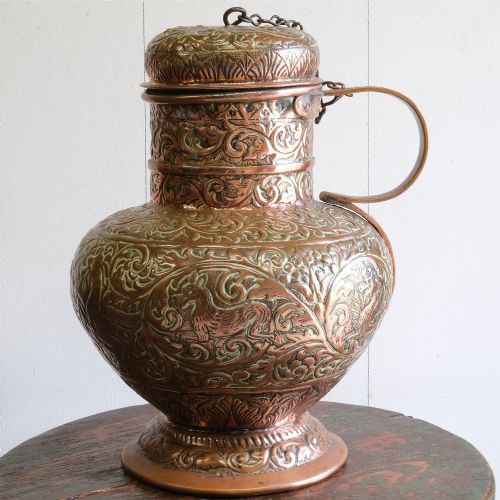


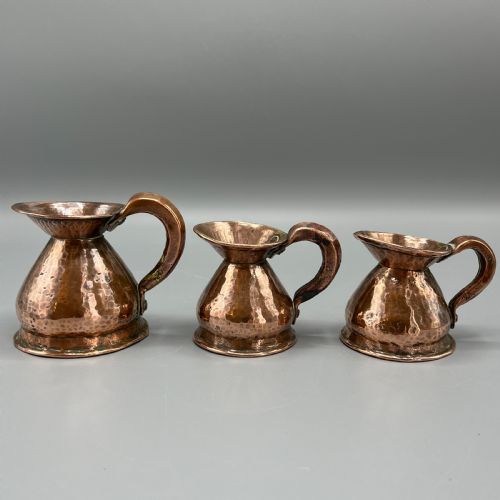


Hand Hammered Copper Jug
These hand hammered copper jug pieces offer warmth and utilitarian utility, bringing enduring character to any interior.
What these pieces are
A hand hammered copper jug combines practical liquid storage with tactile metalwork, appearing across Georgian, Victorian, and Arts & Crafts periods. These vessels serve various household and serving functions, from large two gallon capacities down to two pint milk and pouring vessels.
The selections available here span diverse regional traditions and design movements, including English craftsmanship and Indo-Persian influences. Collectors encounter forms ranging from flagons and serving tankards to simple milk jugs.
Early eighteenth century examples sit alongside nineteenth century and early twentieth century pieces. Each vessel reflects the domestic or decorative requirements of its specific era.
How they were made
Makers shaped these objects primarily from sheet copper, often utilising brass or tin additions for handles, rims, or internal linings. The distinctive surface texture results from manual hammering techniques applied across the body of the vessel.
Constructing these jugs required skill in metal manipulation, joining seams, and forming spouts and handles to ensure structural integrity and functional balance. Artisans finished each piece by hand, leaving visible tool marks that evidence the manual manufacturing process.
Retail Price Guide 2026
Typical UK retail prices for hand hammered copper jug, calculated from the Sellingantiques database of over a million retail prices indexed since 2003. This retail price guide relies exclusively on Sellingantiques data; no external sources or auction records are used, so the figures do not describe the wider market.
Some jugs hold up to two gallons of liquid, while others serve modest portions of milk.
What varies in quality
Quality in these pieces rests upon the precision of the metal shaping and the harmony of the overall proportions. Heavier gauge copper and sophisticated hammer work distinguish finer examples from simpler utilitarian containers.
The integrity of the construction, including the neatness of seams and the attachment of handles, separates standard production items from superior craft objects. Age and historical stylistic coherence further elevate the standing of particular vessels.
The Hand Hammered Copper Jug Glossary
- Flagon
- A large vessel with a handle and spout or lid, traditionally used for holding and pouring liquids. These pieces often feature generous capacities suitable for serving groups.
- Tankard
- A tall drinking vessel featuring a single handle, sometimes adapted for serving liquids in domestic settings. Examples in metal often incorporate sturdy bases and robust handles.
- Arts & Crafts
- A design movement spanning the late nineteenth and early twentieth centuries that prioritised traditional hand craftsmanship and visible material textures. Objects from this style display honest construction methods.
- Georgian
- The period covering the reigns of the four British monarchs named George, characterised by distinct classical proportions and practical domestic forms. Metalware from this era prioritises functional utility.
Frequently Asked Questions
How do I clean a copper jug?
Clean these vessels gently using appropriate metal polishes or traditional natural mixtures to preserve the historic surface patina.
Avoid abrasive materials that might damage the hand hammered texture built up over centuries.
Can I use these jugs for liquids?
Many historical vessels retain internal tin linings that historically made them safe for milk or water.
Check the interior condition of each individual piece before deciding to use it for serving beverages.
How do I date an old copper jug?
Examine the construction methods, handle attachments, and stylistic markers to determine the likely period of manufacture.
Georgian and Victorian pieces display different forming techniques compared to later Arts & Crafts examples.
Where were these copper jugs made?
The evidence shows items originating from English workshops alongside Indo-Persian traditions.
Each region employed distinct hammering patterns and handle designs that reflect local metalworking heritage.