

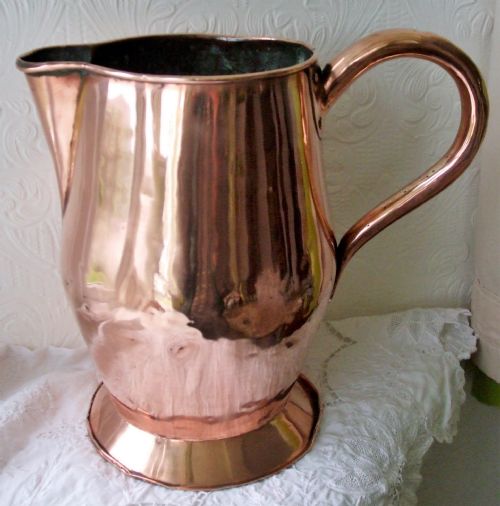
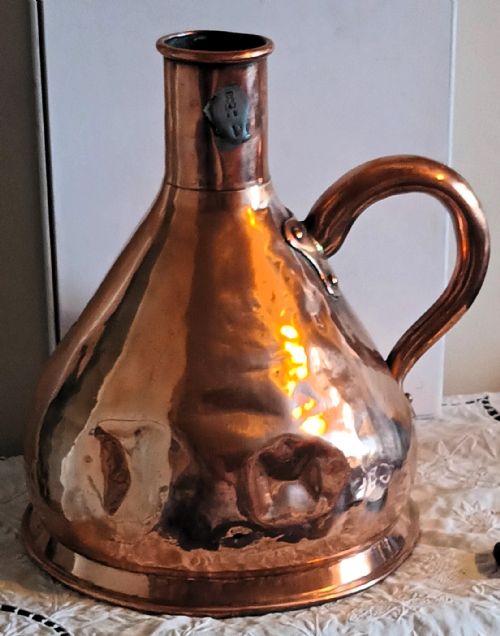


Georgian Copper Jug
These georgian copper jug examples are heavy metal vessels built for holding and measuring liquids, offering robust utility and warm metallic tone for any interior.
Georgian Copper Jug
A georgian copper jug is a durable utilitarian vessel, appearing here in forms ranging from modest pint containers up to colossal multi-gallon tavern pitchers and specific liquid measures.
The selections span the Georgian period, the George III era, and the nineteenth century, reflecting both domestic use and bustling public houses.
Forms include graduated sets, lidded pitchers, creaming jugs, and ale measures, often bearing regional designations like Liverpool or specific tavern names.
How they were made
Metalworkers hammered and shaped sheet copper into these sturdy vessels, often joining seams with lead or brass components.
Many examples incorporate added materials such as ironstone, ceramic, glaze, and enamel, especially in related tableware items.
Georgian Copper Jug Retail Price Guide 2026
Typical asking prices for georgian copper jug among the pieces listed under this phrase on Sellingantiques today, from the lower quarter to the upper quarter. They describe what is for sale here now, not the wider market.
Listings feature copper alongside brass, ironstone, and ceramic across Georgian and nineteenth-century periods.
What varies in quality
Quality rests in the weight of the metal, the precision of the graduated sizing within sets, and the integrity of the original construction.
Inscribed tavern names or specific maker details elevate certain pieces above standard utilitarian production.
Loftus of Oxford Street London
The Georgian Copper Jug Glossary
- Liquid measure
- A calibrated vessel used historically for dispensing accurate volumes of ale or other drinks in taverns. These items often feature official verification stamps.
- Copper lustre
- A pottery technique imparting a metallic, iridescent sheen to ceramic surfaces. This finish mimics the appearance of solid metal.
- Graduated set
- A collection of vessels sized proportionally so that smaller pieces nest within or match larger companions. Such sets were essential for efficient storage and precise measurement.
Georgian Copper Jug: Frequently Asked Questions
What were these jugs used for?
These vessels served primarily for measuring and pouring liquids such as ale, water, and milk in both domestic kitchens and busy public houses. Large capacity pieces functioned as communal tavern jugs or formal liquid measures.
Smaller examples worked well for daily household chores, holding creaming liquids or serving water at the table.
How do I clean copper?
Maintenance depends on whether you prefer a deep historic patina or a bright reflective surface. Gentle washing with warm soapy water removes dust without harming the metal.
Avoid harsh modern abrasives that strip away centuries of character.
Are these jugs watertight?
Many of these sturdy metal containers retain their structural integrity and hold liquids successfully. Heavy gauge construction and soldered seams usually ensure functional performance.
It remains wise to check individual pieces if you intend to use them actively for fresh flowers or liquids.
How do I identify a Georgian piece?
Identification relies on observing traditional construction methods, heavy metal gauges, and specific stylistic markers typical of the period. Forms often follow practical tavern or domestic requirements from the eighteenth and early nineteenth centuries.
Archival comparisons and occasional maker inscriptions help confirm the era.