

Antique Metal Pitcher
An antique metal pitcher brings substantial weight and honest utility to a room, offering tactile connection to centuries of domestic and liturgical service.
What these pieces are
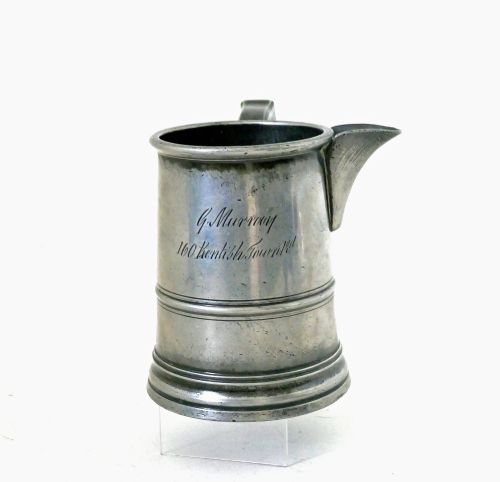
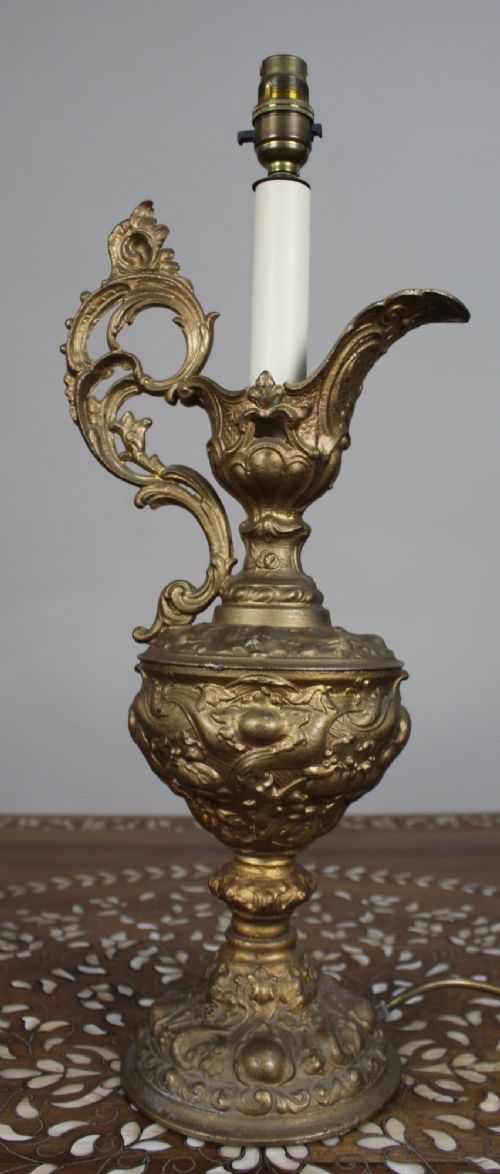
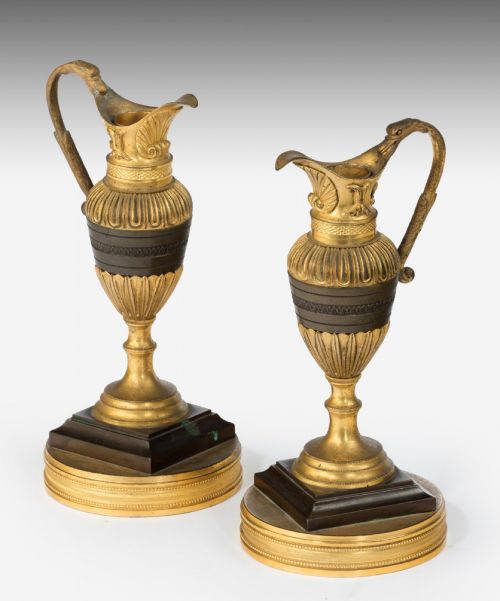
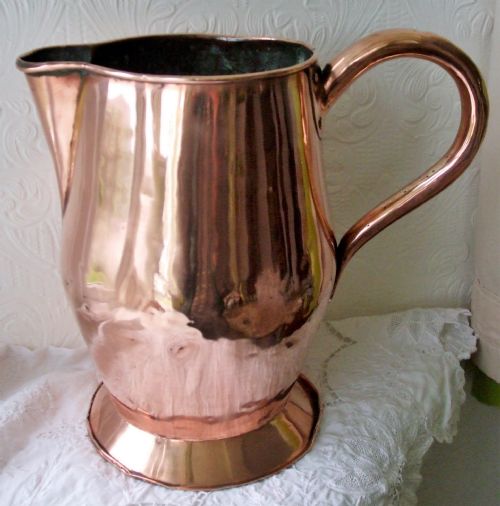
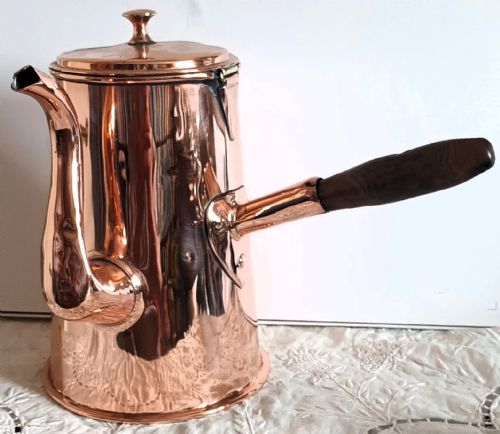
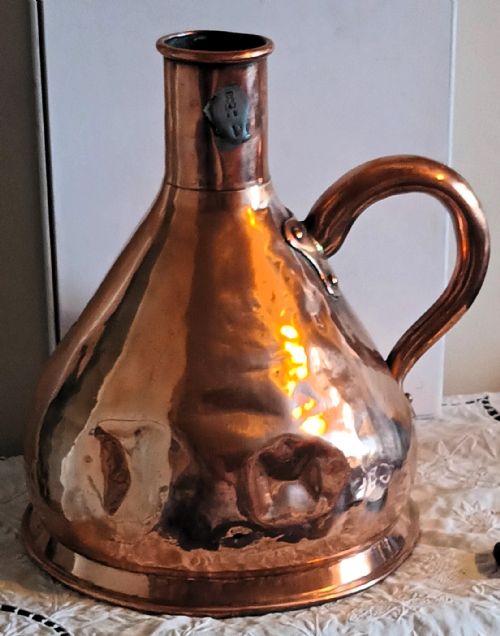
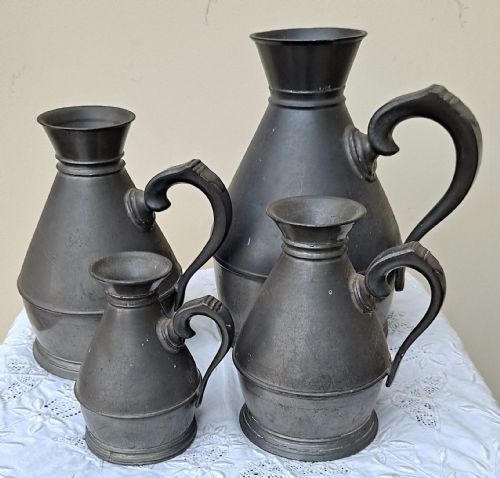
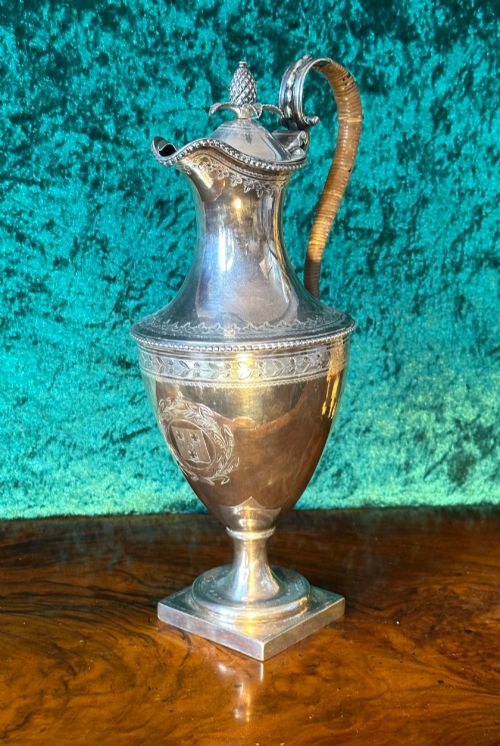
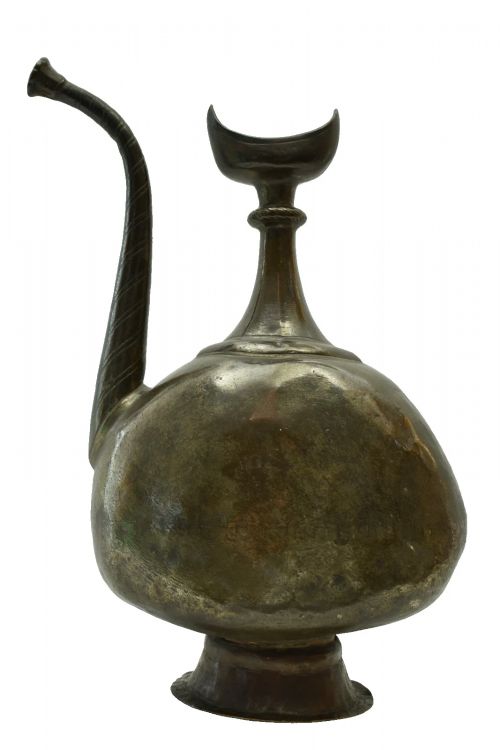
An antique metal pitcher encompasses robust vessels shaped for holding liquids, ranging from modest domestic jugs to large church flagons and heavy measures. You encounter forms spanning the Georgian period and the Victorian era, shaped from durable metal.
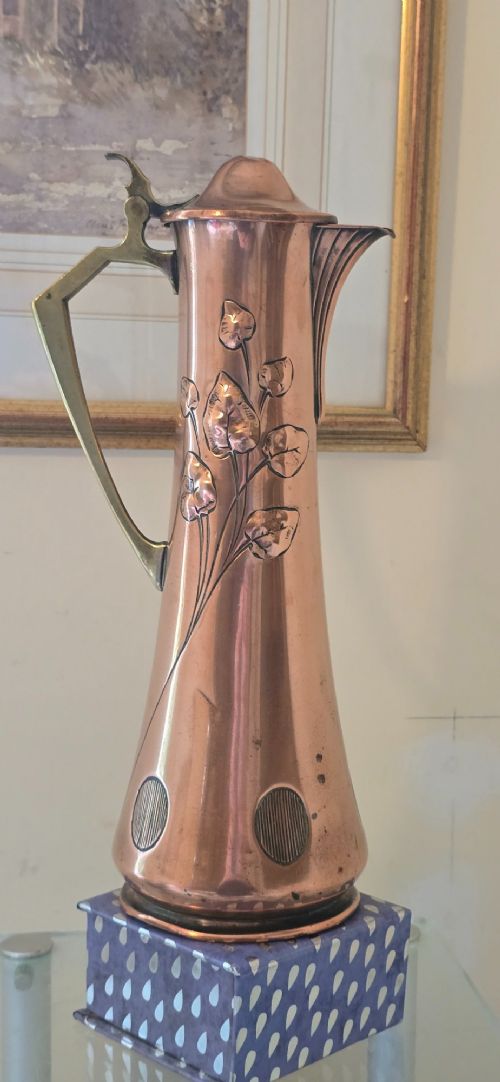
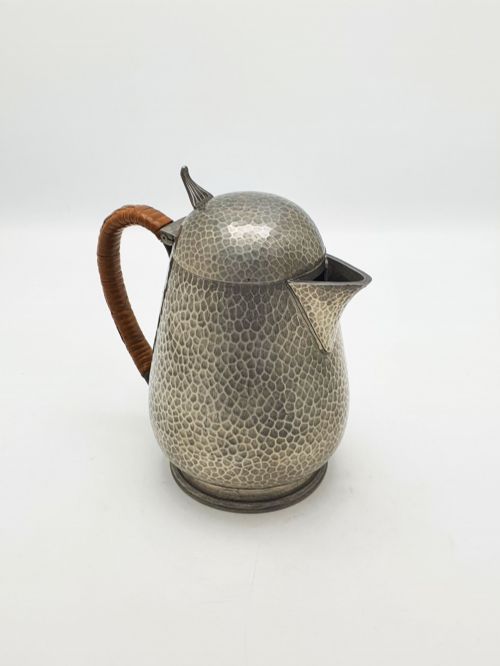
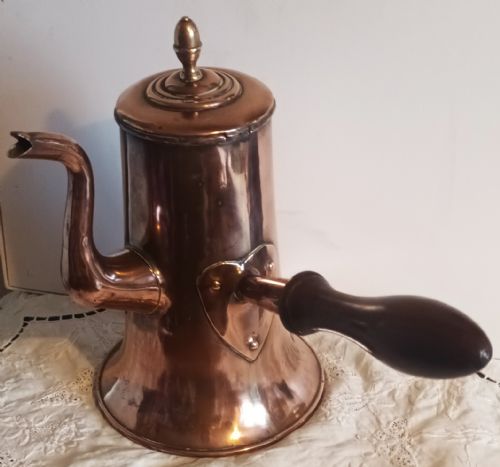
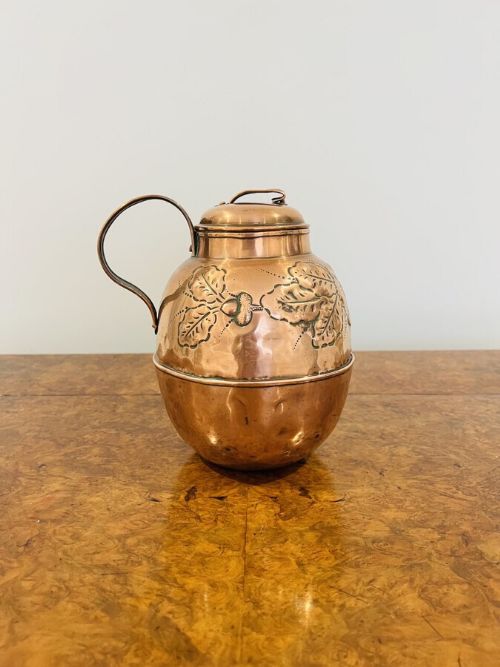
The selections on this page unite utilitarian copper milk jugs and ale containers with historic pewter flagons and measures. These pieces originate from English and Irish workshops, showing the varied scales from two-pint jugs to full gallon capacities.
How they were made
Maker's hands formed these objects using copper and pewter, metals chosen for their malleability and capacity to hold liquids securely. Artisans shaped sheet copper and cast pewter into substantial walls, reinforcing rims and bases for daily use.
Vessels display the construction hallmarks of their period, with joined seams and applied handles that demonstrate traditional metalworking competence. The resulting surfaces reveal the natural tones of aged copper and the dull sheen of historic pewter.
Retail Price Guide 2026
Typical UK retail prices for metal pitcher, calculated from the Sellingantiques database of over a million retail prices indexed since 2003. This retail price guide relies exclusively on Sellingantiques data; no external sources or auction records are used, so the figures do not describe the wider market.
Listings feature copper and pewter materials spanning the Georgian and Victorian periods, including flagons and measures.
What varies in quality
The distinction between ordinary vessels and superior examples rests in the heft of the metal and the integrity of the form. Outstanding pieces maintain balanced proportions and crisp casting or forming, while lesser items show undue thinning or clumsy repairs.
Evidence of original capacity marks and untouched surfaces elevate a piece above standard utility ware. The presence of identifiable maker details adds considerable historic interest to the physical object.
John Heaney of Dublin
The Antique Metal Pitcher Glossary
- Flagon
- A large vessel with a handle and spout, often used for ecclesiastical or ceremonial purposes. These containers frequently hold substantial volumes of liquid.
- Measure
- A standardised vessel employed to gauge and dispense exact quantities of ale or other liquids. Gallon measures represent the larger scale of these utility items.
- Georgian
- The period spanning the reigns of the four King Georges, characterised by distinct design conventions. Pieces from this era often display robust proportions and restrained ornamentation.
- Victorian
- The period covering the reign of Queen Victoria, marked by varied manufacturing output. Metalware from this time demonstrates both industrial capability and traditional form.
Frequently Asked Questions
What is a pewter measure?
A pewter measure is a heavy, standardised container designed to hold precise volumes of liquid such as ale for trade or domestic service.
These vessels possess thick walls to withstand the rigours of busy taverns and households, often featuring official verification stamps.
How do I clean an antique copper jug?
You should generally preserve the natural aged patina rather than polishing the copper to a bright shine. Gentle dusting and occasional soft cleaning protect the historic surface.
Harsh chemical cleaners strip away the aged character that centuries of handling have created on the metal.
Were church flagons used for daily dining?
Church flagons served specific liturgical functions, such as holding sacramental wine during religious services. Their large scale and formal associations separate them from everyday domestic jugs.
Some bear inscriptions or maker details connecting them directly to ecclesiastical history.
How can I tell a Georgian copper jug apart?
Georgian copper jugs display specific construction traits and material thickness associated with eighteenth-century workshops. Their handle attachments and overall heft reflect the manufacturing methods of that era.
Comparing the proportions against documented examples helps confirm the period of origin.