
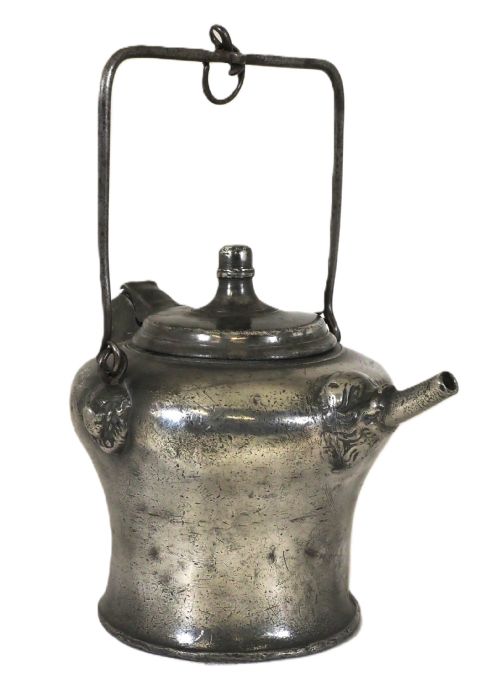

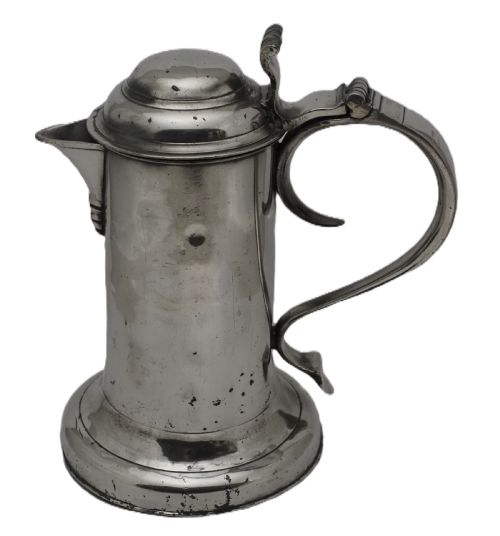


Antique Pewter Jug
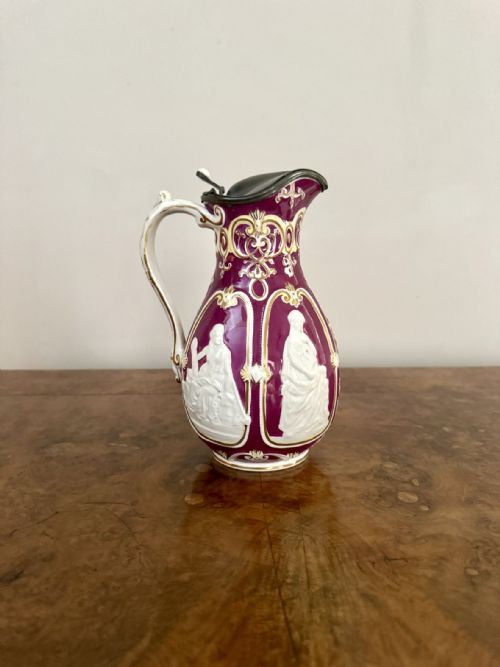
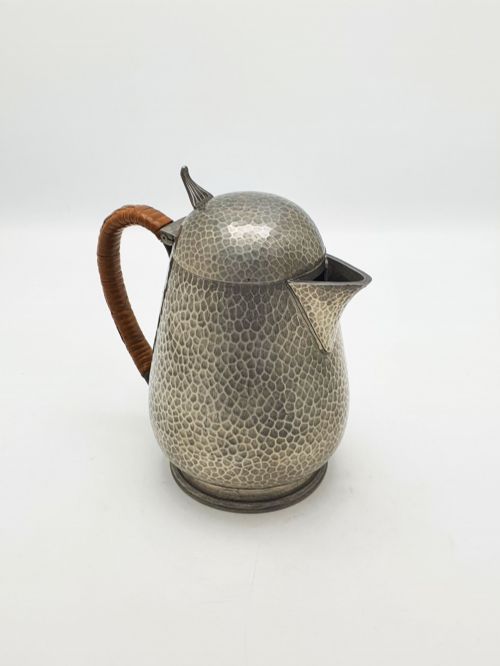
An antique pewter jug brings centuries of tavern life, church service and domestic utility straight to a modern table.
What these pieces are
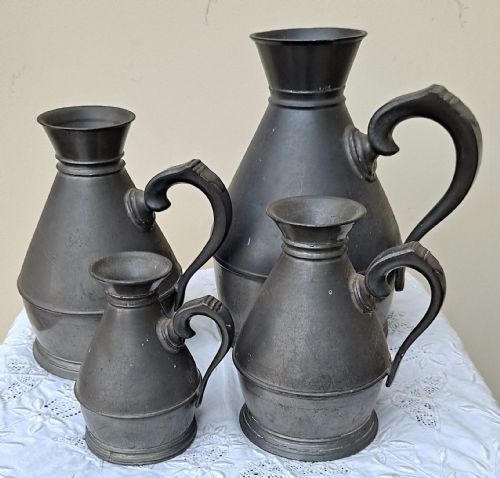
Buyers regularly encounter regional capacities such as the Jersey noggin or quart measures alongside English and Irish tavern vessels. These forms chart the evolution of liquid measurement and social drinking customs over successive generations.
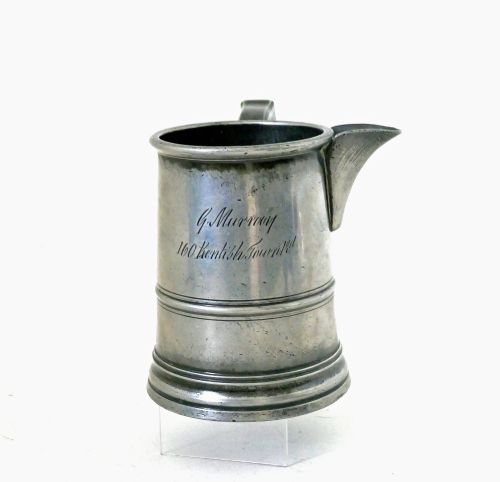
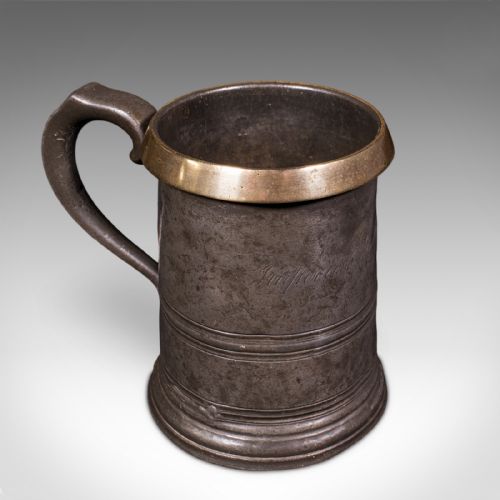
The selection reflects both domestic table use and commercial public house service, carrying engraved tavern names, capacity verifications and maker marks. Each vessel preserves the practical metalware traditions of its specific period.
How they were made
The pieces are formed from pewter, an alloy primarily consisting of tin mixed with lead, copper or antimony to provide rigidity. Makers shaped the metal through casting, hammering and soldering the component parts together to achieve durable vessels.
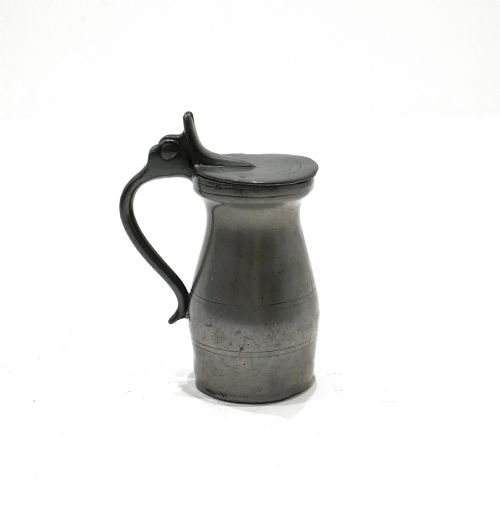
Handles, lids and thumbpieces were cast separately before being attached to the main body, while touchmarks and capacity stamps were struck directly into the soft metal surface using steel punches.
Retail Price Guide 2026
Typical UK retail prices for pewter jug, calculated from the Sellingantiques database of over a million retail prices indexed since 2003. This retail price guide relies exclusively on Sellingantiques data; no external sources or auction records are used, so the figures do not describe the wider market.
Some tavern jugs bear the names of vanished public houses like the Three Pidgeons and the Green Dragon, whispering of old ale and roadside fires.
What varies in quality
Quality rests upon the crispness of touchmarks, the integrity of original soldering and the survival of distinct regional forms without excessive wear. Pieces bearing legible maker details or specific tavern provenance command greater interest than anonymous examples.
The balance of the vessel, the weight of the metal and the subtlety of touchmark stamps distinguish superior workshop production from standard utilitarian output.
John Heaney·John De St Croix
The Antique Pewter Jug Glossary
- Pewter
- A malleable metal alloy primarily composed of tin, historically used for tableware, drinking vessels and church plate. Its soft nature allows for detailed casting and stamping.
- Flagon
- A large vessel with a handle and lid, historically used for holding liquids such as wine or beer during church services or formal meals. Many surviving examples originate from ecclesiastical contexts.
- Measure
- A standardised vessel utilised for selling and serving liquids by volume in public houses and taverns. Capacities range from small gills to large gallons, often verified by government touchmarks.
- Touchmark
- A personalized stamp or hallmark struck into pewter by a master maker or guild to indicate origin and standard of metal purity. These marks serve as primary evidence for dating and attribution.
Frequently Asked Questions
What is an antique pewter jug used for?
These vessels originally served to measure, transport and pour ales, spirits and water in domestic and tavern settings. Church flagons held wine for ecclesiastical services.
Today, collectors use them as decorative mantel displays, flower vases or centerpieces that showcase historic metalwork.
How do I clean an antique pewter jug?
Pewter requires gentle cleaning with mild soap and warm water followed by immediate drying with a soft cloth to prevent spotting. Harsh metal polishes strip away the historic dark oxidation and should be avoided.
Maintaining the natural surface preserves both the aesthetic character and the historical value of the metal.
How can I tell the age of a pewter jug?
Age is determined by studying the form of the body, the style of the handle, the presence of lidded thumbpieces and any touchmarks left by the maker. Eighteenth-century examples often feature flat lids and capacity stamps, while Victorian pieces show imperial verification marks.
Comparing construction techniques with dated examples in historical archives confirms the era of manufacture.
Are pewter jugs safe to use for drinks?
Older pewter often contains lead, which can leach into acidic or alcoholic beverages over time. It is safer to keep antique vessels for display rather than daily consumption.
Modern decorative use avoids any potential chemical transfer from historical alloy compositions.