


Pewter Pub Measure
A pewter pub measure is a sturdy vessel used to pour and serve drinks in taverns, prized by collectors for its honest metal and tavern history.
Pewter Pub Measure
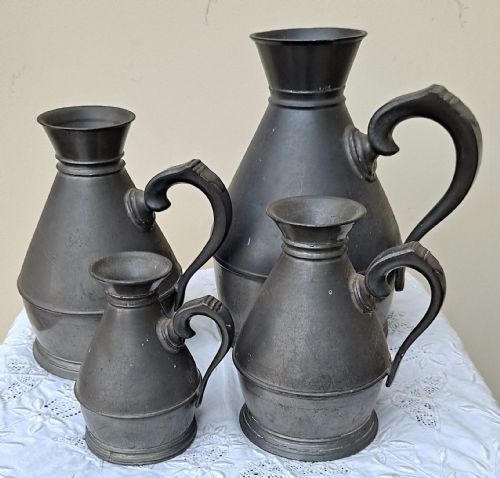
A pewter pub measure serves as the classic tavern vessel for pouring and serving drinks, found across the eighteenth and nineteenth centuries. Buyers searching for a pewter pub measure look for tangible pieces of public house history originating from English and Irish makers.
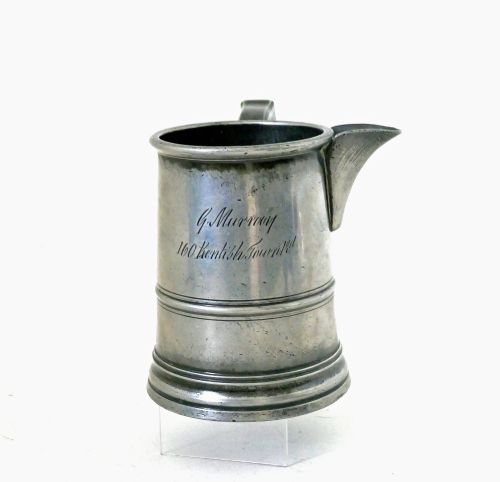
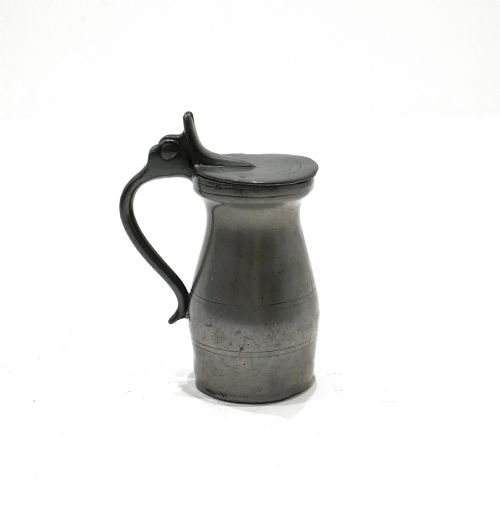
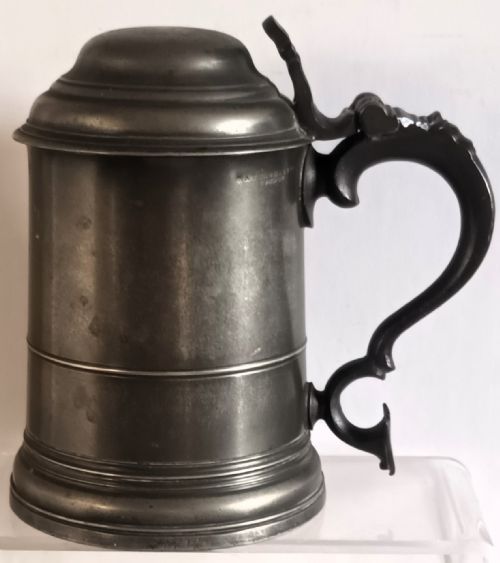
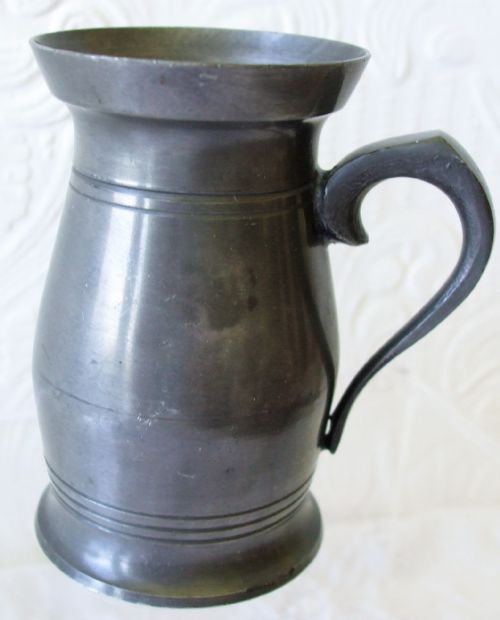
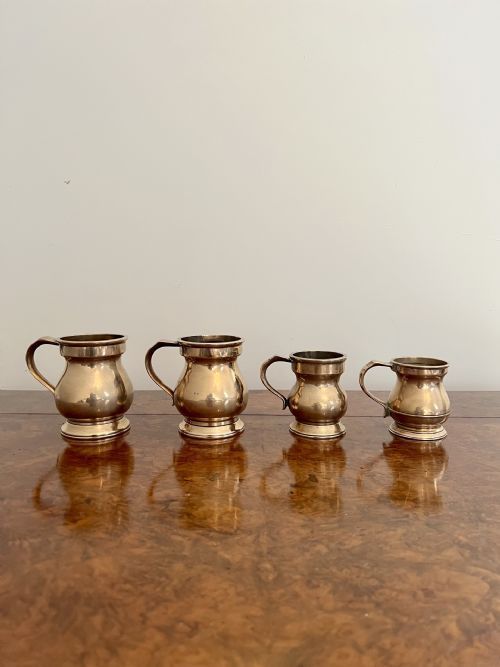
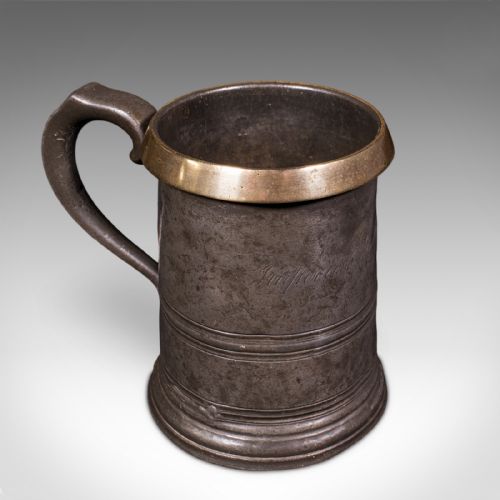
The versions most commonly met on this page include quart tankards, half gill spirit measures, and distinctive haystack shapes. These items range from simple tavern jugs to sets of marked measures bearing royal ciphers and tavern names.
Forms span from flat lidded early pieces to bell shaped tankards and spire flagons. Each object reflects the daily trade of the public house rather than formal dining room display.
Materials and Making
These pieces are fashioned primarily from pewter, a durable alloy of tin combined with lead or other metals to achieve a workable and weighty body. Brass is also utilised for specific components such as handle attachments or reinforcing bands.
The construction relies on traditional casting and soldering techniques appropriate for vessels meant to withstand heavy daily use in busy taverns. Metal is worked into flat lids, tall spires, and curved bell bodies designed to hold exact liquid capacities.
Some measures carry the names of specific nineteenth century inns and the landlords who poured the ale.
Distinguishing Quality
The distinction between standard tavern utility pieces and finer examples rests upon the clarity of maker marks, touchmarks, and royal verification stamps. Clear stamps naming specific founders or inns elevate the historical interest of a vessel.
Weight and balance also set superior examples apart, as thicker gauge metal and crisp engraving indicate careful manufacture. Well preserved surfaces retain a pleasing metal skin without excessive thinning from centuries of polishing.
Watts and Harton·Frederic Sanders
The Pewter Pub Measure Glossary
- Gill
- A unit of liquid capacity equal to a quarter of a pint, commonly used for measuring spirits in taverns. Gill measures are often found in small sizes.
- Haystack
- A distinctively shaped Irish measure featuring a bulbous body resembling a stacked heap of hay. These measures are frequently encountered in graduated sets.
- Flat Lidded
- A style of vessel lid common on earlier metalware, providing a secure cover before domed and bell shapes became standard. This form appears on eighteenth century examples.
- Spire Flagon
- A tall drinking or measuring vessel featuring a pointed lid resembling a spire, built to hold large volumes such as half gallons. These represent more substantial public house forms.
- Touchmark
- An official stamp impressed into the metal by a maker or guild to guarantee the alloy standard. These marks help identify the workshop of origin.
Pewter Pub Measure: Frequently Asked Questions
How do I know the capacity?
Capacity is often indicated by touchmarks, imperial stamps, or physical size categories such as gill, pint, or quart. Many pieces bear official verification marks denoting their exact legal volume for public house trade.
Larger vessels like flagons and quart tankards served bulk pouring, while smaller measures dispensed individual spirits to customers.
Were these used in homes?
These vessels were made primarily for commercial public house use rather than domestic dining tables. They handled the daily flow of ale, beer, and spirits in busy taverns and inns.
Over time, retired pub equipment found its way into private collections as public house interiors and serving standards evolved.
How should I clean pewter?
Pewter requires gentle cleaning with warm soapy water and a soft cloth to preserve its historic surface. Avoid harsh abrasive compounds that can remove patination and wear down touchmarks.
Leaving a natural, dull metal finish is generally preferred by collectors over achieving a bright mirror shine.
What is a haystack measure?
A haystack measure is an Irish style of pewter vessel with a curved, swelling body reminiscent of agricultural haystacks. They were produced in graded sets for measuring public house liquids.
Their distinctive silhouette makes them easily recognisable among nineteenth century tavern metalware.