


Pewter Tavern Measure
Pewter tavern measures are honest working vessels of metal alloy, collected for their heavy weight and enduring tavern history.
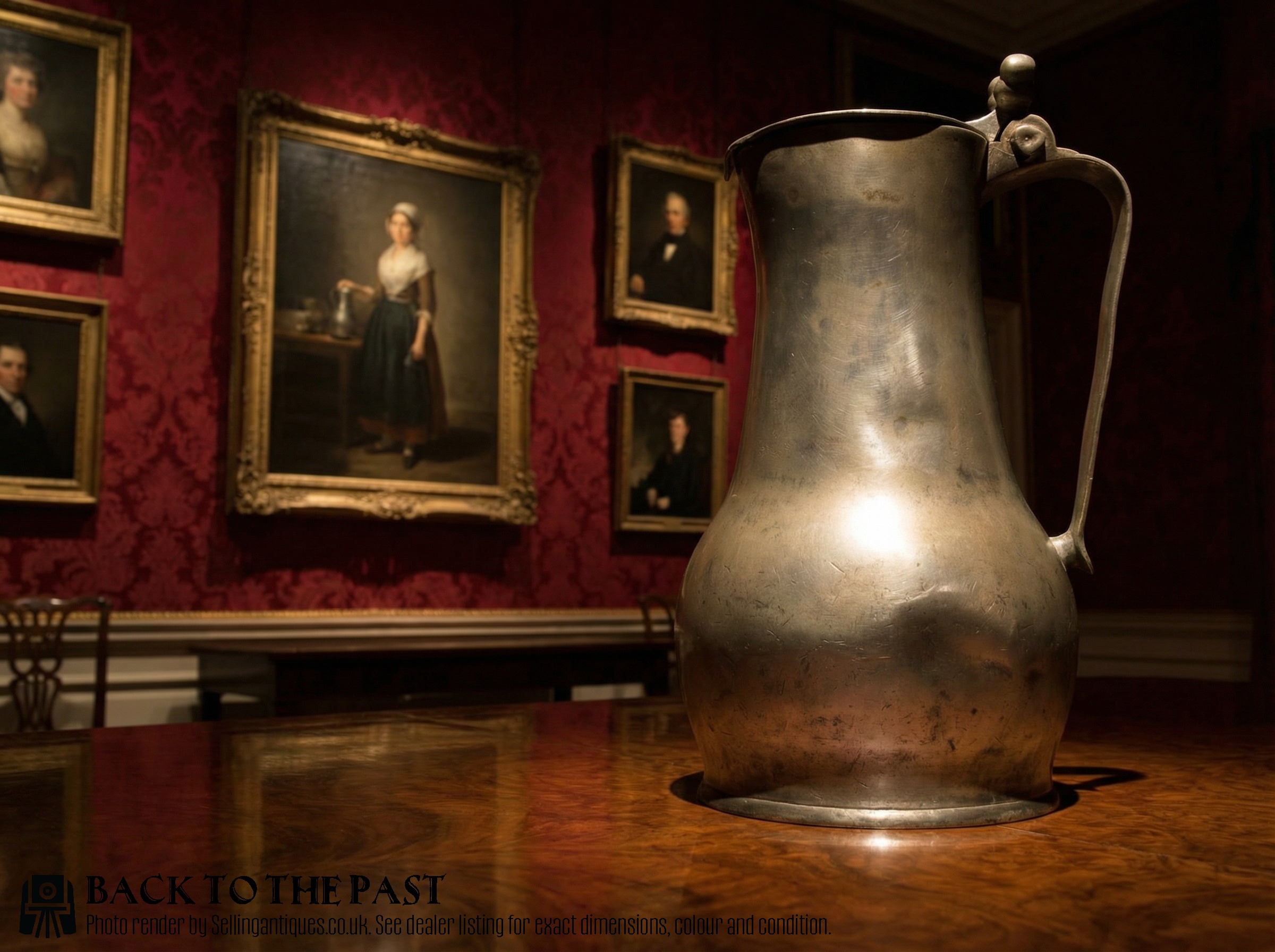
Pewter Tavern Measure
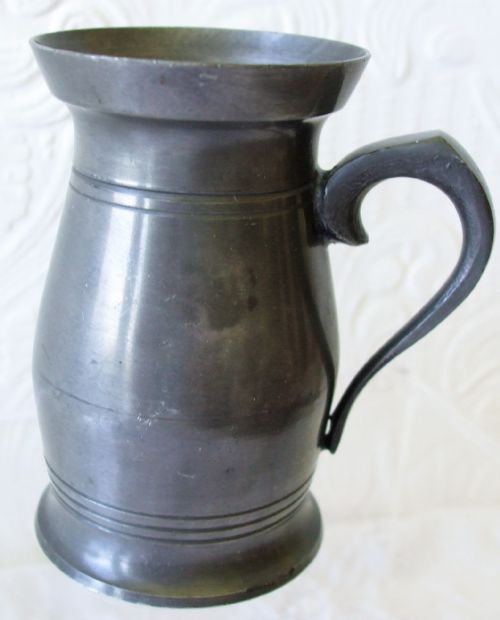
A pewter tavern measure is a sturdy vessel made for serving and pouring ale, wine, or spirits in public houses and domestic settings.
You will most frequently meet 19th-century Victorian examples on this page, alongside earlier Georgian forms from English, Scottish, and Irish makers.
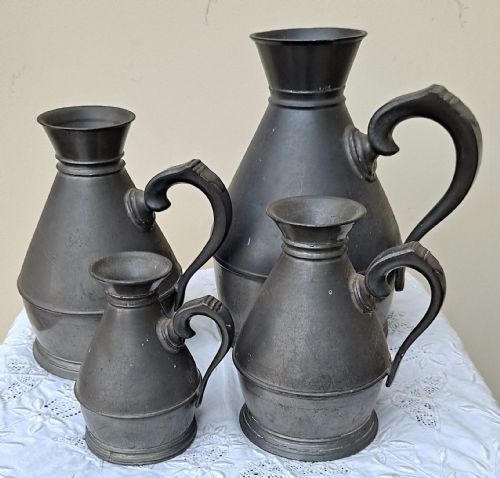
The selection ranges from small half-pint and gill capacities up to large quart and gallon ale jugs and lidded flagons.
How they were made
These items are constructed primarily from pewter alloy, often shaped into bell profiles, haystack forms, or tappit hens.
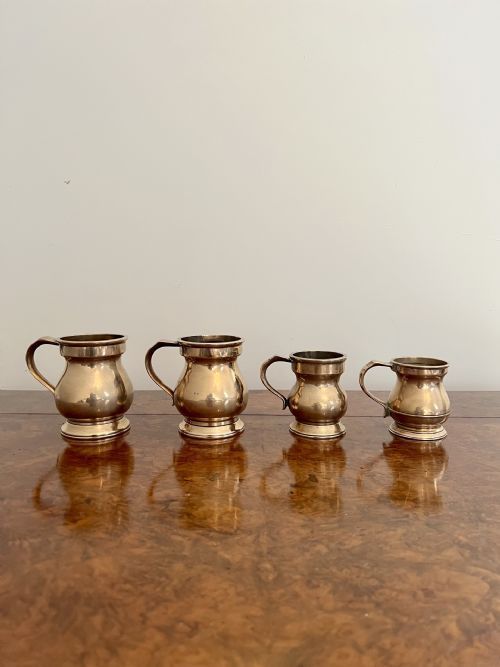
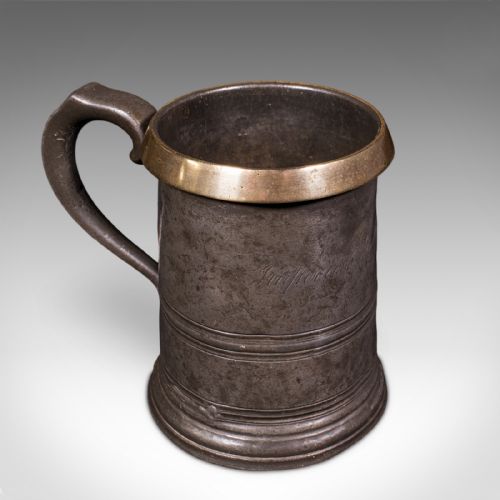
Certain pieces incorporate brass elements, particularly in handles, rims, or verification stamps applied by inspectors.
Regional British and Irish variations include Jersey measures, Scottish tappit hens, and Irish haystack sets.
What varies in quality
The degree of preservation in the soft metal alloy determines the clarity of maker marks, capacity stamps, and royal ciphers like the VR mark.
Completeness alters desirability, particularly when sets remain together, such as matched groups of four haystack measures or bell-shaped tankards.
Frederic Sanders·Thomas Phillips I·John De St Croix
The Pewter Tavern Measure Glossary
- Pewter
- A malleable metal alloy consisting principally of tin, combined with copper, antimony, or lead. This traditional composition gives tavern measures their characteristic dull grey lustre and soft tactility.
- Tappit Hen
- A traditional Scottish form of lidded pewter measure with a distinctive knob on the lid resembling a nesting hen. These sizeable vessels typically held specific regional volumes such as the Scots pint.
- Haystack measure
- A distinctively curved Irish pewter measure shaped with a bulging body and narrow neck, resembling a traditional hayrick. They are frequently found in graduated sets.
- Imperial measure
- A standardised volume standard introduced in Britain to regulate commercial trade. Measures bearing these capacity stamps guaranteed accurate pouring in public houses.
- Flagons
- Large, heavy-lidded metal vessels used for holding and pouring bulk liquids. Georgian examples often feature flat lids and sturdy thumbpieces.
Pewter Tavern Measure: Frequently Asked Questions
What are pewter tavern measures?
Pewter tavern measures are historical drinking vessels produced in specific capacities to serve alcohol in inns, pubs, and homes.
They span various centuries and regions, reflecting strict historical standards for public pouring.
How were tavern measures used?
Publicans utilised these vessels to measure and serve ale, wine, and spirits directly to patrons across the bar.
Larger formats like gallon jugs transported bulk liquids, while smaller gill and pint sizes served individual drinkers.
How do I identify periods?
Period identification relies on vessel silhouettes, such as the flat lids of Georgian flagons versus the bulbous curves of Victorian shapes.
Maker stamps, touchmarks, and royal verification ciphers provide further chronological markers.
How should I display them?
These metal vessels suit open shelving or dresser displays where their soft alloy surfaces catch ambient light.
Keep them away from damp environments to preserve the historic finish of the pewter.