


Victorian Pewter Tankard
A Victorian pewter tankard brings heavy tavern metal and pub history straight to the modern table.
What They Are
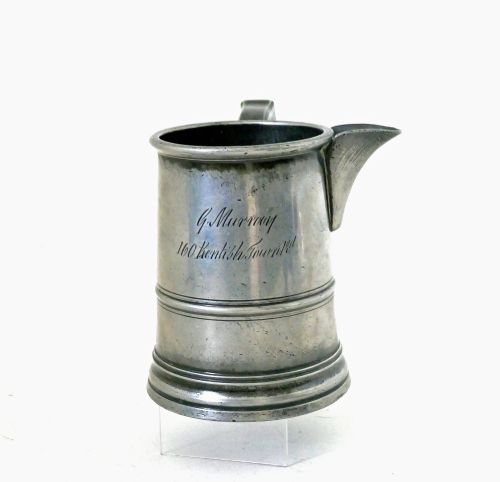
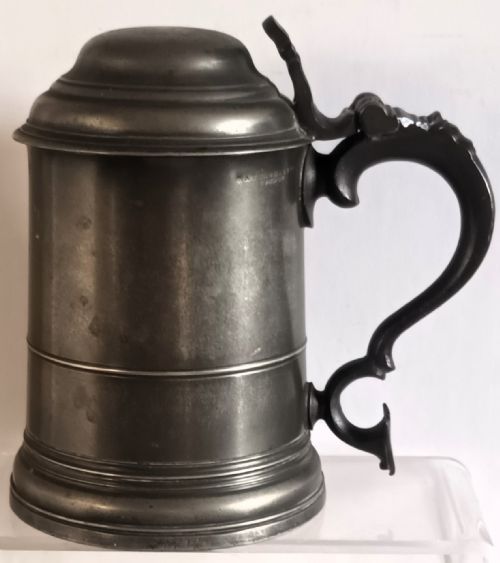
A victorian pewter tankard is a traditional drinking vessel usually formed with a sturdy metal body designed for heavy daily service in public houses. The examples found here span the nineteenth century, including English quart concave mugs, lidded measures, and German masonic flagons.
Most pieces on this page appear as quart jugs, public house tankards, or imperial half pint lidded measures marked with VR. These drinking vessels trace their origins directly to nineteenth century taverns and domestic ale consumption.
The collection also incorporates regional variations such as German masonic lidded pewter tankards alongside standard English pubware. Buyers frequently encounter standard capacity measures designed for public house service during the Victorian era.
How They Were Made
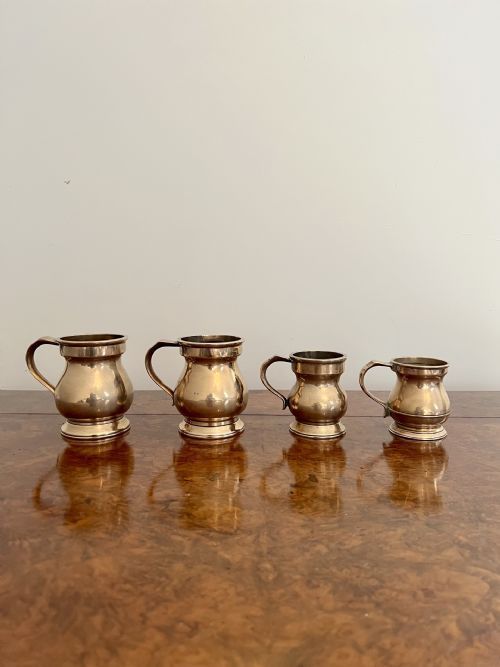
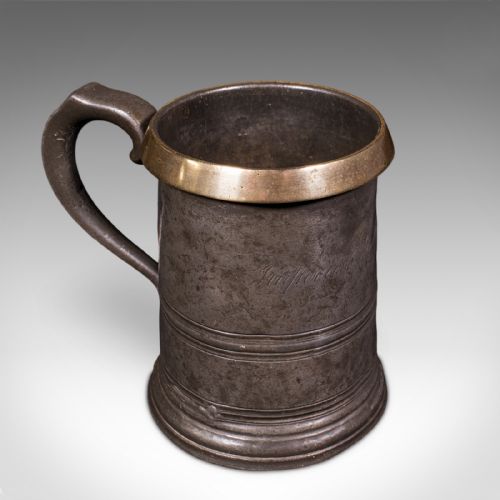
These items are constructed primarily from pewter, a durable metal alloy that was shaped into cylindrical forms and mugs. Selected pieces integrate complementary materials like wood and brass to form handles, bases, or decorative accents.
Maker marks, capacity stamps such as quart, and royal ciphers like VR were punched directly into the metal surface using traditional workshop tools. Lidded measures feature hinged covers fitted securely to the main body for containing ale.
Retail Price Guide 2026
Typical UK retail prices for victorian pewter tankard, calculated from the Sellingantiques database of over a million retail prices indexed since 2003. This retail price guide relies exclusively on Sellingantiques data; no external sources or auction records are used, so the figures do not describe the wider market.
Some nineteenth century drinkers insisted on heavy lidded tankards primarily to keep pub flies away from their sweet ale.
What Varies in Quality
Quality separates standard public house workhorses from superior presentation pieces through the crispness of maker stamps and the weight of the metal. Clear touchmarks from established foundries elevate a piece above unmarked tavern utility items.
The integrity of construction, particularly where handles join the main body and hinges operate on lidded measures, defines the better examples. Fine proportions and unblemished metal surfaces distinguish exceptional nineteenth century vessels from heavily battered survivors.
Watts and Harton
The Victorian Pewter Tankard Glossary
- Pewter
- A malleable metal alloy composed chiefly of tin historically utilised for domestic vessels and tavern measures. It develops a soft dull patina with age.
- Quart
- A traditional imperial capacity measurement equivalent to two pints, frequently stamped onto large public house drinking vessels. Quart mugs represent a standard size for nineteenth century ale consumption.
- VR
- The royal cypher standing for Victoria Regina, stamped on weights and measures to signify government verification during the Victorian period. These inspection marks authenticate period use.
- Measure
- A regulated drinking vessel or jug certified for selling exact quantities of liquid in public houses. Measures often feature lidded designs or precise calibrated lines.
- Concave
- A curved inward profile characteristic of specific nineteenth century mug forms designed for comfortable gripping. This silhouette defines many standard tavern tankards.
Frequently Asked Questions
What is a victorian pewter tankard?
A victorian pewter tankard is a nineteenth century drinking vessel made from metal alloy, historically used for serving ale in public houses and taverns. These pieces include quart concave mugs and lidded measures.
Many examples feature official touchmarks or capacity stamps indicating their original commercial use in British pubs.
How do I clean my tankard?
Clean pewter gently with warm soapy water and a soft cloth to preserve the historic surface and patina. Avoid abrasive metal polishes that can remove original tool marks and stamps.
Dry the vessel thoroughly after washing to prevent water spotting on the metal.
Were these tankards used in pubs?
Most pieces listed here served as functional vessels in nineteenth century public houses, inns, and taverns. Their heavy metal construction was designed to withstand daily commercial service.
Capacity stamps and royal ciphers confirm their role as regulated measures for ale and beer.
What do VR stamps mean?
The VR stamp stands for Victoria Regina, indicating that the vessel was officially inspected and verified for trade use during the Victorian era. These verification marks guarantee period authenticity.
Such stamps are typically found near the rim or handle of public house measures.
Can I still drink from them?
Historic pewter often contains lead, making modern consumption from antique tavern vessels generally inadvisable for daily use. Most collectors prefer to display these items as historical display pieces.
Enjoy them as sculptural reminders of nineteenth century metalwork and pub heritage.