
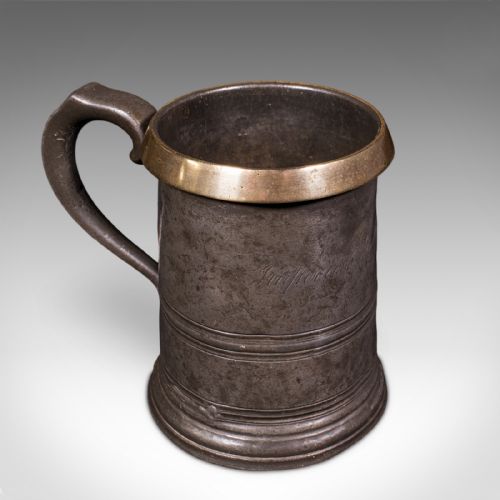


Antique Pewter Mug
An antique pewter mug brings robust tavern character to a shelf, offering a tactile connection to historic drinking customs.
What an antique pewter mug is
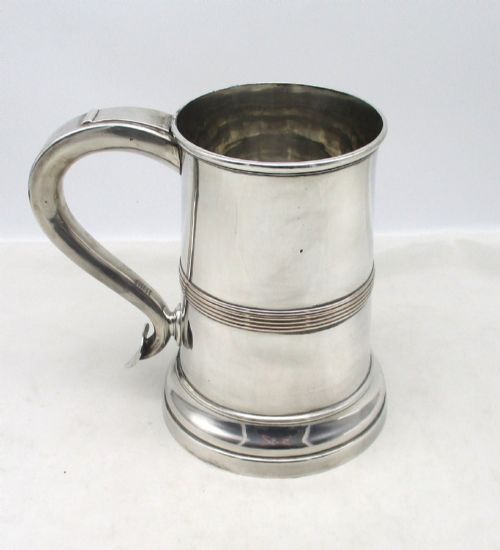
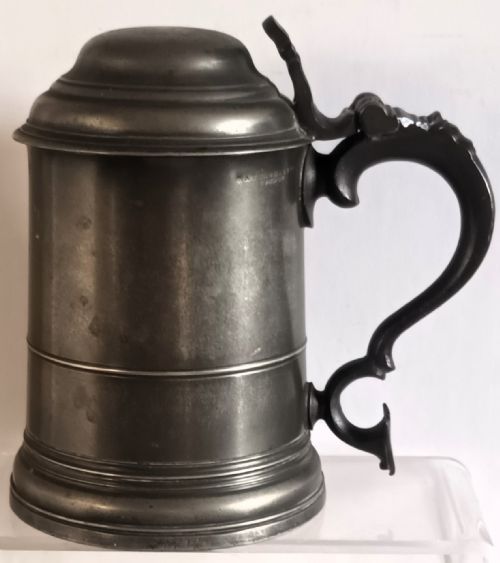
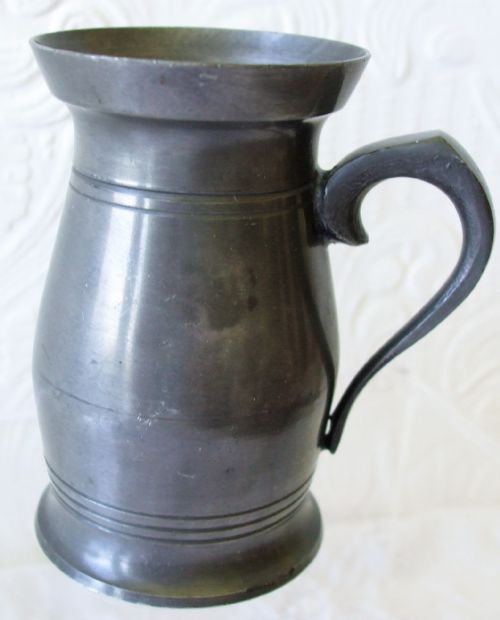
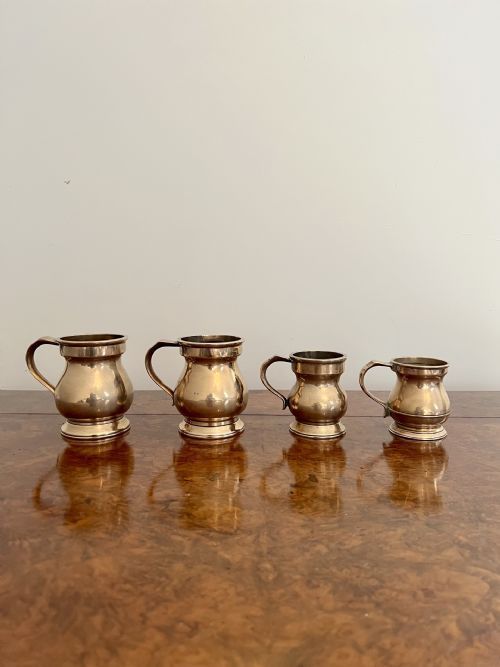
An antique pewter mug is a durable vessel designed for daily drinking, most commonly encountered here in quart, pint, and smaller tavern formats from the Georgian and Victorian periods. These pieces include straight-sided or concave profiles, sometimes fitted with dome lids, and frequently carry touchmarks or tavern engravings.
The material gives these drinking vessels a satisfying weight and a muted metallic lustre that sets them apart from ceramic or glass drinkware. Buyers find both simple domestic examples and pieces marked with public house names or maker details.
Most items on this page date from the eighteenth and nineteenth centuries, reflecting the widespread use of pewter in British public houses and domestic settings before the mass production of cheap ceramics and glass took over.
How they were made
These vessels are primarily formed from pewter, an alloy consisting chiefly of tin mixed with varying proportions of lead, copper, or antimony to achieve stability and a suitable melting point. Wood and brass elements appear occasionally, particularly in handles or applied decorative mounts.
Makers shaped the metal by casting components in moulds and soldering them together, often finishing the surface on a lathe to create smooth walls and clean rims. Handles were cast separately and firmly soldered to the body, while touchmarks were stamped directly into the metal.
Retail Price Guide 2026
Typical UK retail prices for pewter mug, calculated from the Sellingantiques database of over a million retail prices indexed since 2003. This retail price guide relies exclusively on Sellingantiques data; no external sources or auction records are used, so the figures do not describe the wider market.
Some public house mugs carry the scars of thirsty patrons, bearing deep thumb dents where centuries of hands lifted them for a pint.
What varies in quality
The distinction between standard domestic items and finer pieces lies in the crispness of the casting, the proportion of tin, and the clarity of maker touchmarks. Heavier walls and well-balanced handles indicate a higher standard of manufacture.
Pieces carrying clear touchmarks from documented makers command greater interest among collectors because they allow for precise dating and geographic attribution. Original tavern provenance or surviving ownership inscriptions also add historical depth to individual pieces.
Watts & Harton·Burgum & Catcott·Thomas Dean Alderson·Susannah Cocks·Joseph Austen·James Yates·M Alderson·Gaskell & Chambers·Villers & Wilkes·Yates & Birch
The Antique Pewter Mug Glossary
- Pewter
- A malleable metal alloy traditionally composed of tin combined with copper, lead, or bismuth. It develops a dark grey patina over centuries of handling.
- Quart
- An old capacity measurement equivalent to two pints, commonly found on large tavern mugs and tankards. Quart mugs are substantially heavier than pint versions.
- Concave
- A profile shape where the sides curve inwards towards the centre of the mug. This silhouette is typical of many nineteenth-century tavern vessels.
- Touchmark
- A stamped maker mark pressed into the pewter surface to identify the workshop or guild member. These serve as primary evidence for attribution.
- Breweriana
- Collectable items associated with the brewing and serving of beer, including public house mugs and tavern measure jugs.
Frequently Asked Questions
What is an antique pewter mug?
An antique pewter mug is a historic drinking vessel, typically holding a pint or quart, made from a tin alloy and used in homes and public houses.
These pieces span the Georgian and Victorian eras, offering a tangible link to past social habits and tavern life.
Were pewter mugs used in pubs?
Many surviving tavern mugs were heavily used in public houses, sometimes stamped with the names of specific inns or local hostelries.
Their robust construction made them ideal for the rough and tumble of daily service before glass became the dominant material.
How do I clean antique pewter?
Cleaning should be kept to a minimum to preserve the dark grey surface oxidation and historical patina valued by collectors.
Warm water and mild soap are sufficient for removing dust, avoiding harsh metal polishes that strip away age.