

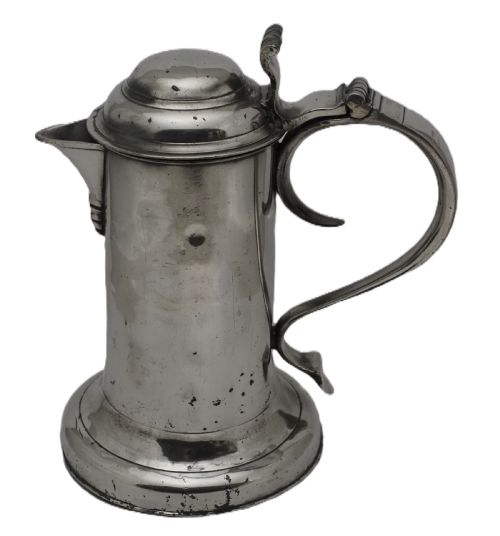


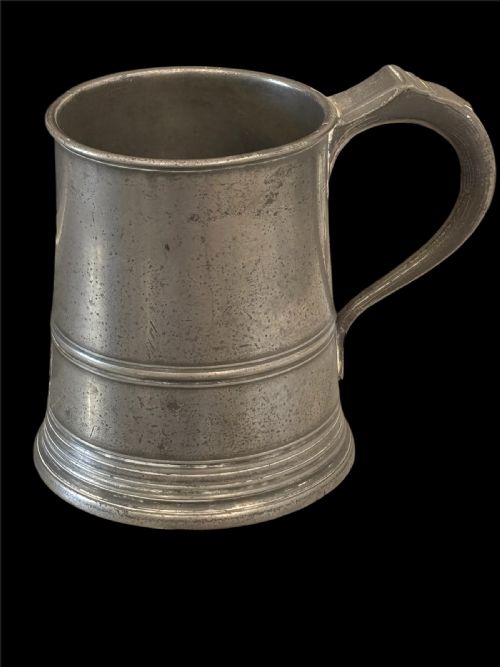
Georgian Pewter Tankard
A georgian pewter tankard brings heavy, honest tavern metalwork and domestic capacity right to your hands.
Georgian Pewter Tankard
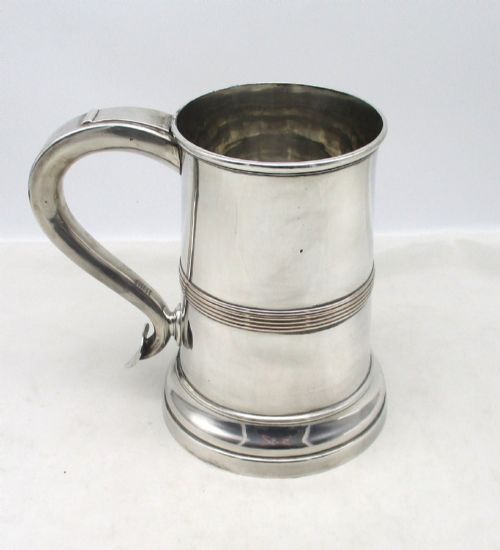
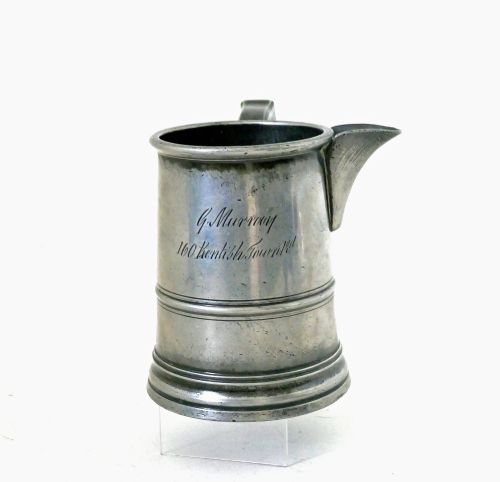
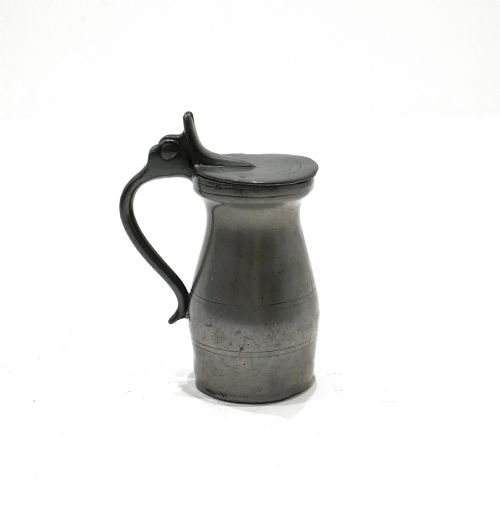
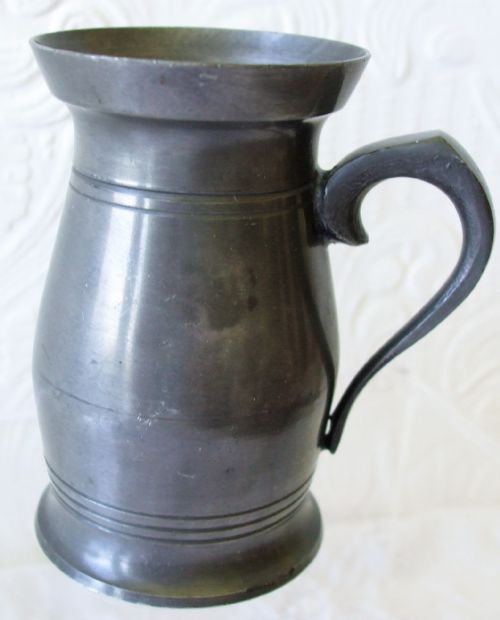
A georgian pewter tankard is a drinking vessel or measure used in homes and alehouses across the eighteenth and nineteenth centuries. The pieces on this page span the eighteenth and nineteenth centuries, including items designated as Georgian, and take forms such as tankards, flagons, ale jugs, spirit measures, and tappit hens.
Most examples originate from English, Irish, Scottish, Jersey, and Guernsey makers. Buyers will encounter both lidded and unlidded forms, ranging from small half gill spirit measures up to quart and half gallon flagons.
How they were made
These items are constructed primarily from pewter, alongside pieces in old Sheffield plate, copper, silver, silver plate, and salt-glazed stoneware. Makers cast the metal in moulds and finished the bodies with soldered joints, applied handles, and hinged flat or dome lids.
Engraving and maker touchmarks often decorate the surfaces, recording names, capacities, and origins such as London, Bristol, and Dublin.
An eighteenth-century Scottish pewter tappit hen carries the delightful capacity name of a Scot's pint.
What varies in quality
Quality rests upon the crispness of cast details, the structural integrity of hinges and handles, and the legibility of maker touchmarks or ownership engravings. Heavy gauge metal and scarce forms like spired flagons or crested tappit hens elevate the stature of a piece.
Original lids, untouched patination, and clear regional attributions separate standard vessels from more distinguished examples.
John Heaney of Dublin·Richard Morton·Thomas Phillips I of London·Robert Iles of London·Burgum & Catcott of Bristol·John De St Croix
The Georgian Pewter Tankard Glossary
- Pewter
- A malleable metal alloy consisting principally of tin, often combined with lead, copper, or antimony. It provides a dense, heavy substance for domestic vessels.
- Tappit hen
- A traditional Scottish pewter drinking vessel featuring a distinct lid and a bulbous body with a Scottish pint capacity. These pieces date around the late eighteenth century.
- Old Sheffield plate
- A composite material made by fusing a thin sheet of silver to a thicker copper base. It yields items that mimic solid silver while remaining robust.
- Spire flagon
- A tall pewter church flagon featuring a tapering lid reminiscent of a spire. These pieces often date from the mid-to-late eighteenth century.
- Spirit measure
- A small calibrated vessel designed for dispensing exact volumes of alcohol. Half gill and gill sizes appear frequently among these listings.
Georgian Pewter Tankard: Frequently Asked Questions
What is a georgian pewter tankard?
A georgian pewter tankard is a metal drinking vessel or measure produced during the eighteenth and early nineteenth centuries. They were utilised for serving and measuring ale, wine, and spirits in public houses and domestic settings.
These vessels feature sturdy handles, flat or domed lids, and distinct capacity markings. Their solid construction allowed them to endure heavy daily use.
How were these tankards used?
People used these vessels primarily for consuming and serving ale, beer, and spirits. Smaller versions served as precise measures for tavern patrons.
Larger flagons sometimes saw service in churches or large households for communal pouring. Their metal walls helped maintain the temperature of the drink.
How do I clean old pewter?
Old pewter requires gentle treatment to preserve its historic surface and dark grey patina. Warm soapy water and a soft cloth suffice for removing surface dust.
Harsh metal polishes and abrasive pads should be avoided entirely because they strip away the aged skin that collectors value.
How do I tell periods apart?
Periods are identified by changes in lid styles, handle shapes, and touchmark stamps. Flat lids and multi-reeded handles often point toward earlier eighteenth-century manufacture.
Dome lids and stamped imperial or pre-imperial capacity marks help separate later Georgian and nineteenth-century pieces. Maker marks provide the most direct link to specific decades.