
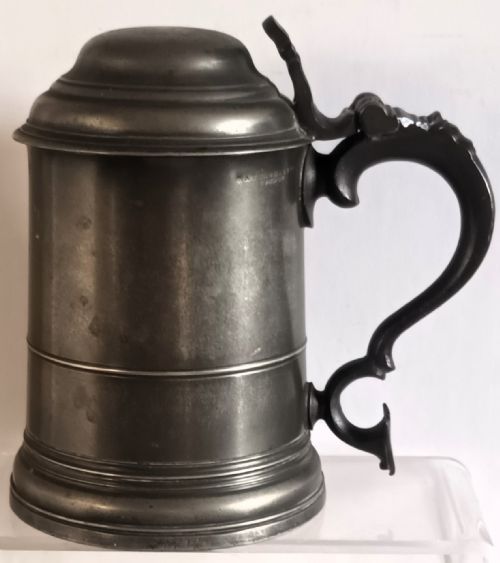


Pewter Lidded Mug
These pewter lidded mug examples combine heavy metalwork and domestic function, offering a tactile piece of drinking history.
Pewter Lidded Mug
When you search for a pewter lidded mug, you encounter drinkware designed for daily service across the eighteenth and nineteenth centuries. These vessels include quart and pint measures, flagons, tankards, and beer steins originating from English, Scottish, and German workshops.
The selection on this page leans toward nineteenth-century English quart tankards and Victorian examples, alongside eighteenth-century flat-lid flagons and German salt-glazed stonewares. Forms range from simple tapering measures to heavily decorated Arts and Crafts Celtic designs and Masonic presentation pieces.
Buyers select these items to hold historical drinking vessels that display authentic period wear and metal patination. Each piece reflects the beverage culture and tavern life of its respective era, from Georgian trading markets to Edwardian artisan guilds.
How they were made
The primary material across these listings is pewter, often paired with glass bottoms, Old Sheffield Plate, or copper elements. Makers also utilised stoneware, salt-glazed stoneware, tin-glazed earthenware, and cobalt decoration for continental European beer steins.
Construction techniques involve casting metal alloys and soldering or riveting handles and hinged lids securely to the body. Ceramic vessels rely on high-temperature kiln firing and applied salt glaze or polychrome tin-glazing.
Design execution varies from plain utilitarian surfaces intended for commercial or domestic measuring to intricate repoussé work, Celtic motifs, and incised German baroque ornament.
Listings feature items spanning the eighteenth and nineteenth centuries, incorporating pewter, stoneware, and Old Sheffield Plate.
What varies in quality
Quality rests on the crispness of maker touchmarks, the integrity of the hinged lid mechanism, and the original thickness of the metal walls. Pieces carrying documented stamps from established founders command greater attention from collectors.
The refinement of the decorative program separates standard utilitarian vessels from exceptional examples. Items designed by known artists or produced for specific markets demonstrate superior proportion, balance, and finishing detail.
Watts & Harton·Archibald Knox for Liberty & Co·Burgum & Catcott of Bristol
The Pewter Lidded Mug Glossary
- Pewter
- A malleable metal alloy consisting primarily of tin, combined with copper, lead, or antimony. It provides a dull grey finish that develops a dark surface patina over centuries.
- Flagon
- A large drinking vessel with a handle and a lid, typically used for holding ale or wine. Eighteenth-century examples often feature flat lids and capacity marks.
- Old Sheffield Plate
- A composite material formed by fusing a thin sheet of silver to a thicker copper base. It was widely used for eighteenth and nineteenth-century tableware.
- Salt-Glazed Stoneware
- Pottery fired at high temperatures where common salt is thrown into the kiln to produce a glossy, textured surface. Westerwald examples frequently utilise this technique.
- Touchmark
- An identifying stamp or hallmark impressed into metalware by the maker or guild. These marks record the workshop origin and standard of the alloy.
Pewter Lidded Mug: Frequently Asked Questions
What is a lidded measure?
A lidded measure is a vessel constructed to hold a precise volume of liquid for commercial or domestic service. The attached lid protected the contents and indicated official inspection standards.
These pieces served in taverns and households where liquid quantities required legal verification through touchmarks and capacity stamps.
How do I date a pewter mug?
Dating relies on the lid style, handle shape, and touchmarks stamped into the metal surface. Flat lids and specific thumbpiece designs generally point to earlier periods, while domed lids and glass bottoms appear later.
Maker marks cross-reference with historical trade directories to narrow the production window to specific decades.
Can I use these for drinking?
Historical metalware often contains lead or other components that make modern daily consumption impractical. Most collectors display these items as historical objects rather than functional drinkware.
Examining the interior surface and material composition clarifies whether a piece remains suitable for occasional beverage use.
What is a German stein?
A German stein is a heavy ceramic or stoneware vessel equipped with a pewter hinge and lid. They frequently feature cobalt blue salt glaze or polychrome tin-glazed earthenware decoration.
These items originated in regions like Westerwald and often incorporate historical, Masonic, or commemorative motifs.