
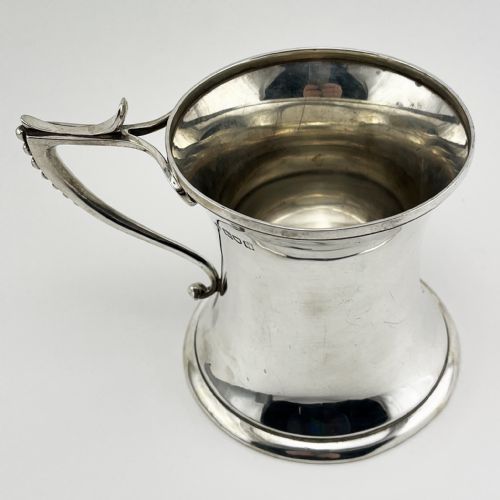
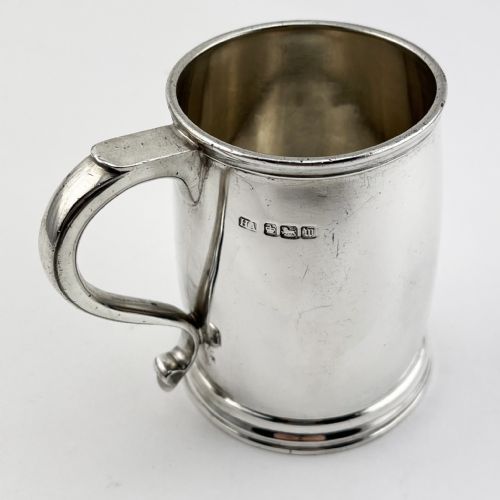


Edwardian Silver Tankard
An edwardian silver tankard brings solid weight and classic proportion to the table, uniting practical drinking vessels with the refined craftsmanship of the early twentieth century.
Edwardian Silver Tankard
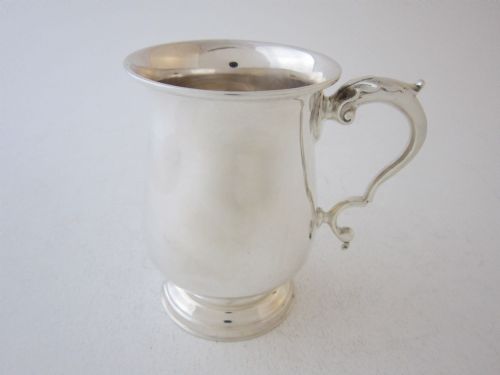
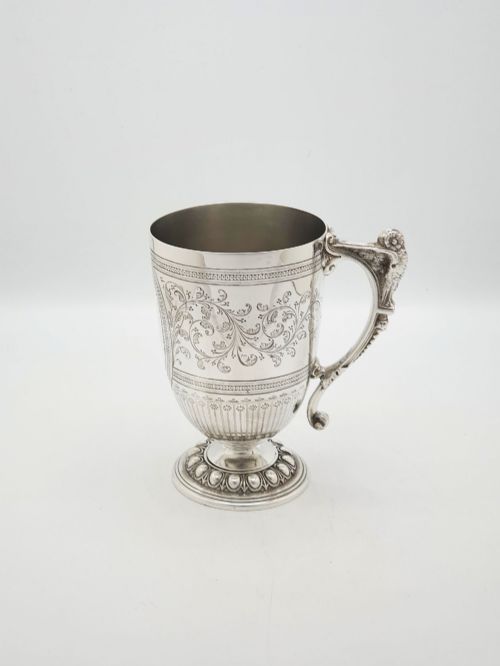
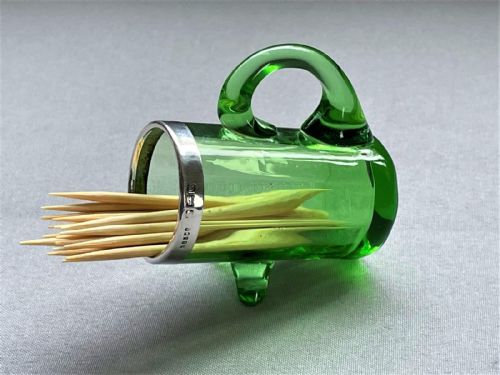
When you search for an edwardian silver tankard, you encounter sturdy drinking vessels, lidded jugs, and christening mugs dating predominantly from the Edwardian period, alongside related pieces from the late nineteenth century and the George V era. These items span traditional cylindrical forms, pint and half-pint measures, and novelty shapes such as owl handles or cut glass combinations.
The selection includes solid sterling silver alongside silver plate, electroplated nickel silver, and glass bodies with silver mounts or glass bottoms. You will find pieces bearing hallmarks from major assay offices including London, Birmingham, Sheffield, and Chester, reflecting the diverse output of the era.
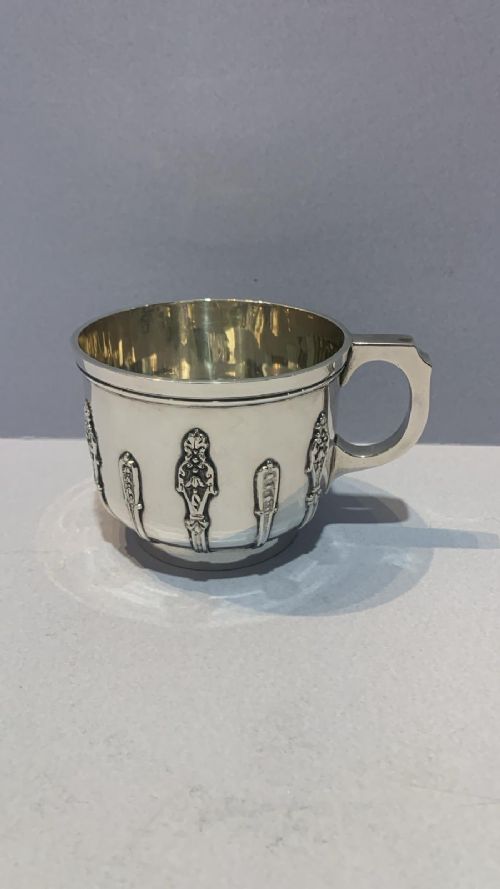
Mugs and tankards designed for children as christening gifts appear frequently alongside full-sized beer vessels and Arts and Crafts or Queen Anne revival styles. Each piece demonstrates the period's fondness for reviving earlier historical aesthetics while maintaining solid, functional forms.
Materials and construction
Makers fashioned these vessels primarily from sterling silver or silver plate over base metals like nickel silver, often incorporating clear or green cut glass bodies fitted with silver rims and handles. Solid silver pieces rely on heavy gauge metal formed into cylindrical or gently tapered bodies, finished with applied scroll handles and occasional gilt interiors.
Silversmiths utilised traditional techniques of raising, spinning, and soldering to construct the main bodies, attaching cast handles securely by hand. Lidded variants required precise hinge work and thumbpieces, while glass-bottomed or glass-bodied tankards depended on secure silver mounts to hold the materials together.
Listings feature sterling silver, silver plate, and cut glass, spanning the Edwardian period, the late nineteenth century, and George V.
Judgements of quality
The distinction between ordinary and superior pieces rests on the gauge of the metal, the crispness of the hallmarks, and the balance of the handle against the body. Heavier gauge silver provides a reassuring heft in the hand and resists dents, whereas thinner metal feels fragile and shows wear more readily.
George Ernest Hawkins·Carrington and Co·Barker Brothers
The Edwardian Silver Tankard Glossary
- Sterling silver
- An alloy containing 92.5 percent pure silver and 7.5 percent other metals, usually copper, chosen for durability in tableware. It forms the standard material for high-quality Edwardian tankards.
- Hallmark
- A series of official stamps applied to precious metals indicating the maker, purity, assay office, and year of testing. These marks provide definitive proof of a piece's age and origin.
- Tyg
- A large drinking vessel featuring multiple handles, allowing it to be passed around a group. Edwardian examples often combine cut glass bodies with solid silver mounts.
- Christening mug
- A small presentation mug, frequently handled and shaped like a miniature tankard, given to mark a child's baptism. They constitute a large share of surviving Edwardian silver drinking vessels.
- Electroplated nickel silver
- A base metal alloy of copper, nickel, and zinc coated with a layer of pure silver through electrolysis. This technique offered an affordable alternative to solid sterling silver.
Edwardian Silver Tankard: Frequently Asked Questions
What is the difference between a tankard and a mug?
Tankards traditionally feature lids and are designed for holding larger volumes of beer or ale, whereas mugs are open-topped drinking vessels.
In the Edwardian era, however, the terms were often used interchangeably by makers, particularly for smaller christening cups.
Were these silver tankards used for daily drinking?
Many solid silver and silver-plated tankards served as functional drinking vessels for beer, ale, or water during formal meals and club gatherings.
Others, particularly smaller christening mugs, served primarily as commemorative presentation pieces kept on display.
How do I care for an Edwardian silver tankard?
Regular, gentle cleaning with a specialist silver cloth removes tarnish without abrading the soft metal or wearing down the hallmarks.
Avoid harsh chemical dips, and wash pieces by hand in warm soapy water rather than placing them in a dishwasher.
How can I tell an Edwardian tankard from a Victorian one?
Assay office hallmarks provide the exact year of manufacture, allowing you to distinguish Edwardian pieces made between 1901 and 1910 from earlier Victorian work.
Stylistically, Edwardian pieces often lean towards clean Edwardian revivalism or Arts and Crafts simplicity, whilst Victorian items frequently display heavier, more elaborate ornamentation.