


Sterling Silver Christening Mug
When you handle a sterling silver christening mug, you hold a tangible piece of family history designed to mark an infant's arrival.
Sterling Silver Christening Mug
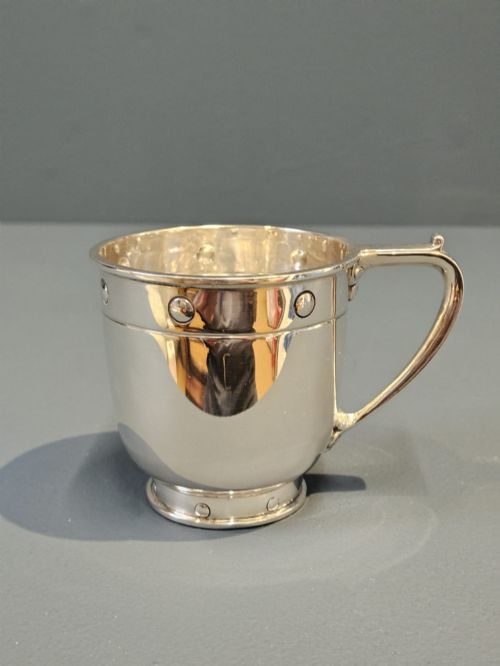
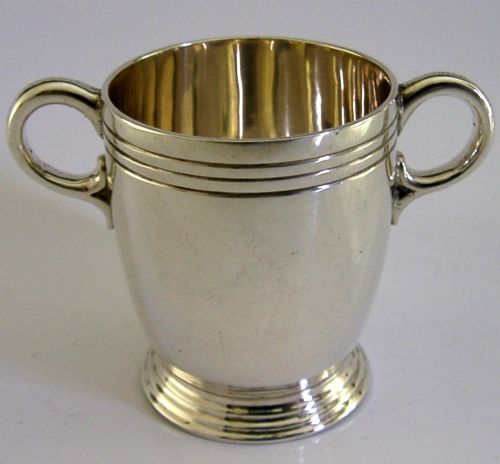
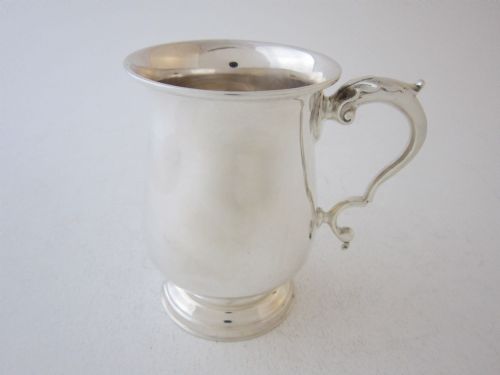
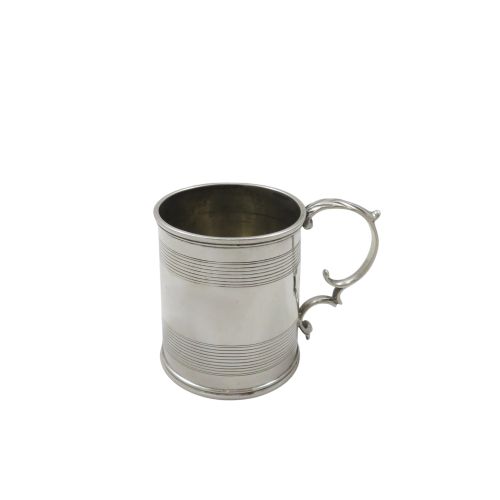
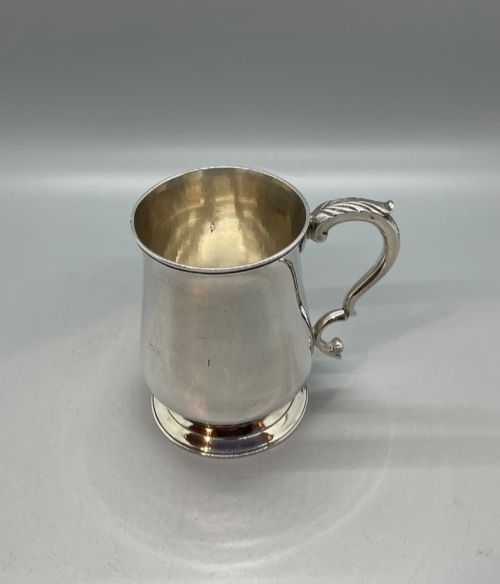
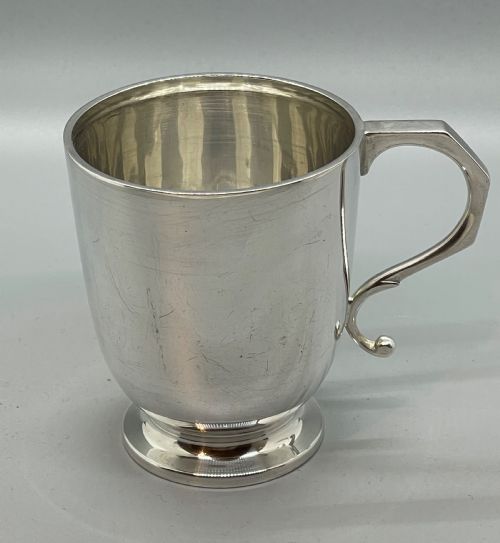
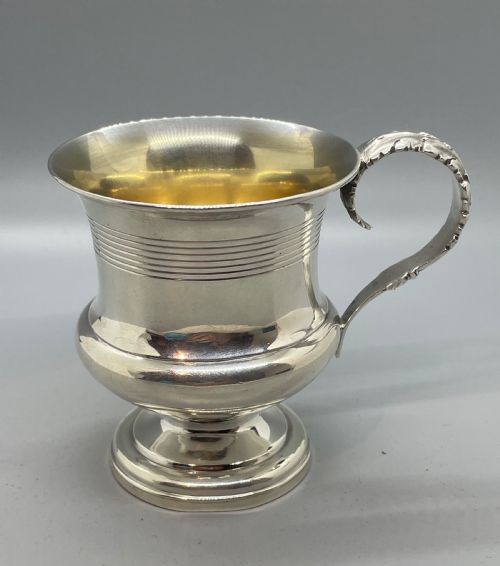
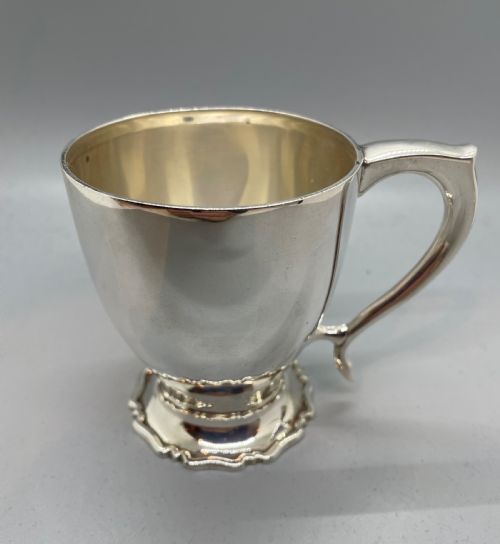
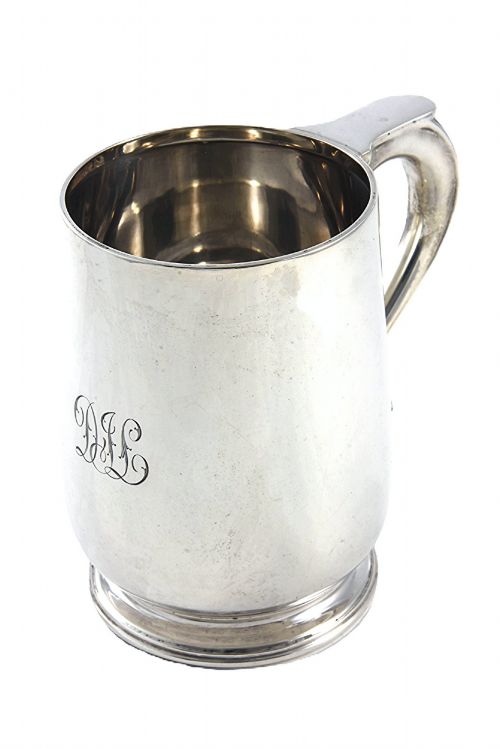
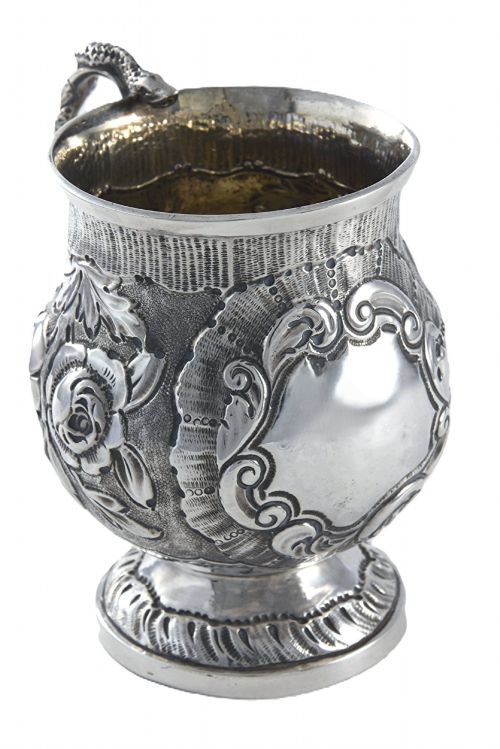
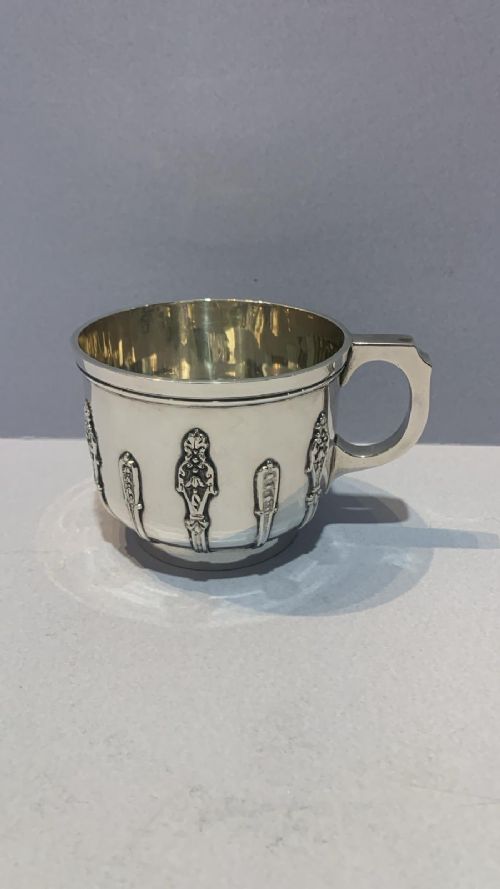
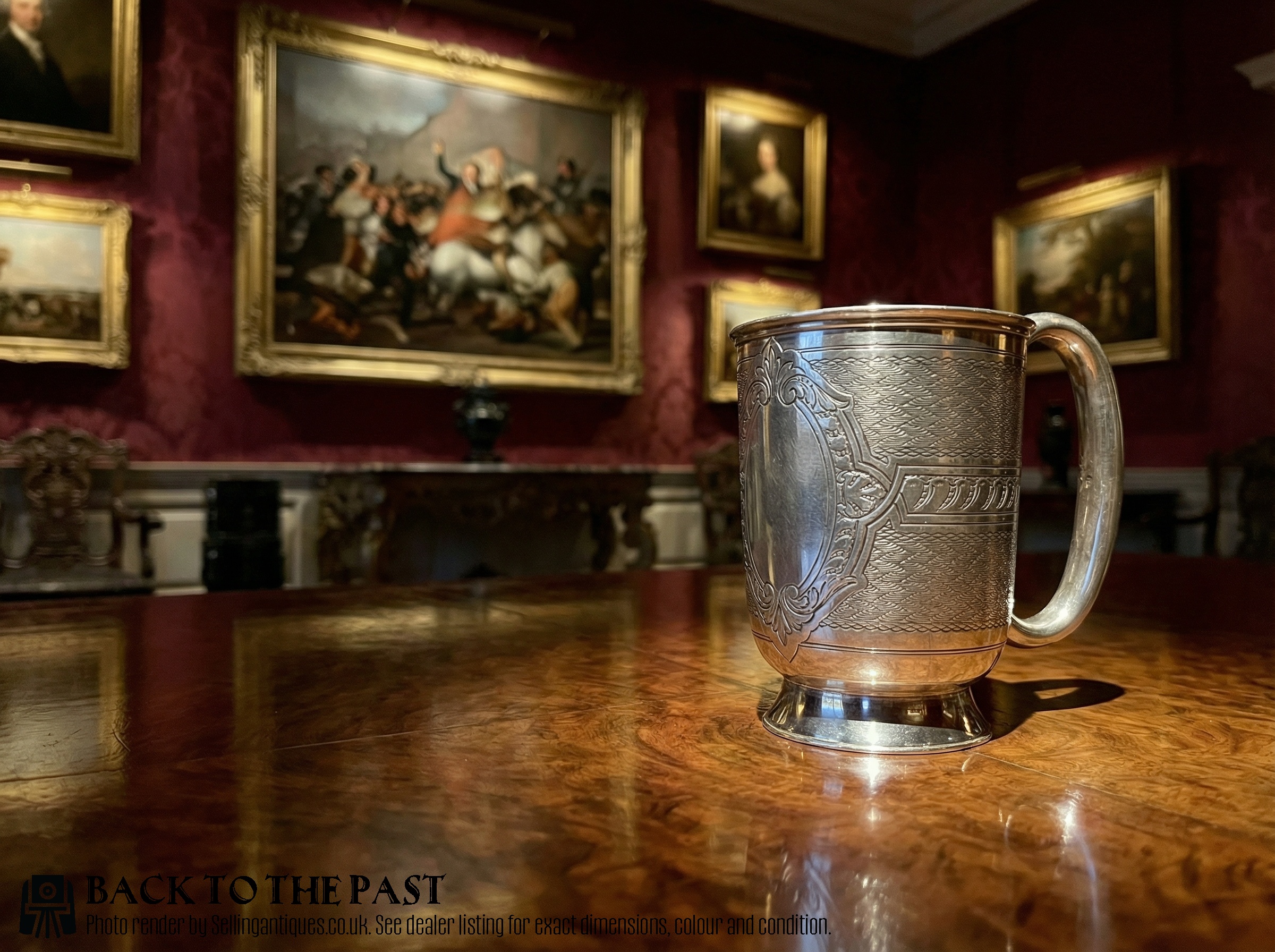
A sterling silver christening mug typically takes the form of a small tankard, beaker, or baluster-shaped vessel designed for a child. These items span periods from the Georgian and Victorian eras through the Edwardian, George V, and Art Deco years up to the mid-century.
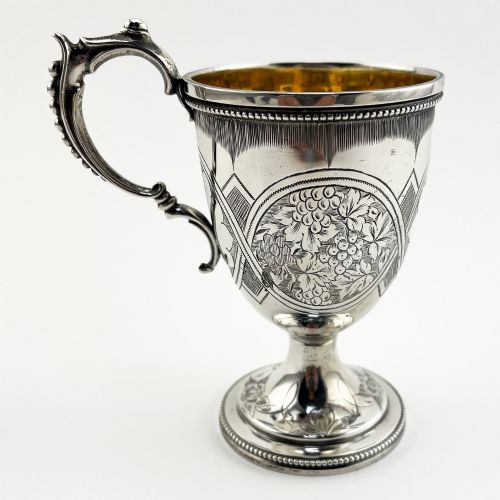
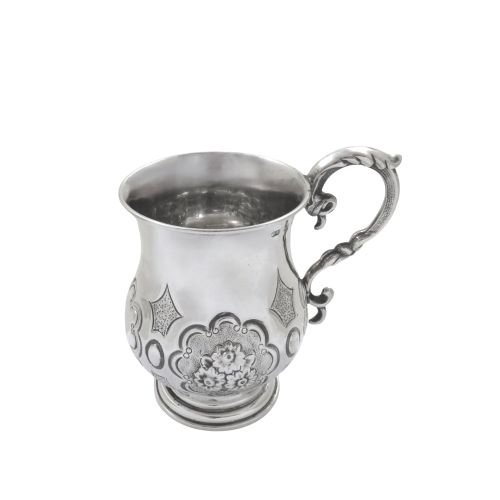
The versions most commonly met on this page are Victorian and George V examples, often featuring scroll handles and engraved floral or bird motifs. Pieces frequently appear individually or housed within fitted presentation cases.
Makers and assay offices across England, including London, Birmingham, and Sheffield, produced these mugs in varying scales, sometimes accompanied by matching presentation sets.
Materials and Techniques
The primary material across the inventory is sterling silver, occasionally complemented by silver-gilt, gold gilt, or interior gilding. Certain pieces incorporate functional elements of leather, velvet, or silk within presentation boxes.
Silversmiths employed techniques such as repoussé embossing, floral engraving, and casting to shape scroll handles and baluster bodies. Hallmark stamps struck directly into the metal record the assay office, date letter, and standard.
Sterling Silver Christening Mug Retail Price Guide 2026
Typical asking prices for sterling silver christening mug among the pieces listed under this phrase on Sellingantiques today, from the lower quarter to the upper quarter. They describe what is for sale here now, not the wider market.
Listings demonstrate a strong presence of Victorian and George V pieces, alongside earlier Georgian examples and mid-century items.
Markers of Distinction
Quality rests in the weight and gauge of the silver sheet used to form the body, which dictates the rigidity of the mug. Substantial metal thickness prevents denting and provides a solid hand-feel.
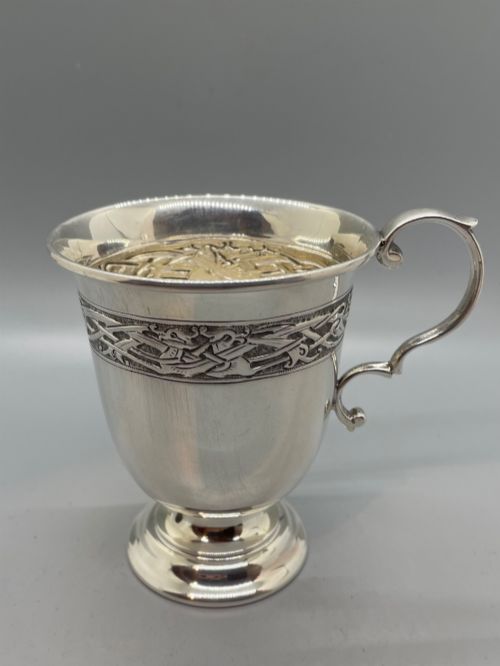
The crispness of hand-engraving, whether depicting birds, floral scrolls, or Celtic patterns, separates standard production from finer workshop output. Crisp, deep chasing and well-balanced scroll handles indicate skilled execution.
Barker Bros·R E Stone·Tiffany & Co·William Bateman·Garrards·Mappin & Webb·Joseph Angell·Charles Fox
The Sterling Silver Christening Mug Glossary
- Baluster
- A form characterised by a swelling lower portion tapering to a narrower neck, commonly seen on Victorian mugs.
- Hallmark
- A series of official marks stamped on precious metals showing the standard of purity, assay office, and year of manufacture.
- Repoussé
- A metalworking technique where the silver is hammered into relief from the reverse side to create embossed floral or figural designs.
- Silver-gilt
- Sterling silver that has been coated with a thin layer of gold on its interior or exterior surfaces.
- Tankard
- A tall drinking vessel featuring a single handle, frequently utilised for the design template of these silver presentation cups.
Sterling Silver Christening Mug: Frequently Asked Questions
What was the original purpose of a christening mug?
These small silver vessels served as traditional gifts presented to a baby upon their christening or birth. Families intended them as keepsake items rather than everyday tableware.
Over generations, the mugs frequently passed down through family lines, sometimes accumulating engraved initials or dates of later births.
How do I identify the date of a silver mug?
The date letter stamped within the official hallmark panel provides the specific year of assay and registration. Comparing the shape of the shield and the letter font against assay office records reveals the exact manufacturing period.
Stylistic indicators such as Rococo scroll handles or Art Deco geometric lines also help narrow down the decade of production.
Are these silver mugs safe for daily use?
While manufactured from solid sterling silver intended for use, many collectors prefer to display them as decorative historical objects. Regular handling and washing require careful maintenance to preserve antique engraving and hallmarks.
Pieces featuring interior gilt layers or delicate repoussé work benefit from minimal use to protect the surface detailing.
Why do some mugs come in presentation boxes?
Retailers frequently housed christening mugs and matching sets in fitted cases lined with silk, velvet, or leather. These fitted boxes protected the silver from tarnish and physical damage while enhancing the presentation of the gift.
Original boxes bearing retailer stamps add context to the provenance of the piece.