




Solid Silver Baby Mug
A solid silver baby mug is a cherished traditional gift, combining delicate craftsmanship with lasting personal sentiment for a new arrival.
Solid Silver Baby Mug
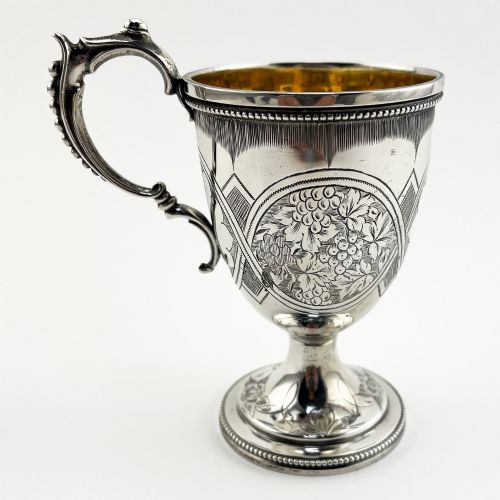
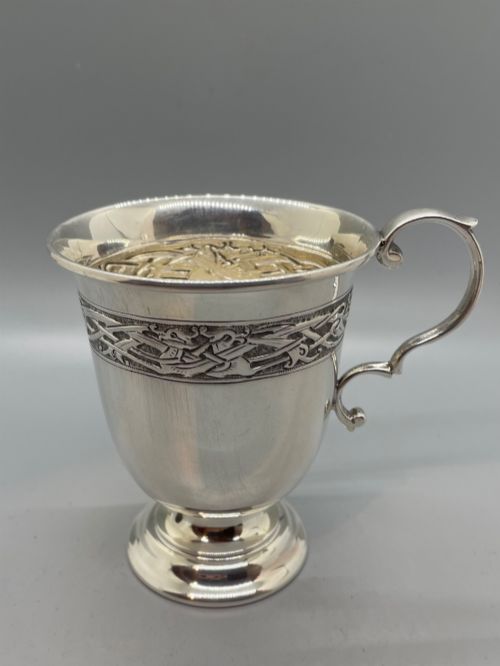
A solid silver baby mug is a traditional christening gift designed to mark a child's birth or baptism with a lasting heirloom. These small vessels appear across the Victorian, Edwardian, and George V periods, featuring distinctive regional hallmarks from Birmingham, Sheffield, and Chester.
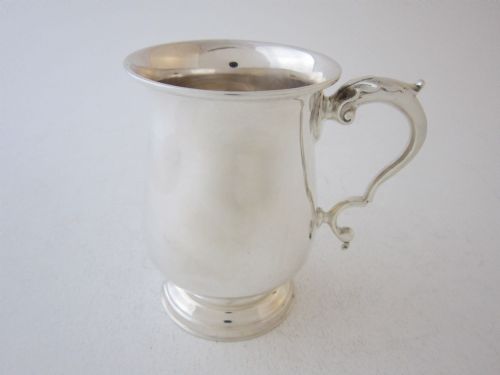
The most common forms seen on this page include baluster shapes and tankards, often accompanied by ornate handles or fitted presentation cases. Makers such as R E Stone and Tiffany & Co also contributed boxed christening sets and specialised drinking vessels to this enduring tradition.
Materials and Construction
These pieces are constructed primarily from sterling silver and solid silver, occasionally featuring silver gilt interiors for practical use. Artisans shaped the metal through raising and forming techniques, applying decorative touches such as floral engraving, embossing, and cast scroll handles.
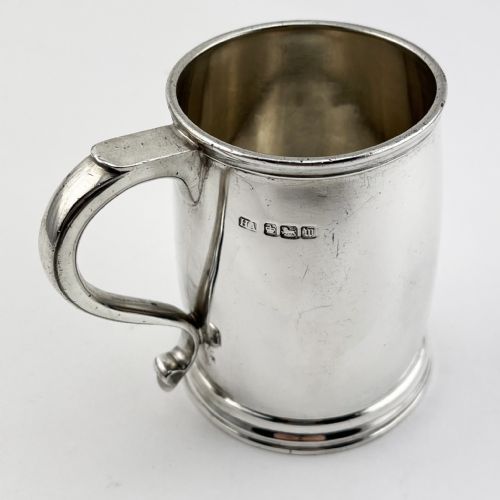
Fitted presentation boxes incorporate protective outer materials like leather lined with delicate silk to house the mugs and accompanying sets securely. Hallmarks struck directly into the silver record the assay office, standard, and exact year of production.
Listings span multiple eras from the mid-nineteenth century through the mid-twentieth century, encompassing Victorian, Edwardian, and George V styles.
Assessing Quality and Merit
Quality in these vessels rests upon the crispness of the hand-engraving, the weight of the sterling silver, and the ergonomic balance of the handle. Pieces featuring rococo scrollwork or substantial gauge metal demonstrate a higher degree of artisan skill during formation.
The presence of a maker with established renown, such as Tiffany & Co or R E Stone, elevates a piece beyond standard utilitarian silver. Original fitted cases lined in silk add considerable interest for collectors seeking complete historical packages.
R E Stone·Tiffany & Co
The Solid Silver Baby Mug Glossary
- Baluster
- A curved, vase-like form swelling gently towards the base. This profile appears frequently on traditional drinking vessels.
- Hallmark
- An official stamp struck into precious metals to guarantee standard and origin. These marks indicate the assay office, metal purity, and date.
- Silver Gilt
- Sterling silver coated with a thin layer of gold on the interior. This technique prevents the metallic taste of silver when used for drinking.
- Tankard
- A tall, cylindrical drinking vessel fitted with a single handle. Examples from the George V period often adopt this sturdy shape.
- Sterling Silver
- An alloy consisting of pure silver and other metals to increase durability. It forms the standard material for the majority of these mugs.
Solid Silver Baby Mug: Frequently Asked Questions
What is a solid silver baby mug?
A solid silver baby mug is a small, durable drinking vessel created as a traditional gift for infants, often marking a christening or birth. These pieces utilise sterling silver and frequently feature decorative hallmarks from British assay offices.
Over the Victorian and Edwardian eras, they evolved from practical items into cherished keepsakes meant to last through generations. Their compact size makes them distinct from adult tankards while retaining identical metalworking standards.
How were these mugs used originally?
While many served as functional cups for a child's early meals, a significant portion were intended purely as commemorative display pieces. Wealthy families recorded the infant's initials or birth date through hand engraving on the body.
Presenting these items in fitted leather and silk boxes ensured they survived as pristine mementoes rather than everyday tableware. Their survival rate in such containers highlights their ceremonial status.
How do I care for antique silver?
Maintaining antique silver requires gentle cleaning with specialised cloths to remove tarnish without wearing away delicate floral engraving or embossing. Avoid harsh chemical dips that strip the natural patina accumulated over the decades.
When storing these mugs, keep them away from direct sunlight and high humidity, particularly if they retain original leather and silk presentation cases. Handling them with clean hands prevents body oils from accelerating surface oxidation.
How can I tell the period apart?
Dating these pieces relies primarily on the stamped hallmarks, which designate the specific year letter and assay office location. Victorian examples often display ornate floral engraving and heavy scroll handles, reflecting mid-nineteenth-century tastes. Later George V and Mid-Century British pieces tend towards cleaner tankard lines or bear the distinct signatures of prominent makers like R E Stone. Stylistic cues such as rococo revival curves also point towards specific manufacturing eras.