



British Sterling Silver Cup
These British sterling silver cup examples span christening mugs, two-handled porringers and art deco bowls, offering enduring metalwork for display or daily use.
British Sterling Silver Cup
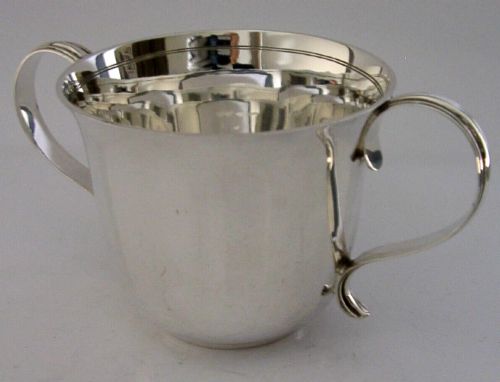
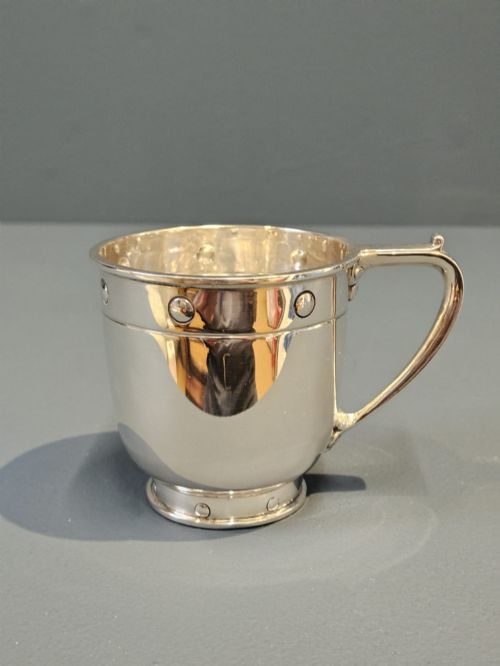
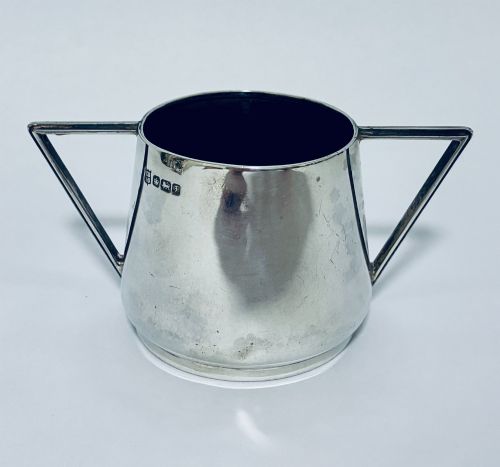
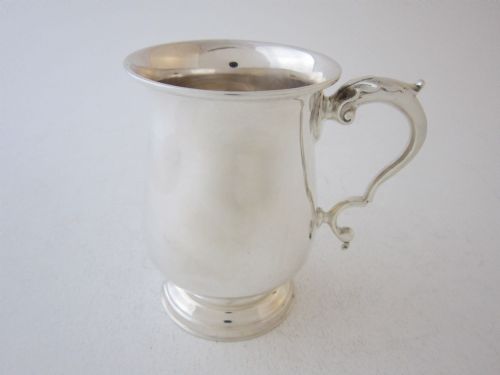
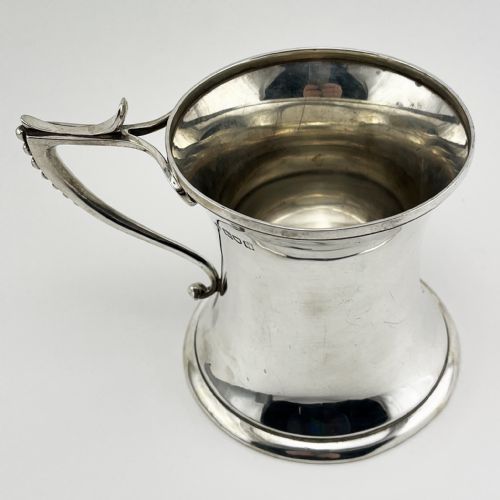
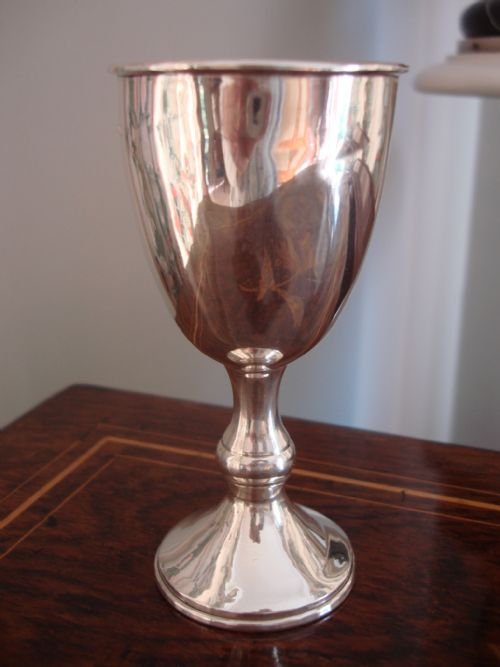
A british sterling silver cup encompasses domestic vessels designed for drinking, christening, or serving, ranging from late seventeenth-century porringers to mid-century goblets. The selection on this page relies heavily on early twentieth-century examples, including George V mugs and art deco sugar bowls.
Forms vary from heavy two-handled bowls and stoneware beakers with silver mounts to slender Kiddush cups and scroll-handled christening mugs. Buyers encounter both utilitarian drinking vessels and decorative vessels shaped by distinct historical periods.
Origins stretch from the late seventeenth century through the Victorian, Edwardian, and George V eras up to mid-century British production. Each period brings characteristic weight, proportion, and decorative restraint to the metalwork.
Materials and construction
Sterling silver forms the primary material across the pieces, often worked into heavy walls for mugs and porringers or shaped into gilt interiors for bowls. Some vessels combine this precious metal with Doulton Lambeth stoneware bodies, uniting ceramics and silver mounts.
Handles and decorative elements involve applied scrollwork and cast components soldered to the main body. Silversmiths utilised traditional hammering, turning, and engraving techniques to achieve the varied profiles seen in Edwardian and art deco pieces.
One tiny William III porringer tips the scales at just twenty-one grams, proving seventeenth-century elegance could travel in a waistcoat pocket.
Judging quality
Quality rests in the thickness of the sterling silver sheet, the crispness of maker's marks, and the balance of the handle against the vessel body. Heavier pieces demonstrate substantial metal weight that resists denting and provides a satisfying heft in the hand.
The refinement of form distinguishes standard production from exceptional work, whether in the clean geometric lines of an art deco bowl or the careful proportions of a late seventeenth-century porringer. Maker attribution also elevates certain pieces above anonymous domestic wares.
Barker Bros·R E Stone
The British Sterling Silver Cup Glossary
- Porringer
- A small, shallow vessel with one or two flat horizontal handles, used in earlier centuries for soft foods or liquids. Seventeenth-century examples often display finely chased decoration.
- Christening mug
- A small handled cup traditionally presented to a child on the occasion of a baptism. These frequently feature engraved presentation inscriptions and decorative scroll handles.
- Stoneware
- A heavy, dense ceramic fired at high temperatures, impervious to liquids. In these listings, stoneware bodies appear paired with decorative silver mounts.
- Gilt
- A thin layer of gold applied to the interior surface of a silver vessel. This treatment protected the silver from tarnishing when holding acidic contents.
British Sterling Silver Cup: Frequently Asked Questions
What are christening mugs used for?
Christening mugs served as traditional gifts for infants, marking significant early milestones and family occasions. Over time, many transitioned from functional drinking vessels to cherished decorative keepsakes displayed in cabinets.
The substantial sterling silver construction ensured these pieces survived across generations. Today, collectors value them for their compact proportions and period-specific maker marks.
How do I identify a seventeenth-century porringer?
Seventeenth-century porringers display distinctive low, rounded bodies fitted with flat, pierced scroll handles on opposite sides. They often feature hand-hammered surfaces and early maker ciphers.
These pieces reflect domestic dining habits of the period before standard teawares became common. Their smaller capacity and specific handle design separate them easily from later mugs.
What distinguishes art deco sugar bowls?
Art deco sugar bowls rely on geometric forms, clean lines, and restrained ornament rather than traditional floral motifs. They capture the modernist design shift of the interwar decades.
These bowls work well for contemporary table settings or minimalist displays. Their polished sterling surfaces reflect light cleanly without ornate surface clutter.
Are silver mounted stoneware beakers durable?
The combination of hard-fired Doulton Lambeth stoneware and fitted sterling silver mounts creates a robust, highly durable drinking vessel. The ceramic body resists daily wear while the silver rim adds structural reinforcement.
Such pieces bridge the gap between ceramic arts and silversmithing. They require standard silver care alongside gentle washing for the stoneware.