


George V Silver Mug
A george v silver mug is a solid vessel intended for daily use or marking a childhood milestone.
George V Silver Mug
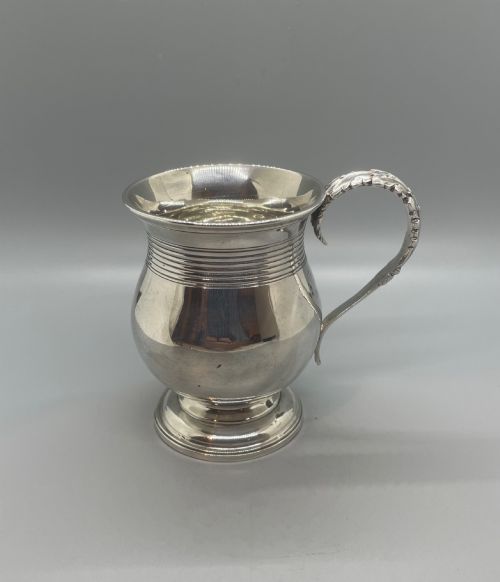
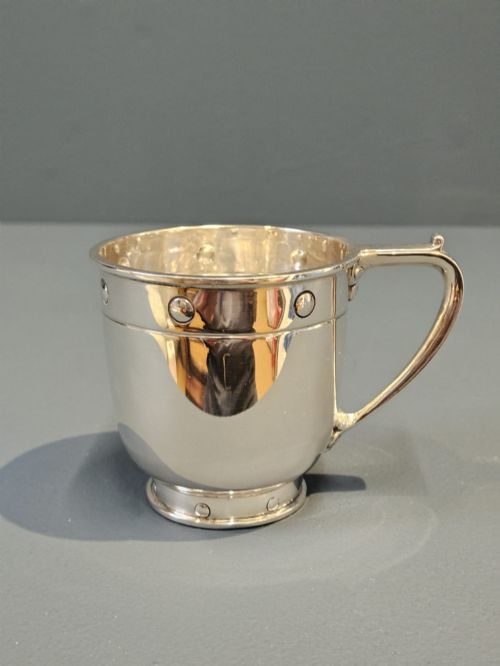
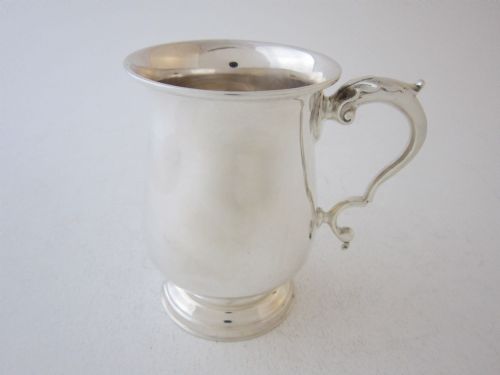
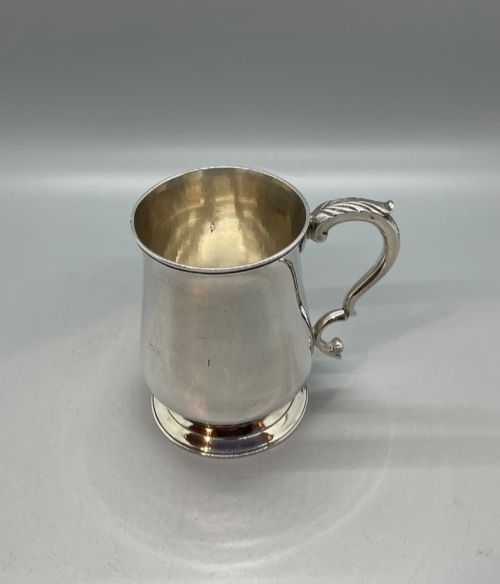
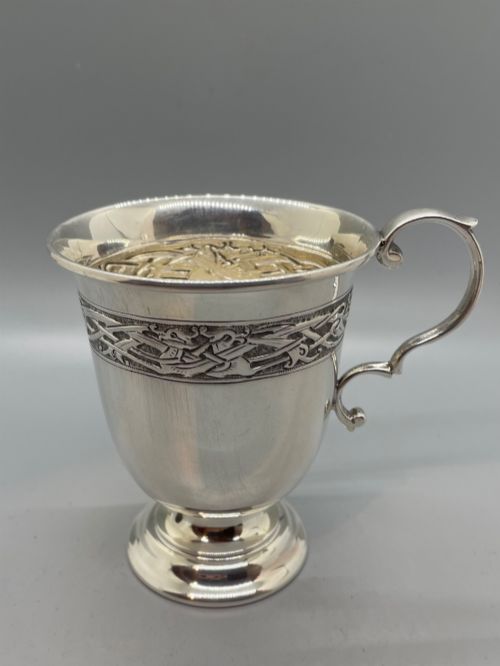
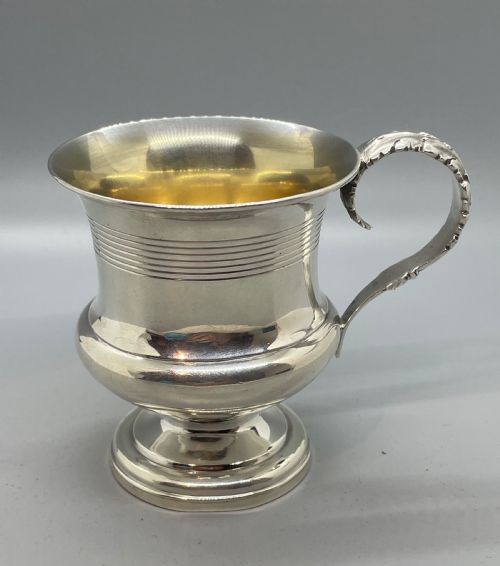
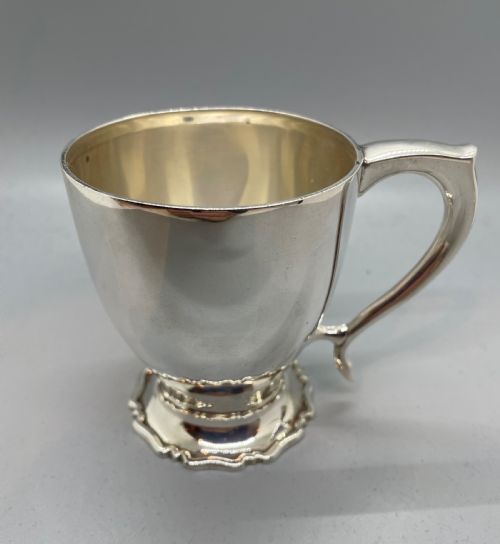
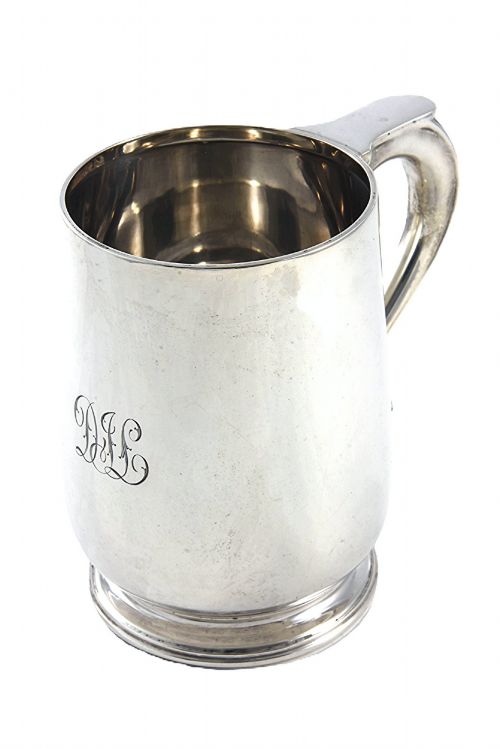
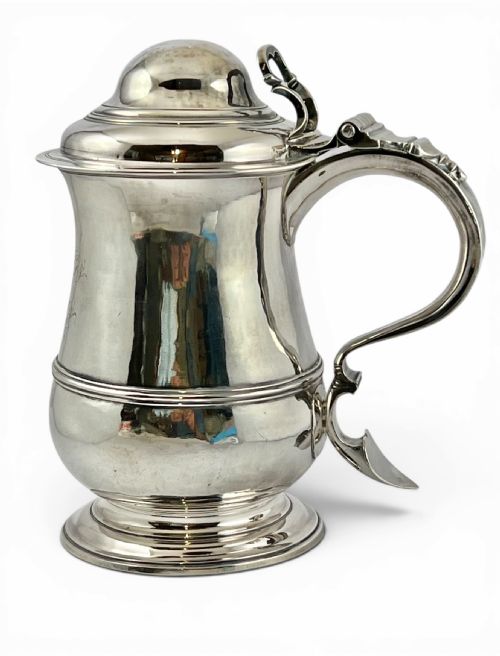
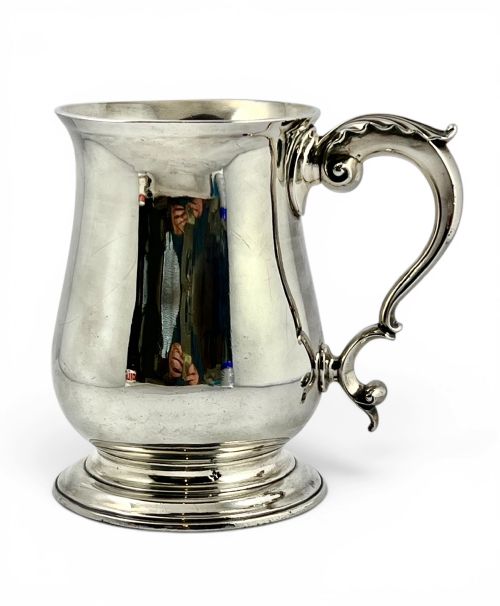
A george v silver mug takes various forms, most commonly appearing as a compact christening cup or a larger pint tankard. The period spans the early decades of the twentieth century, reflecting the craftsmanship of firms working in cities such as London, Birmingham, and Sheffield.
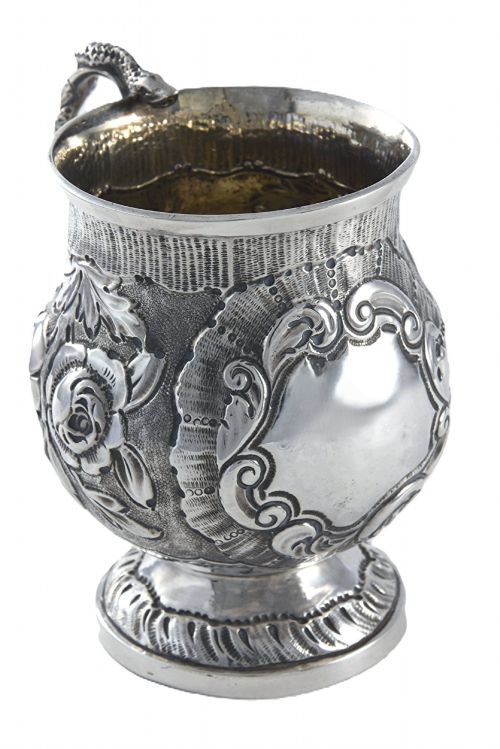
Many examples emerge from this era with straightforward cylindrical or tapering profiles, though some incorporate decorative motifs like engraved birds or biblical scenes such as Noah's ark. Alongside these twentieth-century pieces, the broader category includes earlier Georgian designs from the eighteenth and nineteenth centuries.
Buyers encounter these items functioning both as practical drinkware and as presentation pieces supplied in fitted cases. The variety extends from plain polished surfaces to more elaborate Arts and Crafts interpretations.
Materials and Techniques
Makers shaped these objects primarily from sterling silver, hammering or spinning the metal to form the body before soldering on a sturdy scroll handle. Assay office marks stamped into the surface record the town of testing, the standard of metal, and the date letter for the year of production.
Engraving added surface detail, with craftsmen cutting floral patterns, initials, or pictorial scenes directly into the silver wall. Some specialised iterations combined the metal with cut glass or applied gold gilt to the interior bowl.
Noah's ark scenes occasionally appear engraved on christening mugs to amuse small children.
Judging the Workmanship
The weight of the metal establishes the baseline substance of the vessel, with heavier gauges resisting dents and providing a solid feel in the hand. Thicker walls and robustly joined handles indicate superior construction intended to endure regular handling.
The crispness of the assay stamps and the neatness of any hand-engraving reveal the skill of the silversmith. Pieces retaining their original presentation cases and clear, legible maker marks command greater attention from collectors.
Barker Bros·John Payne·William Grundy·William Bateman·George Ernest Hawkins·Peter and Ann Bateman·The Atkins Brothers
The George V Silver Mug Glossary
- Sterling silver
- An alloy consisting of pure silver and other metals, traditionally proportioned to ensure durability while maintaining a bright metallic lustre. This standard forms the primary material for the majority of these drinking vessels.
- Assay office
- An official body responsible for testing the purity of precious metals and stamping them with hallmark guarantees. Towns like London, Birmingham, and Sheffield operated distinct offices during the period.
- Christening mug
- A small presentation cup traditionally given to an infant to mark a baptism or naming ceremony. These items frequently feature engraved names, dates, or decorative animal scenes.
- Tankard
- A tall drinking vessel, typically featuring a single handle and sometimes a hinged lid. Versions from the eighteenth and twentieth centuries appear across these records in half-pint and full-pint capacities.
- Gold gilt
- A thin layer of gold applied to the interior surface of a silver vessel, often used to protect the metal from acidic contents. This treatment provides a contrasting warm tone against the exterior silver.
George V Silver Mug: Frequently Asked Questions
What is a george v silver mug used for?
These vessels served as practical drinking containers for beer, water, or other beverages depending on their scale. Smaller variants were specifically commissioned as presentation gifts for infants.
Over generations, many transitioned into decorative display items or remained preserved within fitted presentation cases to mark family milestones.
How can I tell the exact year it was made?
Each piece carries a series of punched hallmarks that include a specific letter signifying the year of assay. By consulting standard tables for London, Birmingham, or Sheffield offices, that letter pins down the production date.
Additional stamps indicate the maker's mark and the lion passant denoting sterling standard silver.
Did these mugs change in style over time?
Earlier eighteenth-century examples lean toward baluster shapes and heavy cast scroll handles, while nineteenth-century pieces often incorporate ornate floral engraving. Twentieth-century production shifted between plain utilitarian forms and decorative Arts and Crafts interpretations.
Despite these shifts in decorative vocabulary, the core function as a handled drinking vessel remained consistent.
How should I clean and care for silver?
Regular dusting with a soft cloth prevents the accumulation of grime on engraved surfaces and handles. When tarnish builds up, mild silver polish applied sparingly maintains the reflective finish without wearing away the underlying metal.
Harsh abrasive pads or chemical dips should be avoided to protect the integrity of the antique surface and any delicate engraving.