
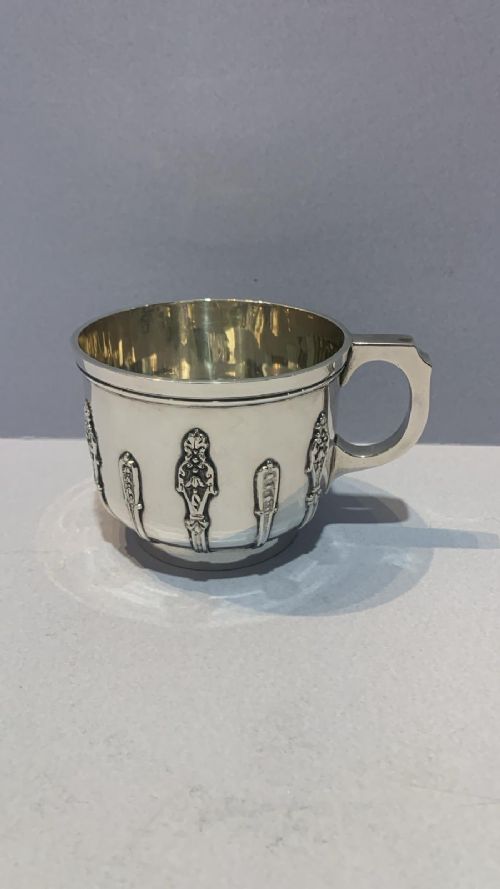


Solid Silver Christening Cup
A solid silver christening cup is a traditional gift of lasting metal, shaped as a small mug or tankard to mark a birth.
Solid Silver Christening Cup
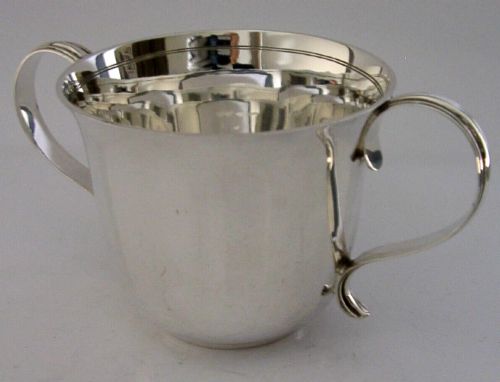
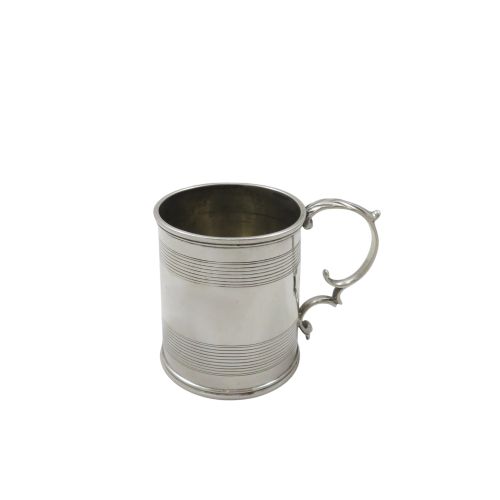
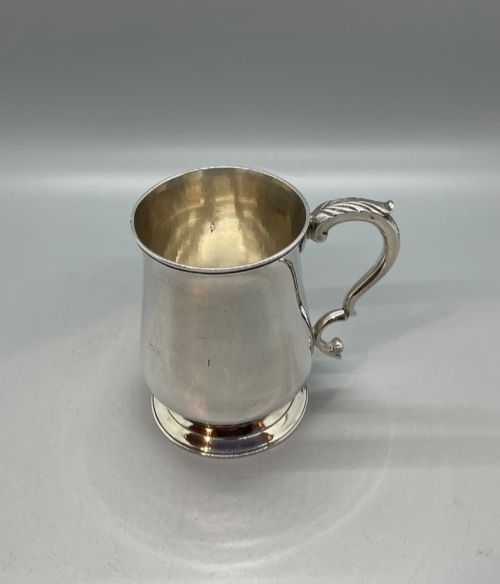
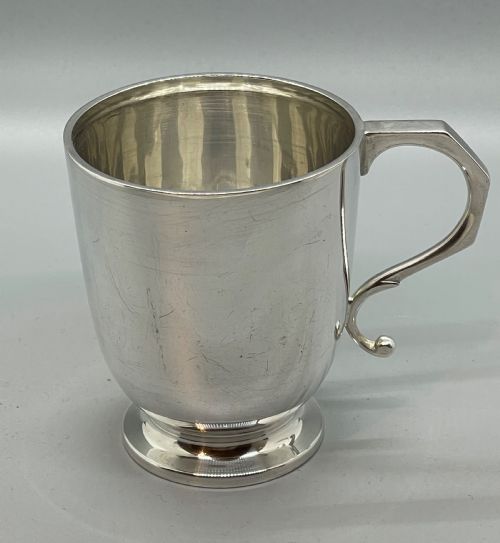
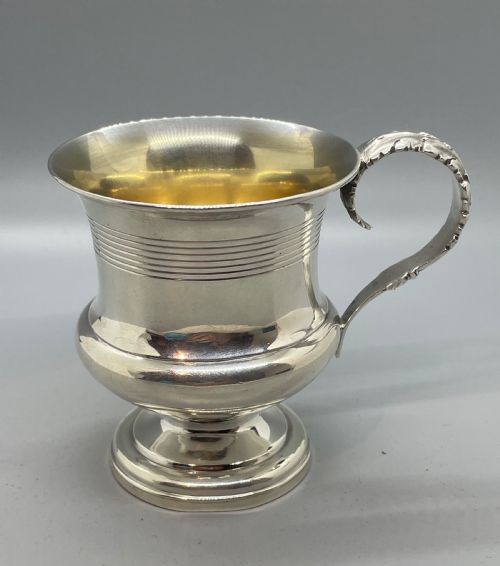
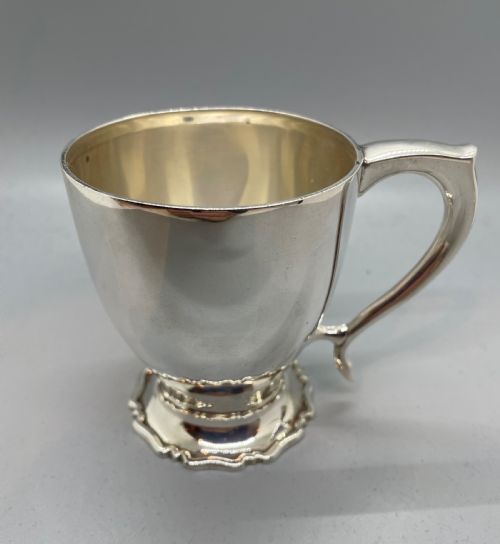
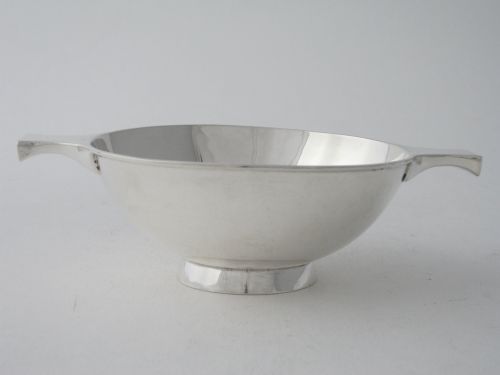
When you search for a solid silver christening cup, you encounter small drinking vessels produced across the eighteenth, nineteenth, and twentieth centuries. These pieces appear as cylindrical mugs, handled tankards, two-handled porringers, and shallow bowls intended originally for children.
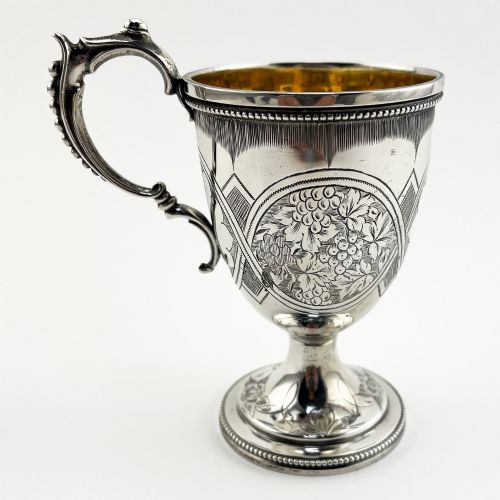
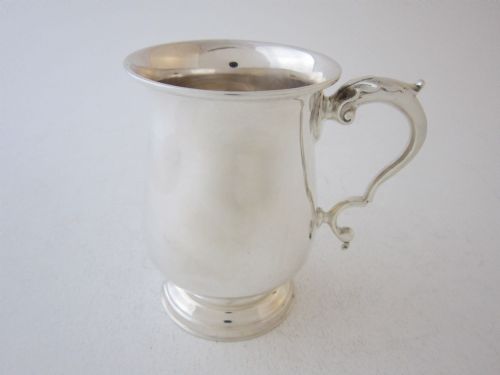
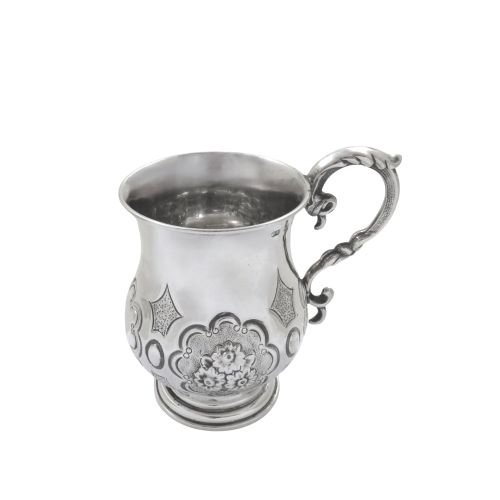
The selections on this page draw from Victorian, Edwardian, and George V periods, alongside Georgian and mid-century examples. Alongside traditional mugs, you will find variants shaped with baluster forms, scroll handles, or floral engravings.
Makers fashioned these items in English assay offices including London, Birmingham, and Sheffield. Many survive alongside fitted presentation boxes lined with velvet, silk, or leather.
Materials and construction
Silversmiths constructed these vessels primarily from sterling silver, occasionally applying gold gilt to the interior surfaces to create a contrasting two-tone effect. Handles were cast separately and soldered securely to the main body, using scroll or loop designs.
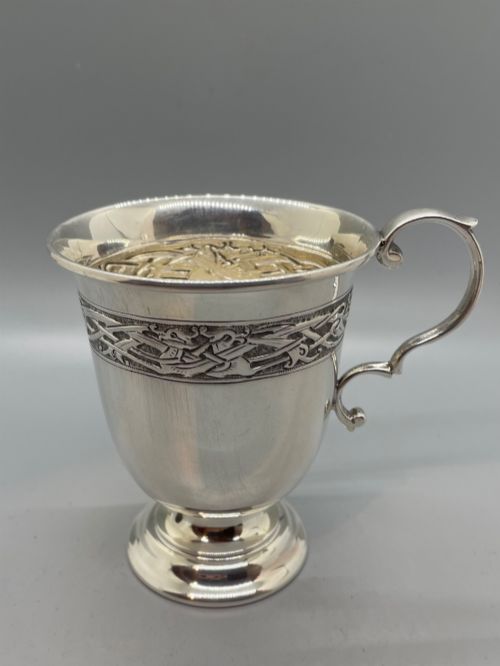
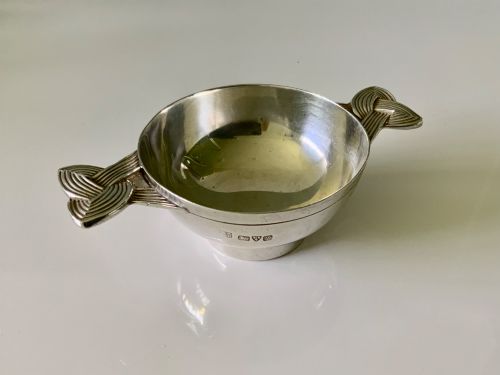
Surface decoration ranges from plain polished bodies to intricate floral embossing and Celtic revival patterns. Hallmarks stamped directly into the metal record the assay office, city, and year of production.
One baby clearly kept a very thirsty schedule, judging by the heavy pint-sized proportions of certain miniature tankards.
Gradations of quality
The standard of a solid silver christening cup rests on the gauge of the metal and the crispness of the hand-engraving. Heavier specimens maintain structural rigidity and resist denting through generations of handling.
The refinement of the handle attachment and the clarity of the maker's punch marks differentiate standard production items from finer workshop pieces. Interior gilding that remains intact adds a layer of finish observed in superior examples.
R E Stone·Tiffany and Co·Harrods·James Young
The Solid Silver Christening Cup Glossary
- Sterling silver
- An alloy consisting of ninety-two point five percent silver and seven point five percent other metals, chosen for durability in tableware. British pieces carry the lion passant mark to verify this standard.
- Porringer
- A small bowl equipped with one or two flat horizontal handles, used historically for porridge or broth. Many double-handled variants serve a similar commemorative function to standard mugs.
- Quaich
- A traditional shallow two-handled drinking vessel of Scottish origin. These items appear occasionally alongside standard mugs in historical silver collections.
- Baluster
- An architectural form featuring a swelling lower portion tapering toward the top, often adapted for the body of a mug. This silhouette provides a steady base for smaller drinking vessels.
- Silver gilt
- Sterling silver coated with a thin layer of gold through an electrolytic or fire-gilding process. This treatment protects the interior from tarnishing when exposed to liquids.
Solid Silver Christening Cup: Frequently Asked Questions
What is a solid silver christening cup?
A solid silver christening cup is a small vessel created to celebrate a child's naming ceremony or birth. Families traditionally gave these items as keepsakes designed to endure through generations.
Over the centuries, silversmiths shaped these pieces into mugs, tankards, and bowls inscribed with initials, dates, or floral motifs.
How were these cups used historically?
Despite their commemorative nature, many of these vessels served practical functions as everyday drinking mugs for children. They held milk, water, or porridge during early childhood.
Over time, many transitioned into display pieces or family heirlooms passed down through subsequent generations.
How do I identify the date of a silver cup?
British silver items carry a series of hallmarks stamped directly into the metal surface. These tiny symbols typically include a date letter, a city mark, and a standard purity mark.
Consulting historical assay office records allows you to match the specific letter stamp to the exact year of manufacture.
What styles are common in these collections?
The inventory reflects distinct design movements across the decades, ranging from plain Georgian and Victorian styles to ornate Edwardian floral engraving. Later pieces embrace the clean lines of the Art Deco and mid-century modern periods.
Regional variations also appear, including Celtic revival patterns and traditional Scottish quaich forms.
How should I care for antique silver?
Preserving solid silver requires gentle cleaning with specialised cloths to remove natural tarnish without abrading the metal. Avoid harsh chemical dips that can strip historical patination from engraved recesses.
Storing pieces in dry environments away from direct sunlight protects any original presentation boxes lined with velvet or silk.