

Vintage Silver Mug
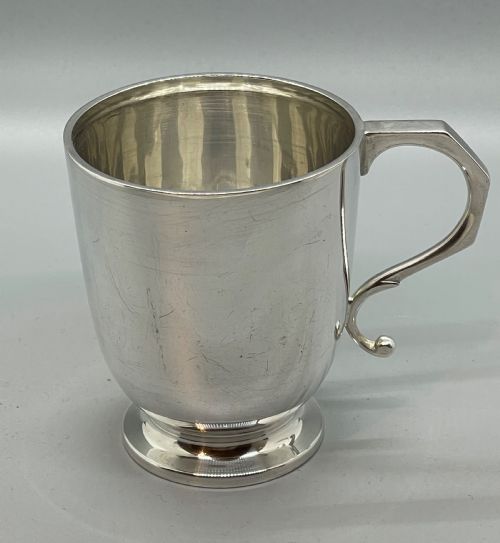
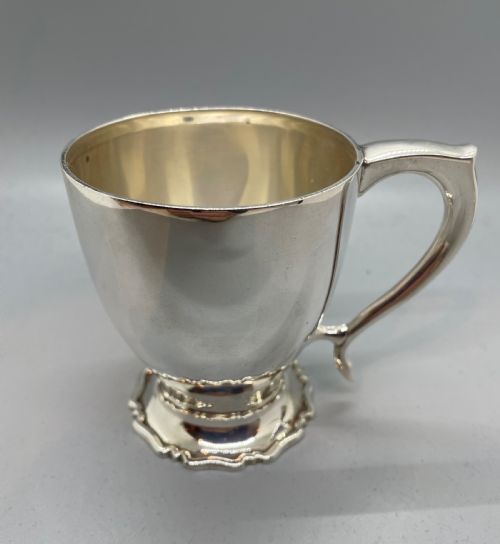
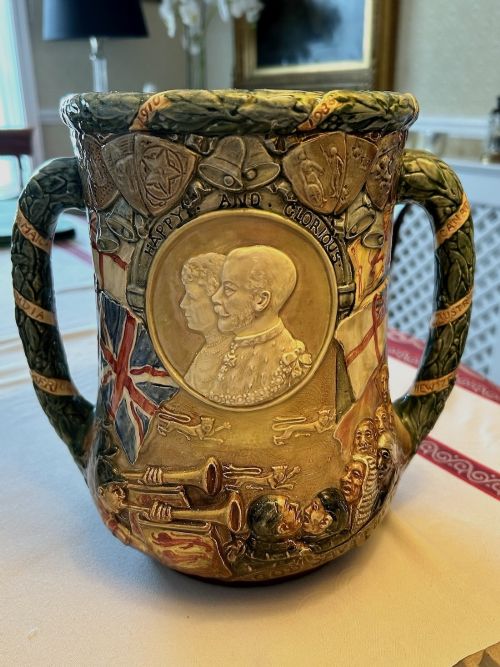
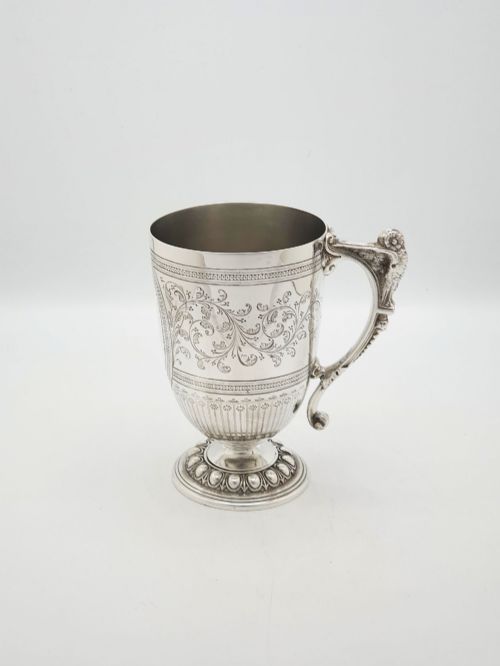
These vintage silver mug examples bring substantial weight to the table, offering a tangible link to Georgian, Edwardian, and mid-century drinking traditions.
What these pieces are
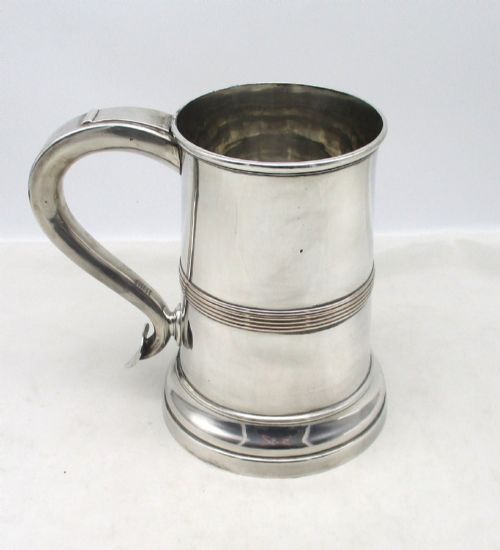
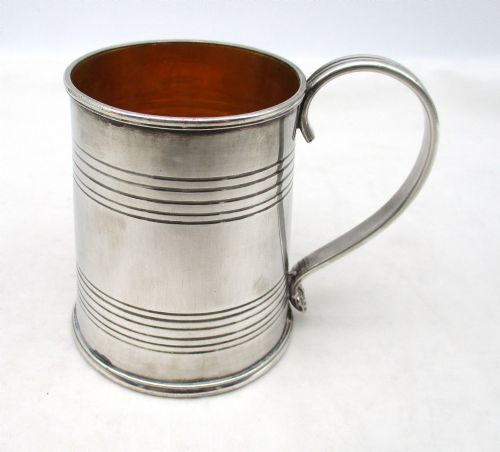
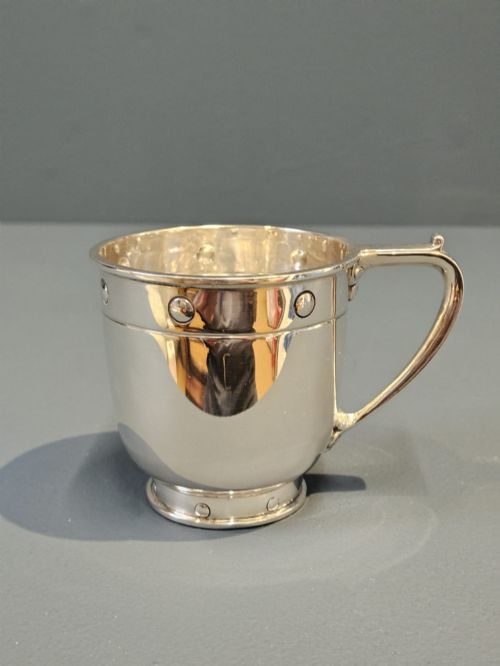
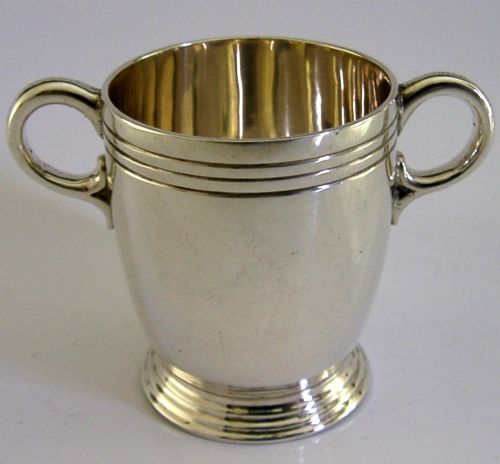
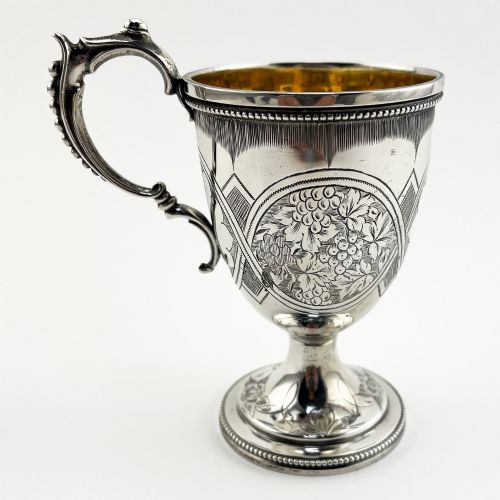
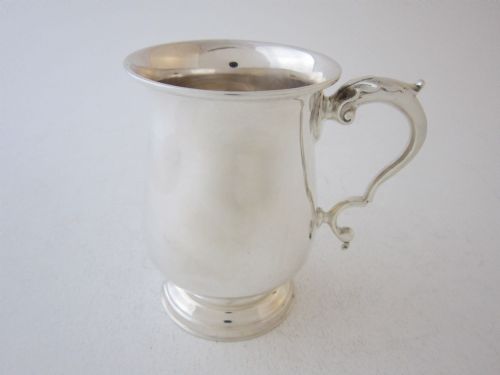
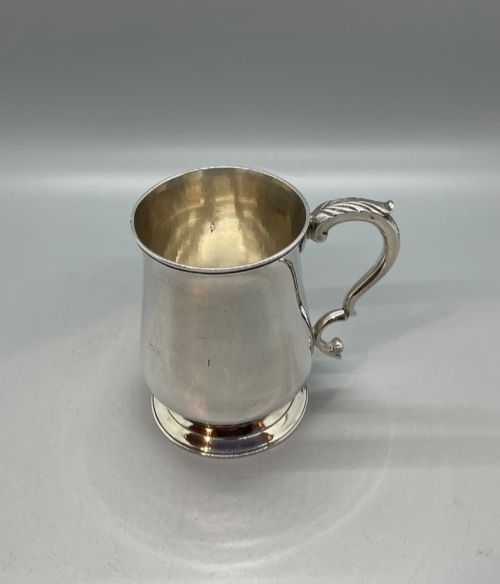
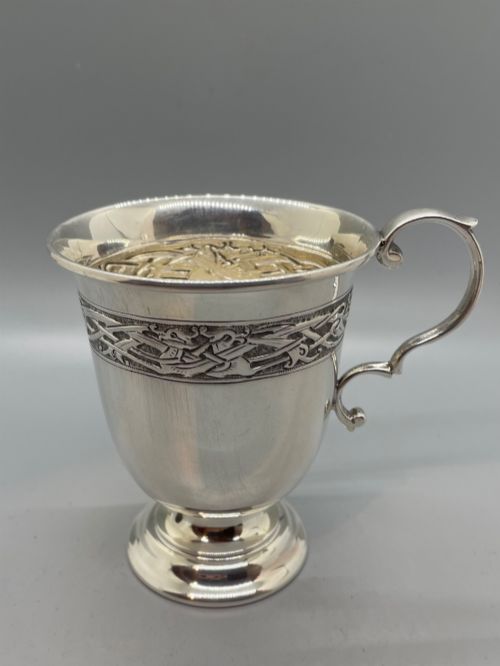
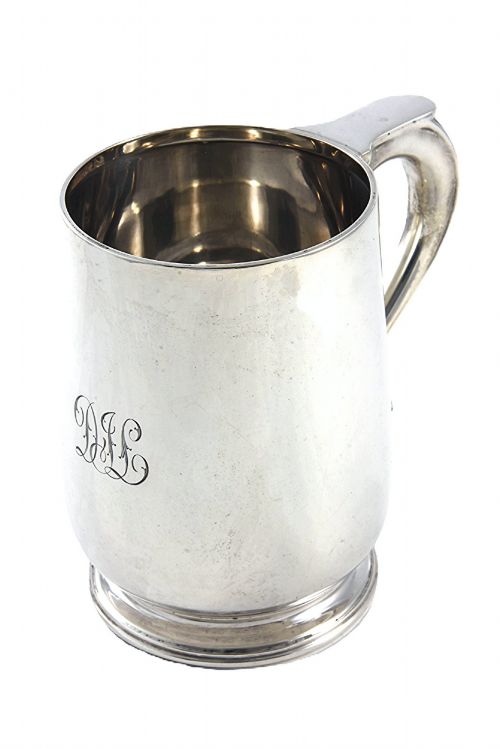
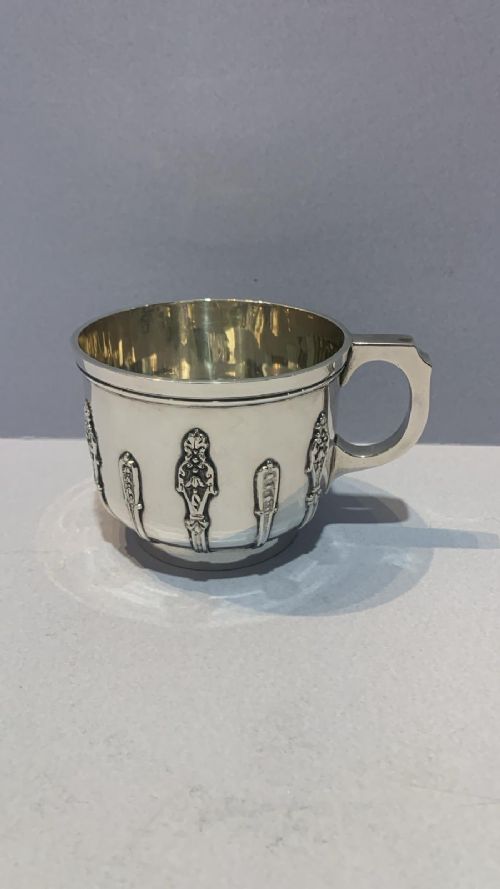
Buyers most frequently encounter sterlings and plated variants in straight-sided or gently tapering profiles. Christening cups often feature chased decoration or fitted presentation cases, while quart tankards present a heavier, plain surface intended for frequent handling.
How they were made
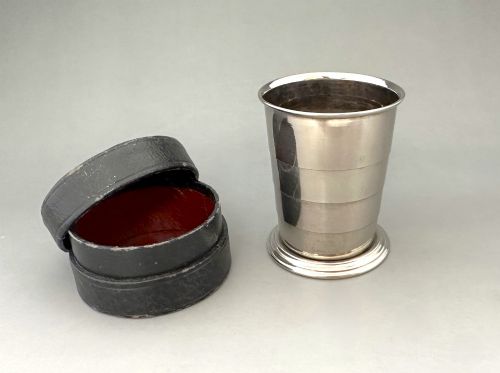
Makers utilised sterling silver, silver gilt, Old Sheffield plate, and base metal substrates fused with silver layers. Many pieces rely on traditional raising and spinning techniques to achieve seamless walls from a single sheet of metal.
Handles are cast separately and securely soldered to the body, often shaped into scrolled or loop configurations designed for a firm grip. Plated items demonstrate early fusion methods where silver sheets bond thermally to copper bases.
Retail Price Guide 2026
Typical UK retail prices for vintage silver mug, calculated from the Sellingantiques database of over a million retail prices indexed since 2003. This retail price guide relies exclusively on Sellingantiques data; no external sources or auction records are used, so the figures do not describe the wider market.
Listings span periods from the 18th century through the 1960s, encompassing sterling silver, silver gilt, Old Sheffield plate, and base metal.
What varies in quality
Metal gauge dictates the primary difference in substance, separating thin, lightweight vessels from heavy-walled examples that resist denting under daily use. Superior execution shows clean solder joints and crisp hand-chased motifs without thinning the surrounding metal.
The integrity of surface plating and gilding defines the visual longevity of secondary metals. Pieces retaining deep, even silver layers across high-wear areas hold greater enduring presence than those showing extensive base metal breakthrough.
Barker Bros·Mappin & Webb
The Vintage Silver Mug Glossary
- Tankard
- A tall drinking vessel featuring a single handle, frequently built with a substantial base and straight sides for holding ale. These pieces appear in both quart sizes and smaller pint capacities.
- Christening Mug
- A small presentation cup given to mark a birth or baptism, often bearing engraved initials or decorative motifs. They frequently survive in fitted protective cases.
- Old Sheffield Plate
- A composite material formed by fusing a thin sheet of silver to a thicker copper core before shaping. This historical technique leaves a characteristic copper seam visible on raw edges.
- Silver Gilt
- Sterling silver treated with a thin coating of gold applied to the interior or exterior surfaces. This process adds warmth and protects the underlying silver from tarnishing.
Frequently Asked Questions
What distinguishes a mug from a tankard?
Tankards traditionally denote larger, heavier vessels built for ale, often holding a full pint or quart. Mugs encompass a broader range of smaller drinking vessels, including christening cups.
While both share a single handle and cylindrical form, tankards generally present a more robust structure intended for hearty use.
How are christening mugs different?
Christening mugs are scaled down for child use and frequently carry personalised engravings, dates, or decorative motifs like rabbits. They often survive alongside their original fitted presentation cases.
Standard mugs and pint tankards focus instead on utility and capacity for adult beverages.
How do I care for silver plate?
Silver plate requires gentle cleaning with non-abrasive polishes to preserve the thin outer layer of precious metal. Regular use prevents heavy tarnish buildup and reduces the need for aggressive rubbing.
Storing pieces in dry, anti-tarnish environments keeps the surface stable over decades.
What periods do these pieces span?
The inventory covers items ranging from the eighteenth century through the Edwardian era and mid-twentieth century. Georgian and George V examples sit alongside 1960s modernist designs.
Each period brings distinct stylistic cues, from plain eighteenth-century surfaces to playful mid-century novelty shapes.