




Engraved Silver Beaker
These engraved silver beaker examples are substantial drinking vessels that bring tactile history to a modern table.
Identifying an engraved silver beaker
An engraved silver beaker is a cylindrical or slightly tapered drinking vessel shaped from precious metal and finished with surface decoration. These pieces bridge the gap between ornamental display and functional tableware, offering a solid weight in the hand.
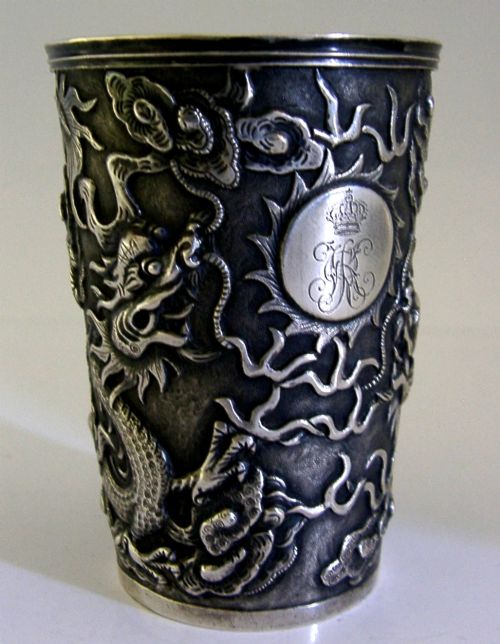
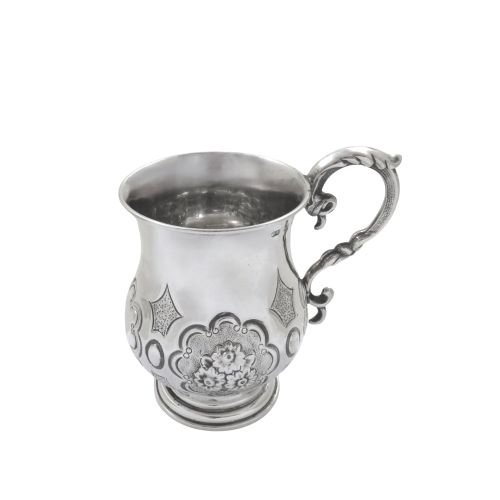
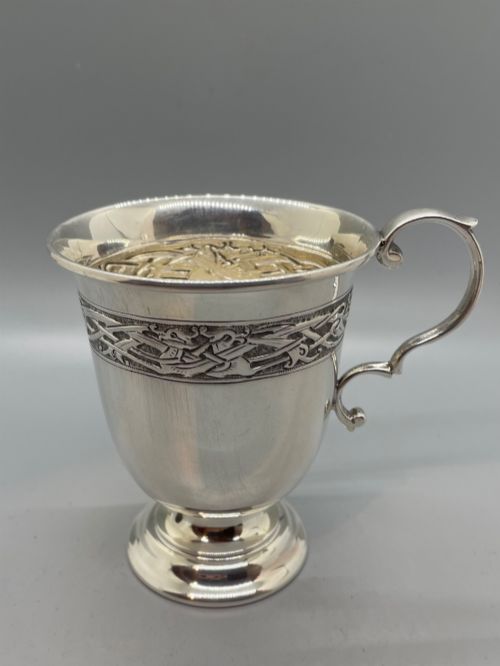
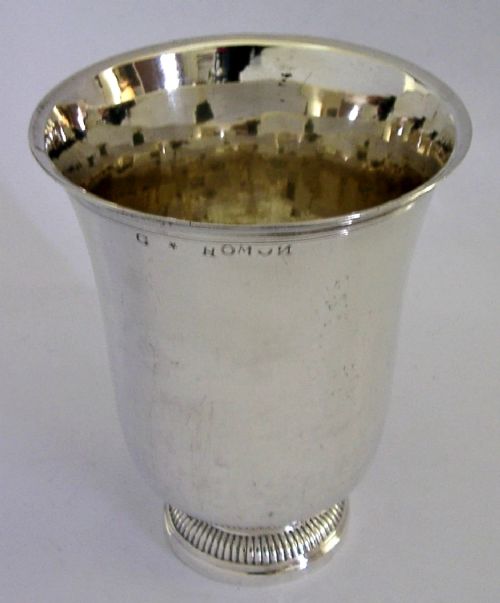
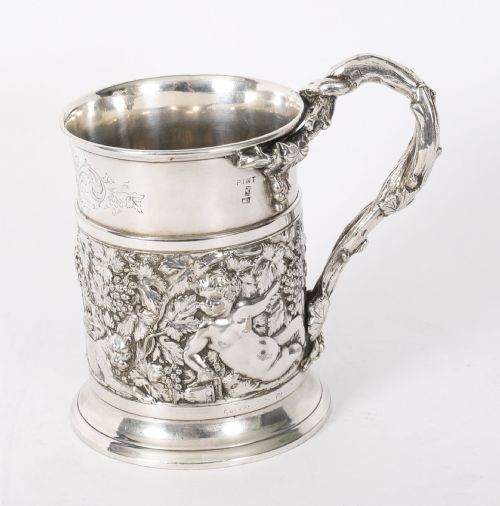
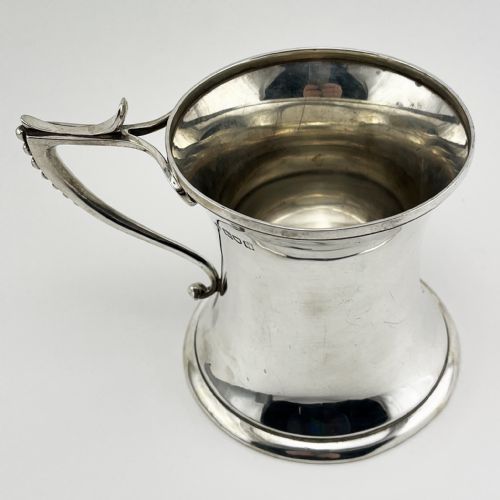
The selections on this page span several distinct periods, including 18th century French work, Victorian designs, and George V pieces. Buyers frequently encounter christening mugs and tankards alongside traditional cups among these offerings.
Origins vary across British, French, and Russian silversmithing traditions, reflecting regional tastes in ornamentation. Domestic items like christening mugs share the shelf with larger, over-sized vessels from continental workshops.
Materials and construction methods
Makers shaped these vessels primarily from sterling silver, occasionally applying parcel gilt interiors to protect the metal from acidic contents. The underlying structure relies on heavy-gauge sheet metal, formed into a cylindrical body and joined at a secure seam.
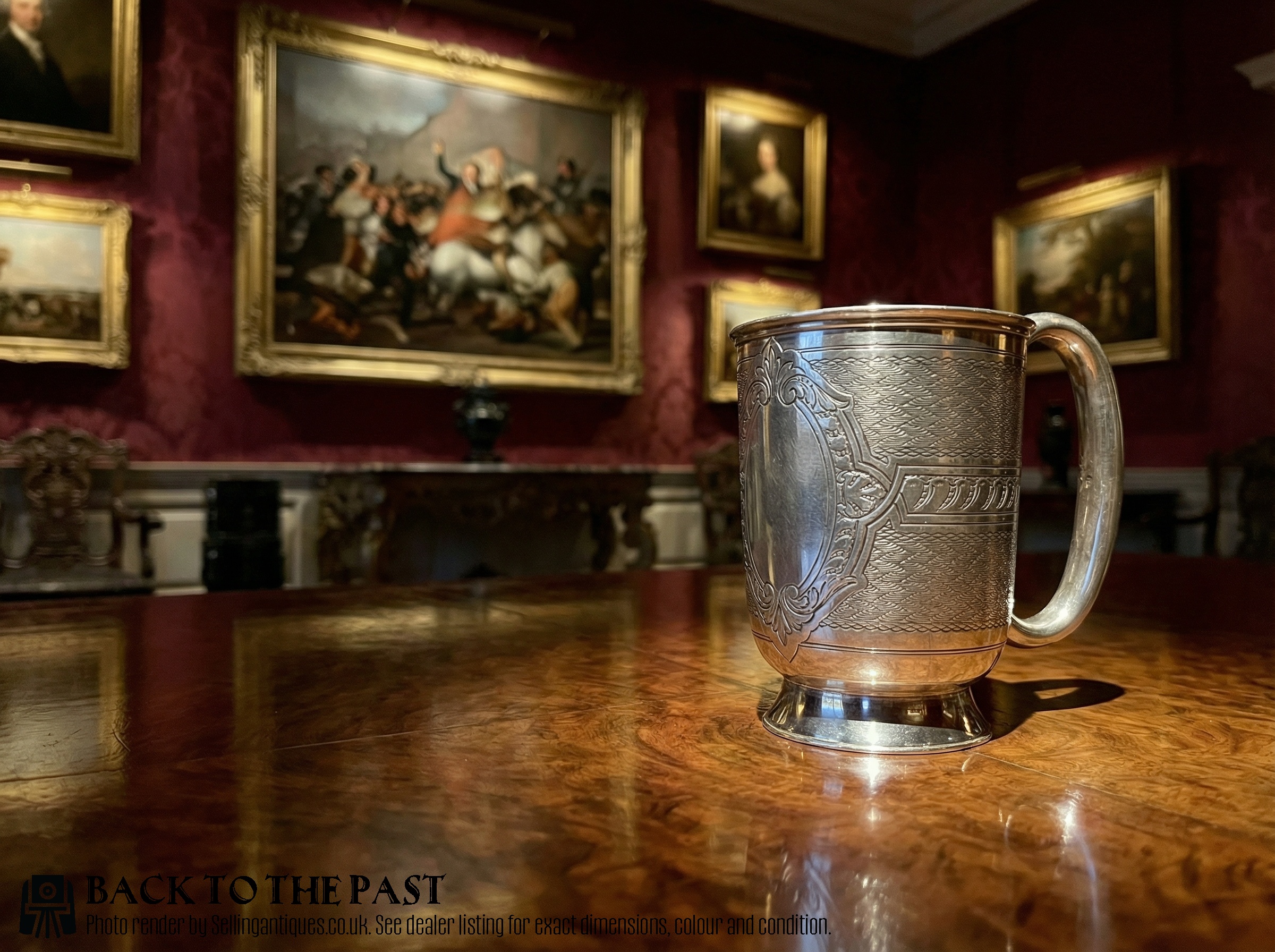
Surface patterns were achieved through meticulous hand engraving, varying from delicate floral scenes to geometric engine-turning. Artisans utilised sharp gravers to cut directly into the metal surface, creating permanent relief and texture.
Retail Price Guide 2026
Typical UK retail prices for engraved silver beaker, calculated from the Sellingantiques database of over a million retail prices indexed since 2003. This retail price guide relies exclusively on Sellingantiques data; no external sources or auction records are used, so the figures do not describe the wider market.
Assessing quality in silver vessels
Quality rests upon the crispness of the hand engraving and the gauge of the silver used for the body. Superior examples display deep, deliberate cuts that retain their sharpness rather than worn or shallow surface marks.
The architectural balance of the vessel and the neatness of any cartouche or heraldic detail reveal the maker's skill. Pieces featuring comprehensive hand engraving across the entire exterior surface generally demonstrate greater artisan investment.
AL
The Engraved Silver Beaker Glossary
- Sterling silver
- A silver alloy containing 92.5 percent pure silver by mass, ensuring durability for practical drinking vessels. This standard metal forms the foundation of most items in this category.
- Parcel gilt
- A silver object that is partially gilded with a thin layer of gold, typically applied to the interior of a cup. This technique provides a pleasing contrast in colour and protects the silver.
- Engine-turned
- A decorative technique involving a machine that etches precise geometric patterns into metal surfaces. It creates uniform, repeatable textures across the body of a beaker.
- Cartouche
- An ornamental frame or panel, often left blank for future engraving or monograms. It forms a focal point within broader floral or scrollwork designs.
- Christening mug
- A small presentation cup traditionally gifted to mark a birth or baptism. These vessels frequently feature commemorative inscriptions alongside decorative engraving.
Frequently Asked Questions
What is an engraved silver beaker?
An engraved silver beaker is a portable drinking vessel made from sterling silver and decorated with hand-cut patterns. These items combine practical function with decorative metalwork.
Historically used for daily consumption or ceremonial toasts, they survive as durable examples of period silversmithing.
How were these silver vessels used?
These vessels served as functional drinking cups for water, wine, or ale in domestic settings. Smaller variations were often given as christening gifts to mark significant family milestones.
Over time, many transitioned from active dining service to display pieces or presentation items.
How do I date an antique silver beaker?
Dating relies on identifying official hallmarks stamped into the metal, which indicate the assay office, standard, and year of production. Stylistic clues such as Arts and Crafts or 18th-century French aesthetics also point to specific eras.
Comparative analysis of engraving styles helps narrow down pieces that lack clear assay marks.
How do I care for antique silver?
Regular, gentle dusting with a soft cloth prevents the accumulation of particulate matter on delicate engraved surfaces. When necessary, traditional silver polish applied sparingly maintains the shine without wearing down the relief.
Store pieces in stable humidity environments away from direct sunlight to preserve the metal condition.