


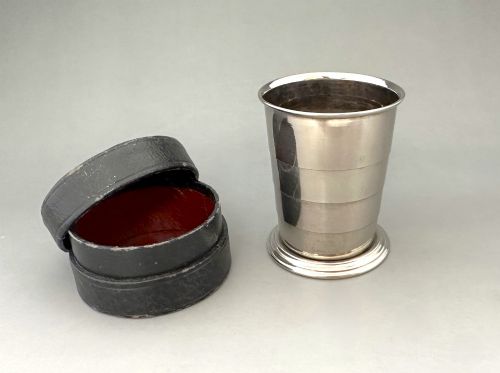


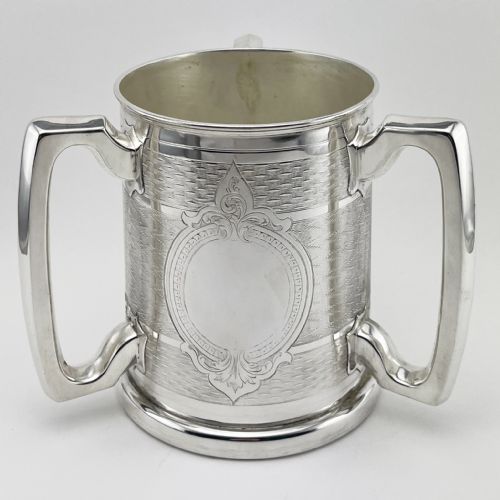


Victorian Silver Mug
A victorian silver mug carries the weight of 19th-century domestic ceremony, prized as a traditional gift for infants or a sturdy vessel for ale.
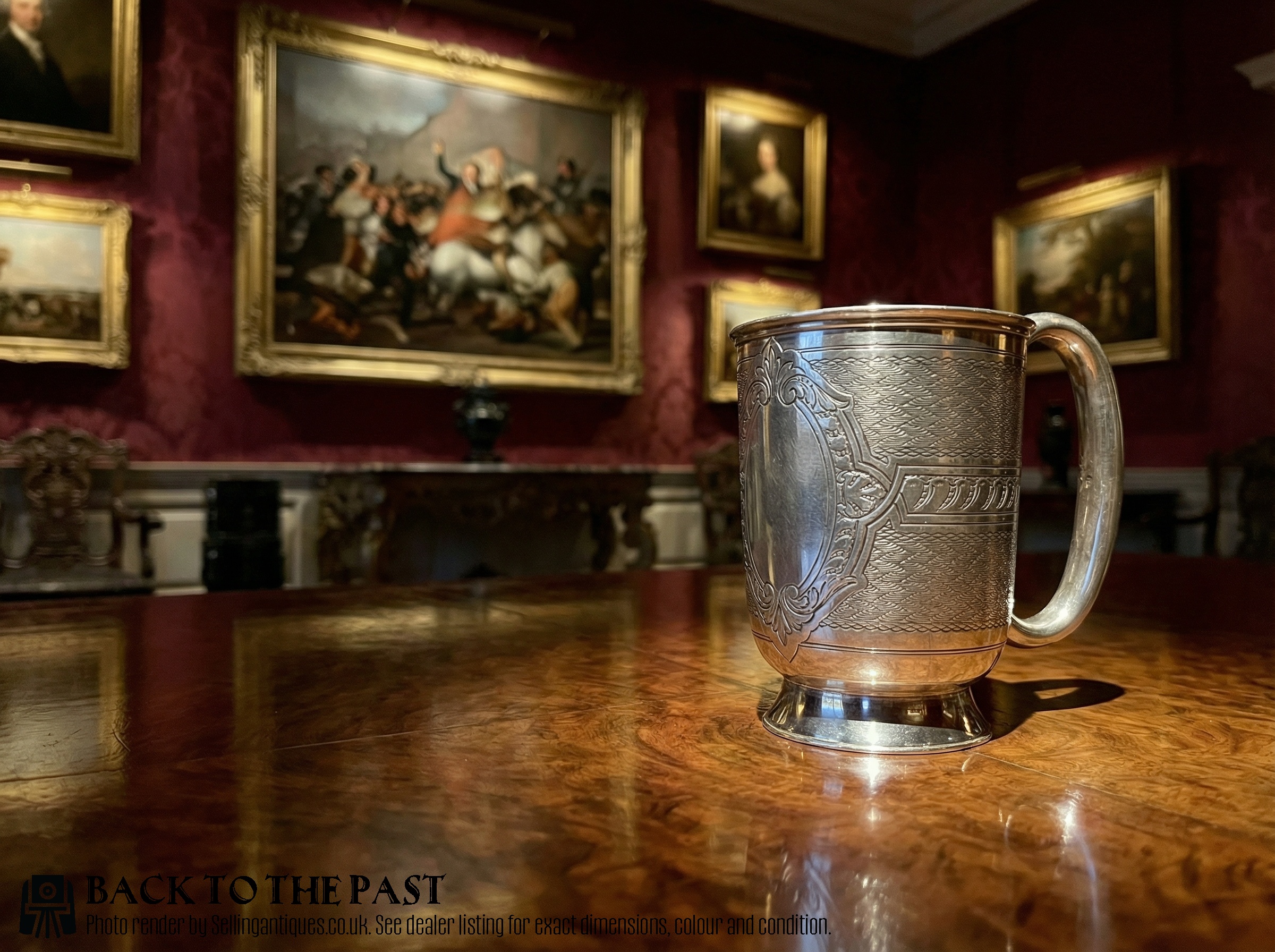
Victorian Silver Mug
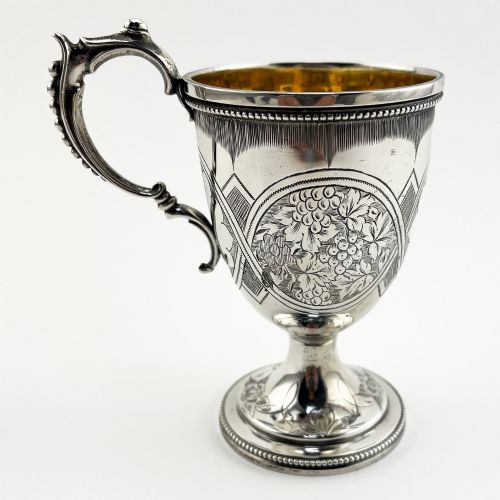
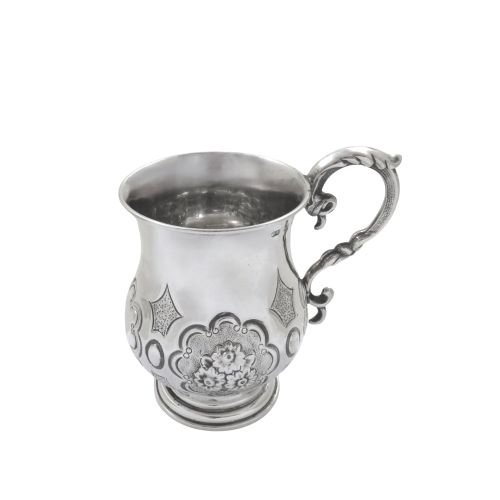
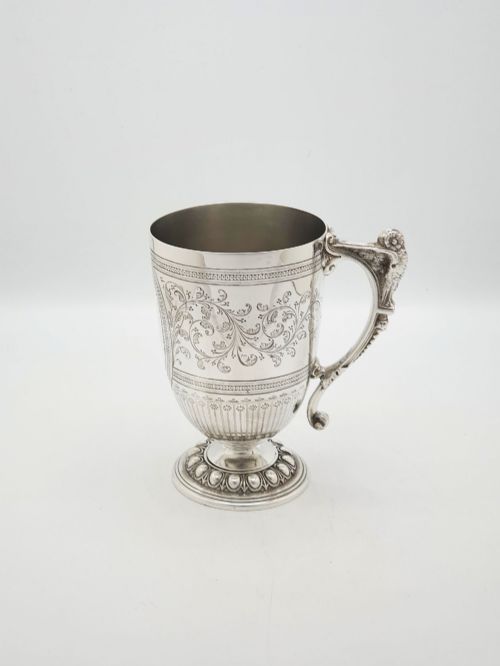
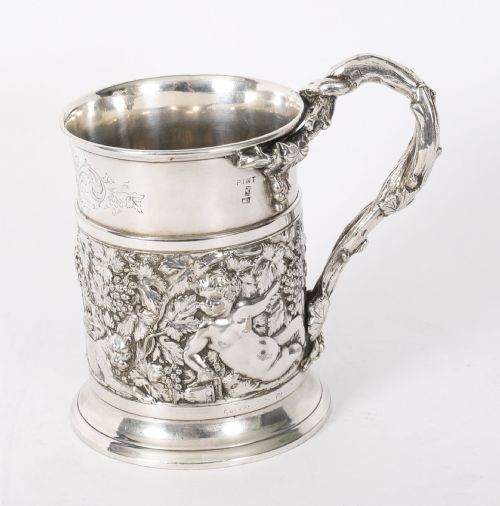
When searching for a victorian silver mug, collectors encounter a domestic vessel defined by the 19th century, varying from small christening cups to larger pint tankards and loving cups. The most common form on this page is the sterling silver christening mug, often featuring floral engraving, repoussé work, or a baluster shape.
The selection extends beyond standard sterling to include silver plated items, silver gilt examples, and pieces combining silver rims or mounts with stoneware, glass, or leather. Styles range from strict Georgian revivals and Rococo scrollwork to later Arts and Crafts, Aesthetic Movement, and Art Nouveau designs.
Originating predominantly from English assay offices in London, Birmingham, and Sheffield, these vessels also include colonial work such as Australian pieces. They reflect the domestic rituals of their era, serving as personal presentation items, shaving mugs, or functional drinking vessels.
How they were made
Makers utilised sterling silver and silver plate, frequently shaping bodies through spinning or raising sheet metal over a stake. Details like handles, feet, and rims were cast separately and soldered onto the main body.
Surface decoration relied heavily on hand engraving, engine turning, and embossing, creating floral motifs, birds, or narrative scenes. Many vessels combined metal with other media, pairing silver mounts with Doulton Lambeth stoneware, glass, or leather.
Victorian Silver Mug Retail Price Guide 2026
Typical asking prices for victorian silver mug among the pieces listed under this phrase on Sellingantiques today, from the lower quarter to the upper quarter. They describe what is for sale here now, not the wider market.
Object forms range from small christening cups and shaving mugs to heavy pint tankards, loving cups, and harvest vessels.
What varies in quality
The gauge of the metal dictates much of the vessel's heft and durability, separating thin, pressed items from substantial, heavy-gauge pieces that resist denting. Superior examples display crisp, deep chasing and engraving rather than shallow, worn surface decoration.
Consideration also rests on the integration of applied elements, such as cast handles and rims, where clean solder lines and balanced proportions indicate superior silversmithing. The presence of clear, well-struck hallmarks adds historical clarity and authority to the piece.
G R Collis·Watts and Harton·Fenton Brothers·George Adams·Thomas Bradbury and Sons·Martin Hall and Co·Elkington and Co Ltd
The Victorian Silver Mug Glossary
- Baluster
- A vase-shaped architectural form with a rounded lower body and a flared rim, frequently seen in christening mugs.
- Tyg
- A large drinking vessel featuring multiple handles, allowing it to be passed around a table among several drinkers.
- Repoussé
- A metalworking technique where the artisan hammers the design from the reverse side to form a raised relief on the front.
- Stirrup cup
- A small drinking vessel handed to a rider before a hunt, often shaped like an animal head or designed without a flat base.
- Silver gilt
- Sterling silver that has been coated with a thin layer of gold on its interior or exterior surfaces.
- Assay mark
- An official stamp indicating the purity of the metal, the location of the assay office, and the year of manufacture.
Victorian Silver Mug: Frequently Asked Questions
How were silver mugs used?
These vessels functioned primarily as personal drinking cups for everyday use or special household occasions. Larger variants like tankards and loving cups held ale or cider at the dining table.
Some specialised forms served specific domestic tasks, such as shaving mugs equipped with removable soap trays. Others remained purely decorative presentation pieces displayed in a cabinet.
How do I identify the date?
Dating relies heavily on the stamped hallmarks found on the metal surface, which indicate the specific assay office and year of testing. Stylistic clues, such as Rococo scroll handles or Art Nouveau motifs, also point to specific decades within the era.
Comparing the form and decorative technique against documented maker marks helps narrow the manufacturing period. Many pieces bear clear registry or date letters stamped directly into the silver.
Are silver plated items antique?
Silver plating was common during the period, utilising techniques like electroplated nickel silver to provide the appearance of solid metal at a lower cost. These plated pieces share the same period styles and functional uses as their solid silver counterparts.
Manufacturers often marked their plated wares differently from sterling pieces, sometimes omitting traditional assay office stamps. Assessing the quality involves looking at the crispness of the embossing and the durability of the plating.