
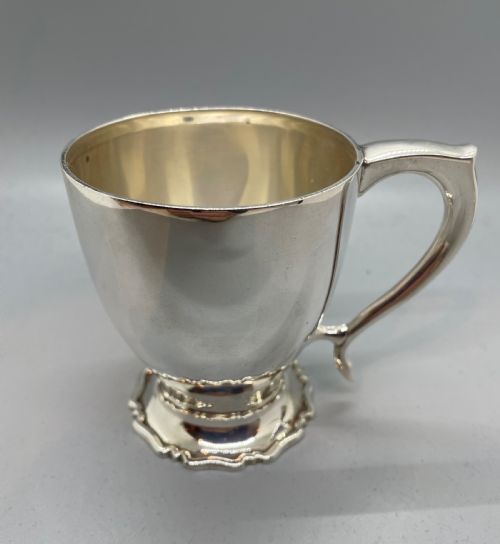


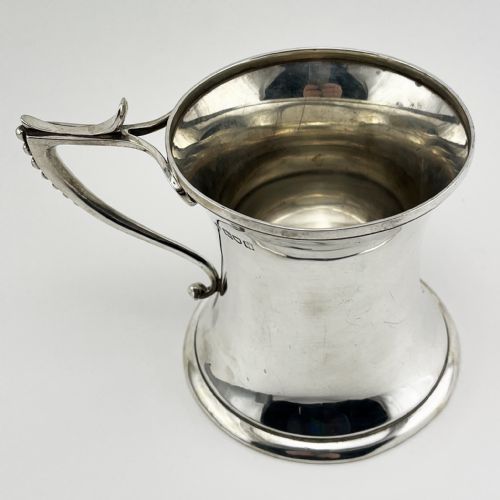
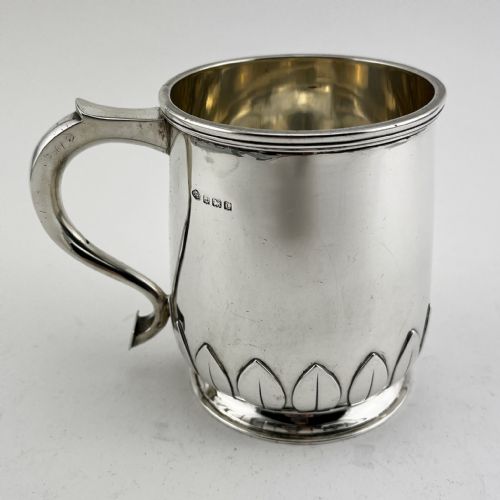
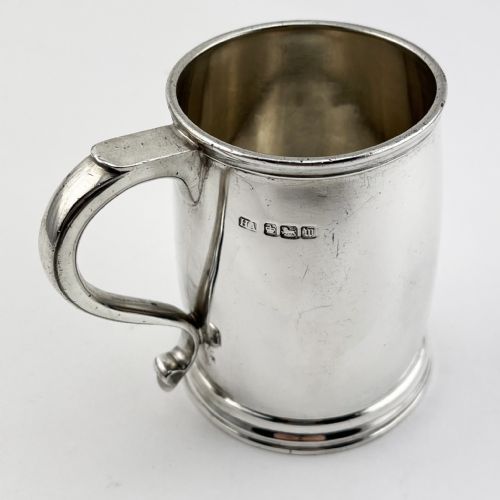


Hallmarked Silver Tankard
A hallmarked silver tankard brings tactile weight and bright metal to the table, forged from solid sterling silver across several historic eras.
Identifying hallmarked silver tankard examples
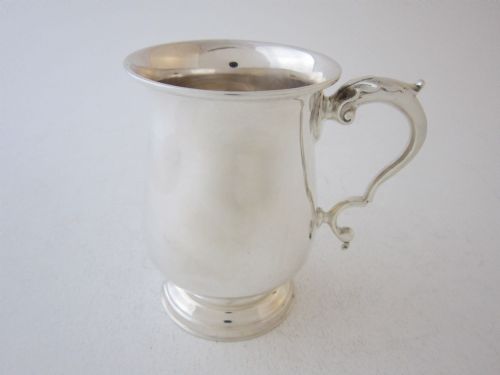
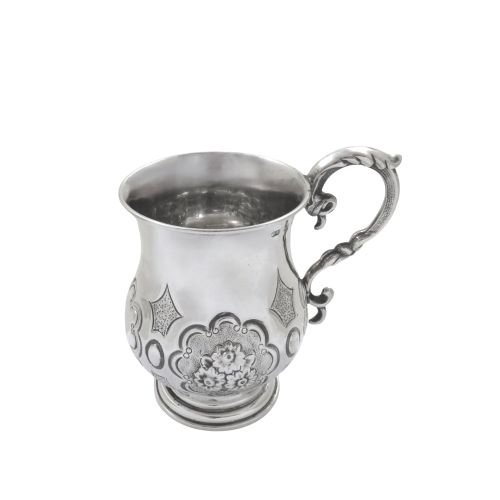
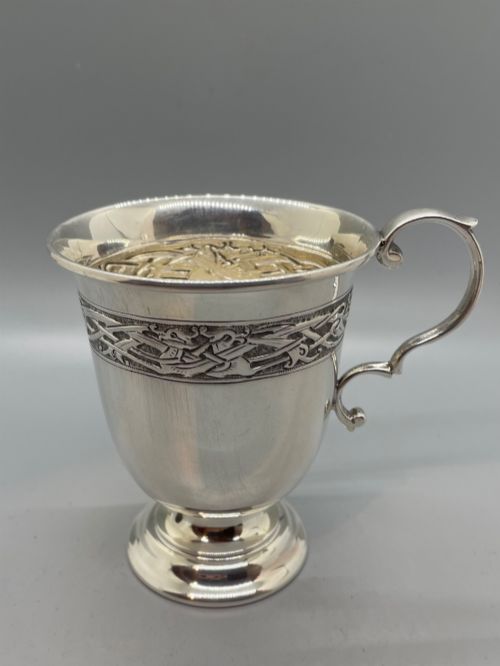
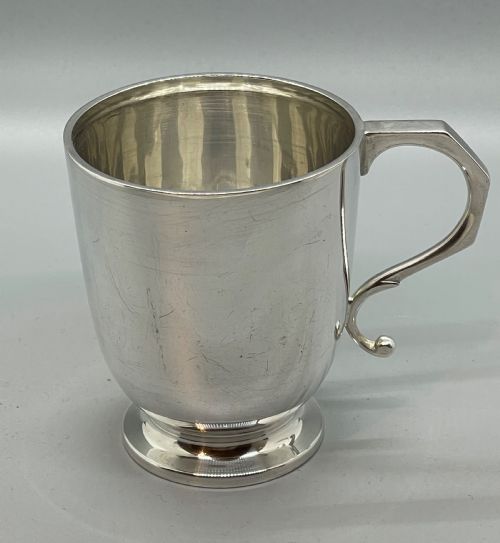
A hallmarked silver tankard is a robust drinking vessel cast or shaped from solid sterling silver, stamped with official assay marks to guarantee its metal content. Buyers searching for a hallmarked silver tankard encounter sturdy drinking vessels designed for practical use or display, appearing in forms ranging from plain cylindrical bodies to ornamented period pieces.
The pieces on this page span the 18th century, 19th century, Victorian, Georgian and Art Nouveau styles, alongside later examples produced after 1960 and during the Edwardian and George V periods. Forms include lidded vessels, mugs, and quarter pint, half pint, or full pint capacities.
Most examples originate from British assay offices, featuring precise town marks, date letters and maker's marks alongside the lion passant indicating sterling standard. Whether examining a George III Scottish piece or a later 20th-century design, each vessel carries the distinct stamp of its working period.
Materials and construction methods
Every piece listed in the evidence is made from sterling silver, a durable alloy containing ninety-two point five percent pure silver with copper added for strength. Silversmiths worked this metal into thick sheets or cast it directly, hammering and soldering the components to create rigid, watertight vessels capable of holding liquids.
Handles were securely attached to the main body using strong silver solder, shaped to offer a comfortable grip on heavy pint and half pint tankards. Lidded variants required precise hinge work and thumbpieces, fitted closely to the rim to ensure smooth opening and closing.
Retail Price Guide 2026
Typical UK retail prices for hallmarked silver tankard, calculated from the Sellingantiques database of over a million retail prices indexed since 2003. This retail price guide relies exclusively on Sellingantiques data; no external sources or auction records are used, so the figures do not describe the wider market.
Some sturdy vessels hold precisely a quarter pint, proving that historic drinkers occasionally preferred a very modest measure indeed.
Distinctions in craftsmanship and form
Quality in these drinking vessels rests upon the thickness of the sterling silver sheet and the integrity of the original construction. Substantial metal weight provides a reassuring heft in the hand, separating solid, durable examples from lighter, more utilitarian vessels.
The clarity and completeness of the hallmarks stamped into the silver also define the piece, as well-preserved assay stamps allow precise dating and attribution. Finer examples display clean lines, crisp hand-engraving where decoration is present, and seamless handle joints that demonstrate the silversmith's technical skill.
William Neale & Son Ltd·Z Barraclough & Sons·P Cunningham & Sons·Turner & Simpson·Viners Ltd·William Hair Haseler
The Hallmarked Silver Tankard Glossary
- Sterling silver
- An alloy of silver containing ninety-two point five percent silver by mass and seven point five percent other metals, usually copper. This standard ensures the metal is durable enough for functional drinking vessels while maintaining a bright appearance.
- Hallmark
- An official stamp applied by an assay office to indicate the purity of the metal, the maker, and the year of production. These marks provide a reliable history of the object's origin.
- Assay office
- An official body that tested precious metals and applied the required hallmarks to items submitted by silversmiths. British offices include London, Birmingham, Sheffield, and Edinburgh.
- Lion passant
- A walking lion stamp used in British hallmarking to signify sterling silver standard. This symbol appeared on items produced across Georgian, Victorian, and later eras.
Frequently Asked Questions
What capacities do these tankards come in?
The pieces recorded in the evidence include quarter pint, half pint, and full pint sizes, alongside unlabelled mugs and larger tankards.
These varied capacities accommodated both individual drinking portions and larger communal uses across the Georgian, Victorian, and 20th-century periods.
How do I read the hallmarks?
British hallmarks typically combine a standard mark like the lion passant, a town mark for the assay office, a date letter, and a maker's mark. Together these symbols reveal exactly where and when the silver was tested.
Matching the stamped letters against official assay records allows you to date the vessel to a specific year and identify the silversmith who made it.
Were all tankards fitted with lids?
Not all examples feature a lid; the evidence includes both lidded silver tankards and open-topped mugs or tankards.
Open vessels functioned simply as large drinking cups, while lidded variants helped keep contents covered during use.
How can I tell a Georgian piece from a later one?
Georgian examples, such as those from the 18th century, carry specific date letters and style characteristics typical of the period, often featuring simpler, heavier silhouettes. Later Victorian, Edwardian, and George V pieces reflect the design tastes and manufacturing techniques of their respective eras.
Examining the shape, handle design, and the specific punch marks of the hallmarks provides the clearest guide to the vessel's age.