


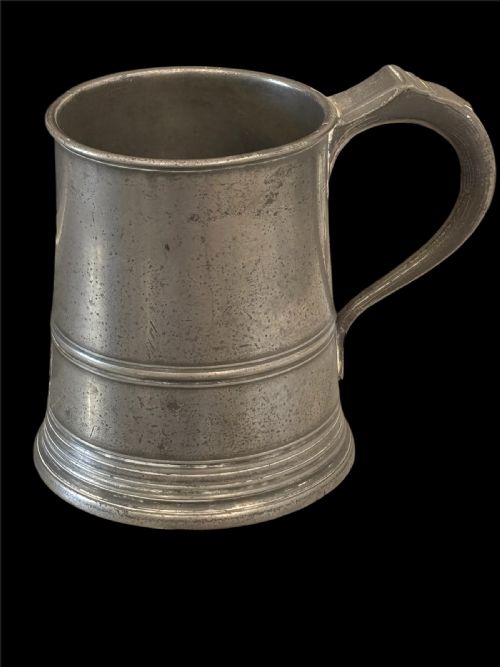


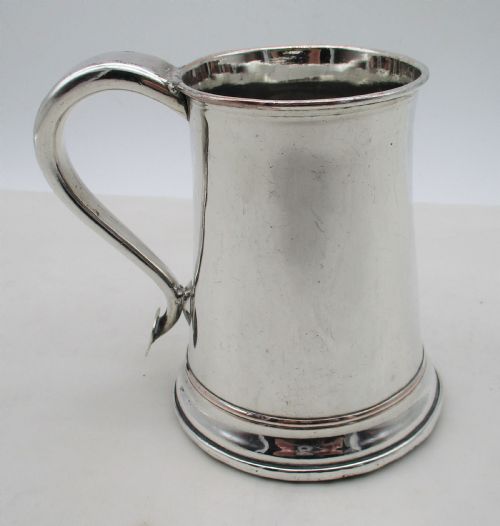

Silver Ale Mug
These silver ale mug examples offer solid drinking vessels from past centuries, providing genuine historic character for use or display.
Silver Ale Mug
A silver ale mug is a sturdy drinking vessel designed for malt beverages, appearing in forms such as tankards and mugs across this selection. The pieces on this page span the eighteenth and nineteenth centuries, including items from the Georgian and Victorian eras.
Buyers will encounter various sizes here, ranging from small pint examples to larger quart tankards and lidded formats. Most pieces originate from the eighteenth and nineteenth centuries, including items dated to seventeen fifty-one and around eighteen hundred.
While sterling silver and solid silver pieces appear, a large proportion of the selection comprises Old Sheffield Plate and silver plate. Pewter and copper examples also feature alongside the plated and solid silver items.
How they were made
Makers shaped solid sterling silver and copper bases through traditional metalworking techniques to form the body of each mug. Old Sheffield Plate examples involve fusing a layer of silver to a copper core, a method prominent in the eighteenth century.
Pewter vessels utilise tin alloyed with other metals, cast and finished to create robust tavern and household mugs. Gilding sometimes adds interior or decorative highlights to the finished silver and plated surfaces.
Listings span the eighteenth century, nineteenth century, and nineteen forty, featuring sterling silver, Old Sheffield Plate, pewter, and copper.
Judging quality
Quality depends upon the weight of the metal and the integrity of the fused silver layer on plated items. Solid silver and substantial Old Sheffield Plate display crisp lines and secure handle attachments.
The presence of maker marks or specific period hallmarks adds clarity to the origin and date of the vessel. Surviving lids and original gilding preserve the intended functional design of the period.
Richard Morton·Watts and Harton
The Silver Ale Mug Glossary
- Old Sheffield Plate
- A composite material made by fusing a thin sheet of silver to a thicker copper ingot. This technique preceded modern electroplating and creates distinct edge details.
- Tankard
- A tall drinking vessel, typically featuring a single handle and sometimes a hinged lid. They were commonly used for ale and beer.
- Pewter
- A malleable metal alloy consisting primarily of tin, often combined with copper and antimony. It provides a dark, matte finish suitable for everyday historic tavern use.
- Quart
- A historic unit of liquid capacity equivalent to two pints. Quart tankards offer a larger drinking volume than standard pint mugs.
Silver Ale Mug: Frequently Asked Questions
Are these silver ale mugs safe for drinking?
Many solid silver and pewter mugs remain suitable for holding cold beverages today. Buyers should check the interior condition and material composition before regular use.
Silver plate and Old Sheffield Plate require gentle cleaning to protect the underlying copper layer from exposure.
How do I date an old tankard?
Hallmarks on solid silver pieces provide specific year letters and maker marks for precise dating. Stylistic clues and construction methods help place plated and pewter items within the eighteenth or nineteenth century.
Comparing handle designs and base profiles against known examples clarifies the period of manufacture.
What is Old Sheffield Plate?
Old Sheffield Plate is an early form of plated metal created by heat-fusing silver onto copper. This process differs entirely from later nineteenth-century electroplating methods.
Examining the edges often reveals a thin line of copper where the fused sheets meet.
What is the difference between a mug and a tankard?
Tankards traditionally incorporate a sturdy handle and frequently include a hinged lid to cover the drink. Mugs tend to be open-topped vessels with a simple side handle for lifting.
Both forms served ale and beer in domestic and tavern settings throughout the Georgian and Victorian eras.