





English Sterling Silver Mug
An English sterling silver mug brings substantial weight and centuries of silversmithing directly to the table or desk.
English Sterling Silver Mug
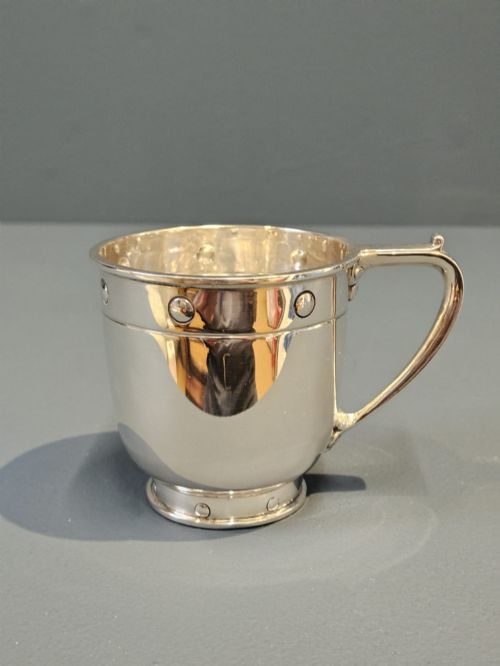
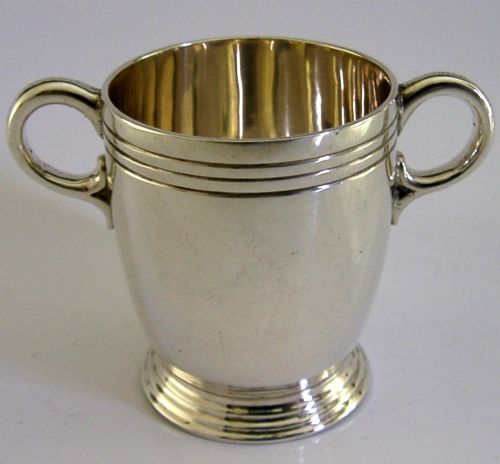
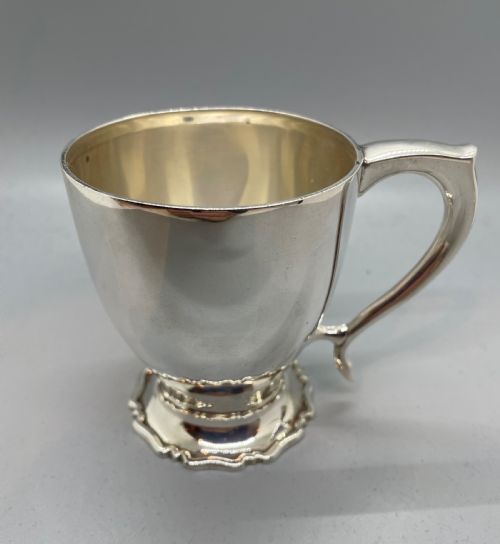
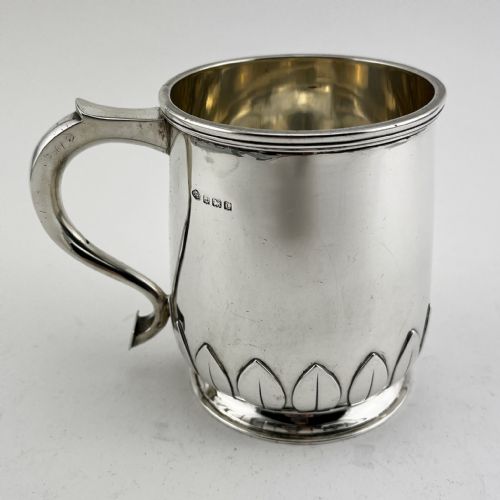
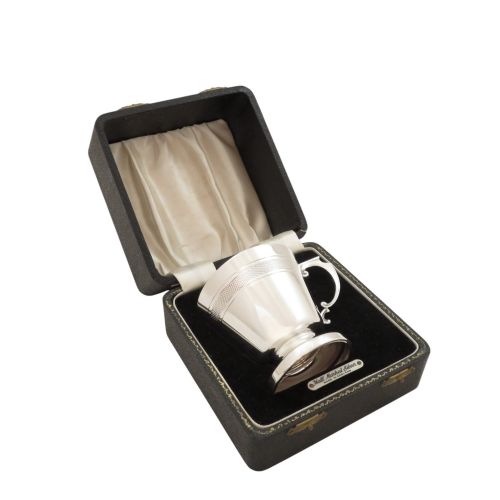
When you search for an english sterling silver mug, you encounter drinking vessels, tankards, and christening cups spanning from the seventeenth century through the mid-twentieth century. The selection ranges from early Charles II heavy tankards to George V vessels and later twentieth-century pint mugs.
Most examples you will meet on this market lean towards smaller christening mugs and child's cups, alongside pint-sized drinking vessels. Styles shift across the eras, taking in plain bodies, engraved surfaces, Art Deco barware, and Art Nouveau motifs.
Origins stretch across various English assay offices and decades, encompassing Georgian and Victorian periods alongside Edwardian and 1930s output. These vessels served practical drinking functions or marked significant childhood milestones through presentation pieces.
What varies in quality
Substance and wall thickness dictate the tactile presence of the metal, separating lighter vessels from substantial pieces designed to endure heavy handling. The heft of the silver influences how the mug sits in the hand.
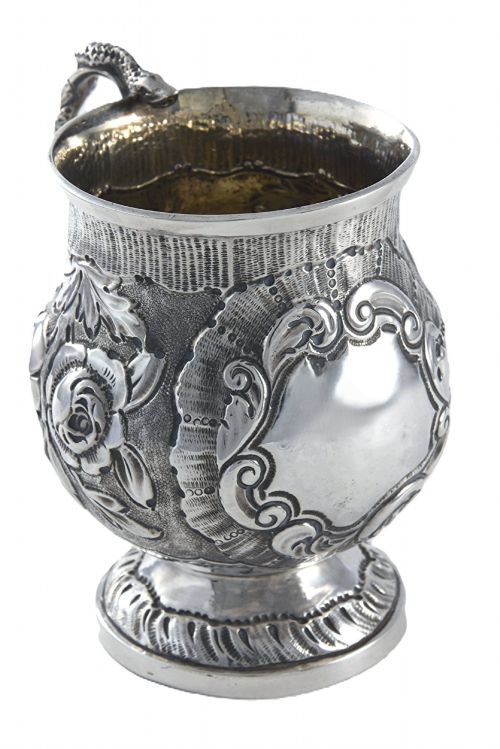
Artistry in decoration creates another distinction, moving from plain, utilitarian bodies to elaborate hand-engraved scenes or cast embellishments such as cherubs. The crispness of the original silversmith's marks and the retention of clean lines elevate the standing of a piece.
Victorian silversmiths sometimes decorated christening mugs with fable scenes involving cranes and wolves, giving children an early lesson in Aesop.
Barker Bros·William Bateman
The English Sterling Silver Mug Glossary
- Sterling silver
- A silver alloy containing 92.5 percent pure silver and 7.5 percent other metals, usually copper, chosen for strength and durability. This standard forms the baseline for British silver output.
- Hallmark
- A set of official marks stamped onto precious metal items to guarantee their purity and origin. These marks typically include the maker's mark, standard mark, assay office mark, and date letter.
- Tankard
- A tall, cylindrical drinking vessel with a single handle, frequently fitted with a base rim. Early English examples often display substantial weight and sturdy proportions.
- Christening mug
- A small presentation cup given to mark a child's naming ceremony or birth. These pieces frequently feature engraved dedications or child-focused motifs.
- Gilt
- A thin layer of gold applied to the interior or exterior surface of a silver object. This technique protects the silver from tarnishing when in contact with acidic liquids.
English Sterling Silver Mug: Frequently Asked Questions
What were silver mugs used for?
These vessels served as everyday drinking vessels for ale, beer, or water in domestic settings. Larger tankards held generous measures at the table.
Smaller christening mugs functioned primarily as presentation pieces for children. Families gifted them to mark births or naming ceremonies, turning practical items into family heirlooms.
How do I date an English silver mug?
Dating relies heavily on the stamped hallmarks found on the body or base of the piece. Assay office symbols and specific date letters correspond to exact years of production.
Stylistic cues also help determine the period. Charles II pieces look very different from 1930s Art Deco barware or Victorian child's mugs.
Can I use an antique silver mug daily?
Solid sterling silver stands up well to regular handling and use. Many pint mugs and beakers were built for functional drinking.
Careful washing by hand preserves the surface and any engraved details. Avoid abrasive cleaners to maintain the finish over time.
What is the difference between a mug and a tankard?
Tankards traditionally refer to larger, heavier cylindrical drinking vessels from earlier periods. They often possess a distinct base rim and robust handle.
Mugs span a wider range of sizes and eras, including smaller christening cups and twentieth-century pint vessels. The terms sometimes overlap in historical listings.