


Victorian Silver Beaker
These robust victorian silver beaker examples bring tactile history to the table, combining solid metalwork and horn with Victorian utility.
Victorian Silver Beaker Forms and Origins
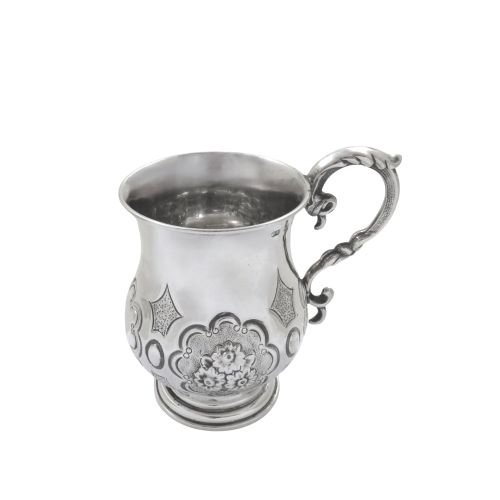
A victorian silver beaker spans simple tapering shapes, christening mugs, and ingenious collapsible picnic vessels designed for travel. The selection includes standard solid metal cylinders alongside horn cups mounted in sterling silver and silver gilt interiors.
Makers produced these pieces across the nineteenth century, with examples reflecting Aesthetic Movement, Art Nouveau, and Anglo-Indian design influences. Surviving pieces range from plain utilitarian vessels to heavily chased drinking cups adorned with fruit, foliage, and birds.
Materials and Construction Techniques
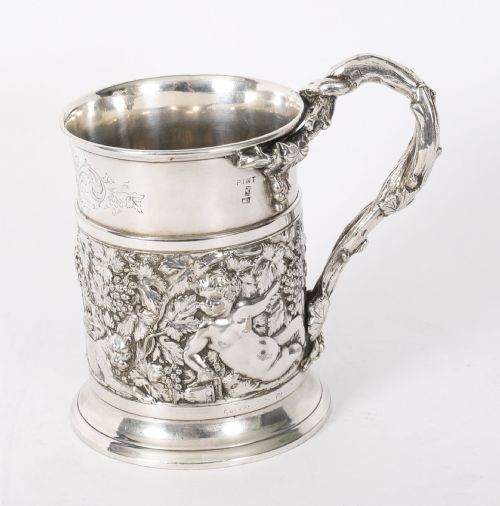
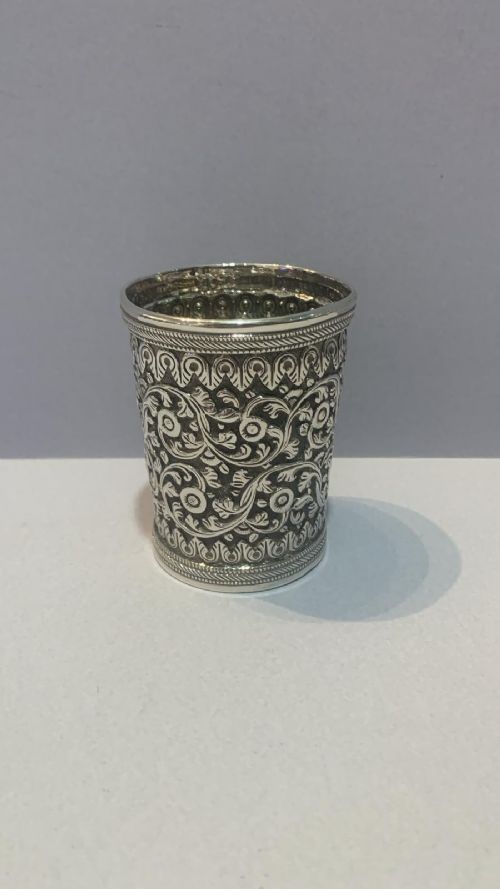
Silversmiths utilised sterling silver, silver gilt, and silver plate, frequently pairing the metal with natural horn and clear glass rims. Many cylindrical bodies display fully hand-engraved floral scenes, chased gargoyles, and naturalistic grapevine motifs in high relief.
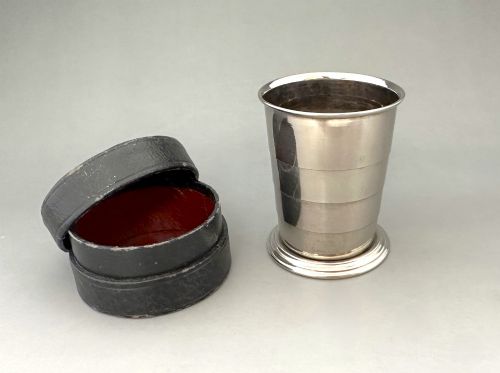
Travelling picnic versions employ telescoping nested sections to create a collapsible mechanism housed in fitted leather cases. Horn variations feature protective silver rims and shields secured firmly to the natural organic material.
Retail Price Guide 2026
Typical UK retail prices for victorian silver beaker, calculated from the Sellingantiques database of over a million retail prices indexed since 2003. This retail price guide relies exclusively on Sellingantiques data; no external sources or auction records are used, so the figures do not describe the wider market.
Listings feature sterling silver, silver gilt, and silver plate alongside natural horn and clear glass variants.
Distinctions in Quality and Design
Execution of decorative details like naturalistic grapevines and figural gargoyles separates standard production items from master silversmith output. The integrity of collapsible mechanisms and the clean joining of silver mounts to horn bodies further dictate overall grade.
Garrard·Thornhill London·Briggs·Barnard·Walter and John Barnard·Carnelly and Co
The Victorian Silver Beaker Glossary
- Sterling silver
- A silver alloy containing 92.5 percent pure silver and 7.5 percent other metals, usually copper, ensuring durability for functional drinking vessels.
- Silver gilt
- Sterling silver that has been coated with a thin layer of gold on the interior or exterior surface, providing a rich finish.
- Chased decoration
- A technique where the silversmith hammers metal from the front to depress the surface and create raised ornamental designs without removing material.
- Collapsible beaker
- A portable drinking vessel engineered in sliding nesting sections to fold down flat into a compact leather travelling case.
- Horn beaker
- A drinking cup formed from natural animal horn, typically fitted with a protective sterling silver rim and circular base mount.
Frequently Asked Questions
What is a collapsible victorian silver beaker?
A collapsible victorian silver beaker consists of telescoping rings that slide inside one another to form a flat, compact cylinder for travel.
These portable drinking cups were frequently supplied in custom leather cases for picnics and journeys.
How were silver mounted horn beakers used?
Silver mounted horn beakers served as sturdy everyday drinking vessels for wine, ale, or water during the nineteenth century.
The natural horn body offered insulation and strength, while the sterling silver rim protected the drinking edge.
What motifs appear on engraved victorian silver beakers?
Engraved victorian silver beakers frequently feature floral scenes, naturalistic grapevine designs, foliage, and occasionally birds or gargoyles.
Some pieces also incorporate blank shields or cartouches intended for personal initials or family crests.
How do I identify the date of a silver beaker?
The date of a silver beaker is typically identified through official hallmarks stamped into the metal by an assay office.
These marks indicate the city of assay, the standard of silver, and a specific date letter corresponding to the year of manufacture.