



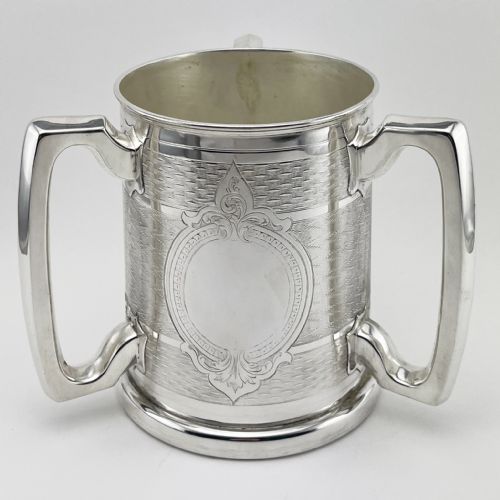


Victorian Silver Tankard
Victorian silver tankard pieces are robust drinking vessels crafted in sterling silver and silver plate, prized for their traditional barware utility.
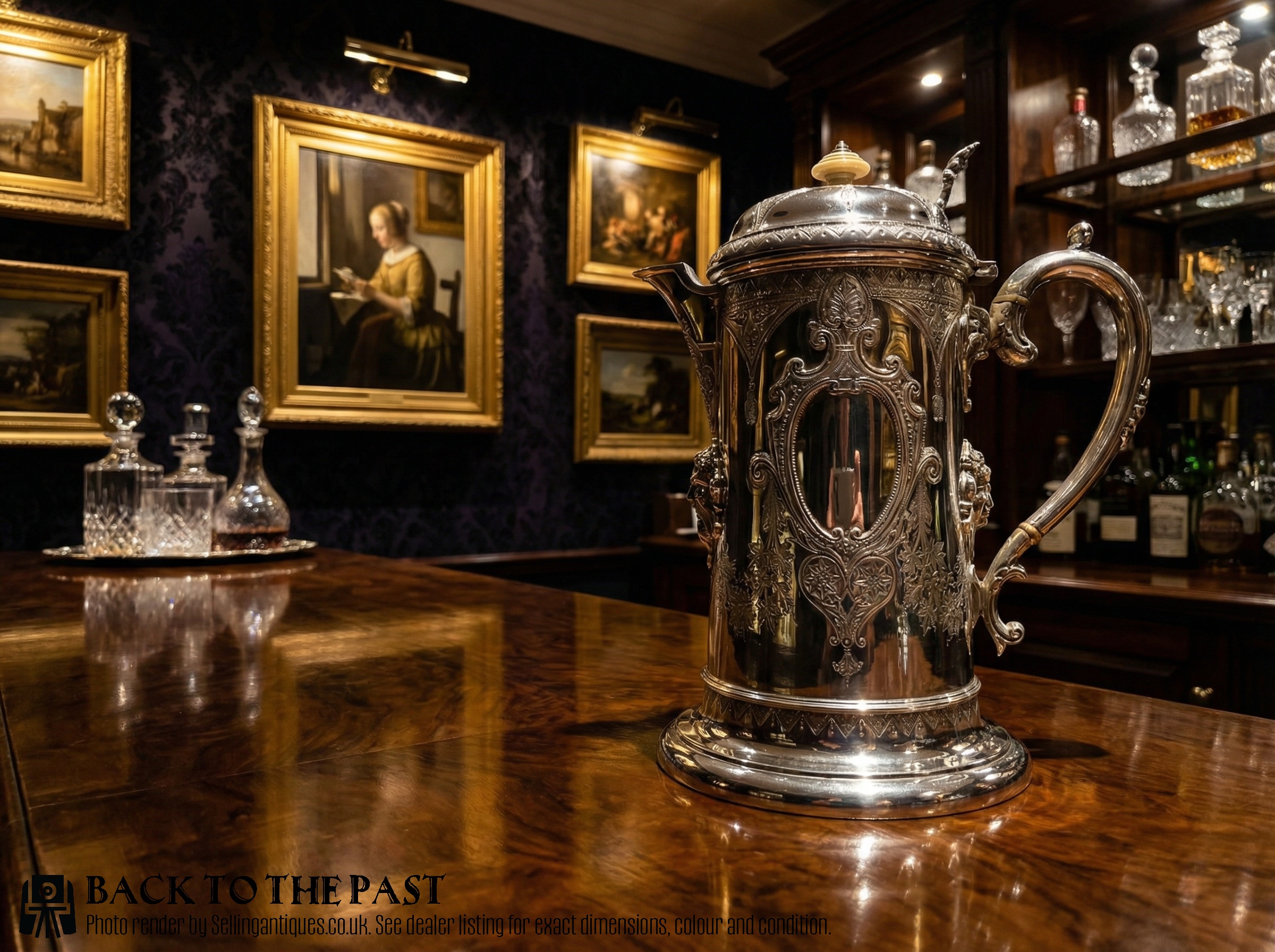
Forms and Origins
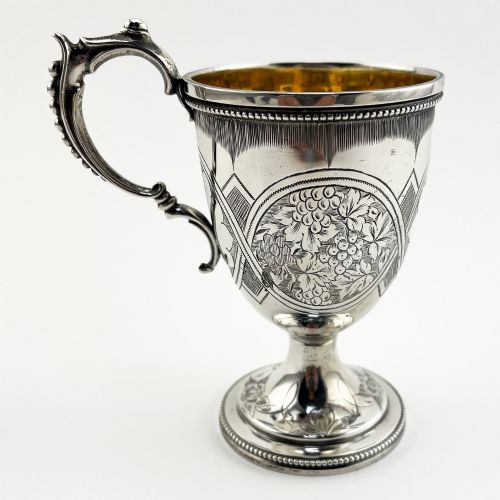
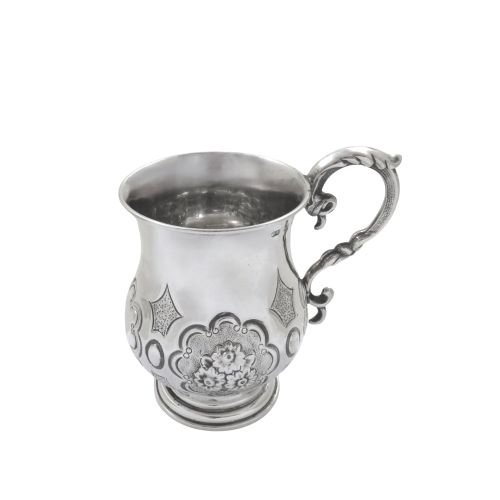
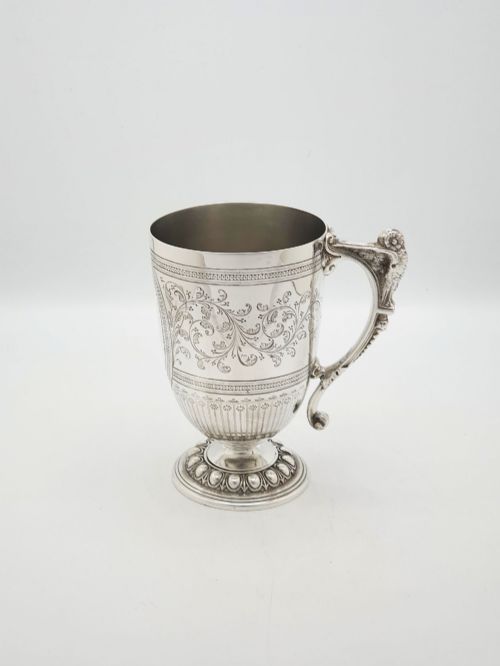
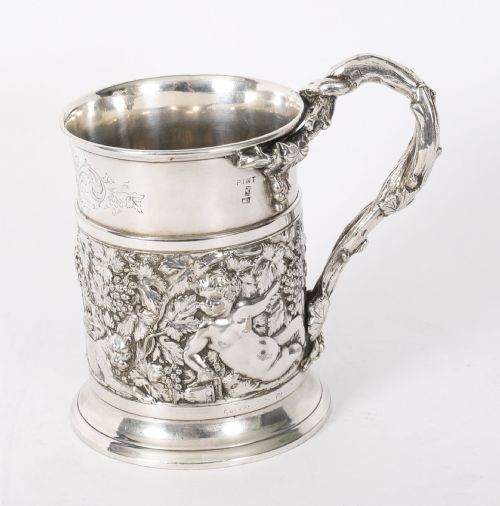
A victorian silver tankard spans functional barware and domestic presentation pieces, appearing as pint or half-pint mugs, lidded jugs, and smaller christening vessels. The archive shows an abundance of standard pint tankards alongside smaller mugs designed for children.
Most examples originate from major English assay offices in London, Birmingham, Sheffield, and Exeter, occasionally extending to Scottish makers. Pieces take simple straight-sided forms, baluster shapes, or ornately chased designs featuring motifs like pheasant shooting scenes and pineapple patterns.
Materials and Technique
Silversmiths utilised sterling silver and silver plate, occasionally combining the metalwork with organic materials such as bone, leather, velvet, glass bases, and oak. Electro forming also appears in the production of plated lidded variants.
Construction techniques involve heavy-gauge sheet metal shaping, casting handles, and applying detailed hand-chased ornamentation or engraving. Lidded models incorporate hinged lids, thumbpieces, and securely fitted handles suited for regular service.
Retail Price Guide 2026
Typical UK retail prices for victorian silver tankard, calculated from the Sellingantiques database of over a million retail prices indexed since 2003. This retail price guide relies exclusively on Sellingantiques data; no external sources or auction records are used, so the figures do not describe the wider market.
Listings feature sterling silver, silver plate, leather, velvet, and bone across pint tankards, christening mugs, and lidded jugs.
Standard of Manufacture
The weight of the metal separates standard utilitarian mugs from substantial presentation pieces, with larger three-pint vessels and heavy gauge pint tankards sitting at the upper end. Finely chased or engraved decorative programmes, such as game scenes or intricate floral motifs, indicate greater workshop investment.
The involvement of recorded silversmiths and clear assay office marks provide distinct points of separation in provenance and desirability. The integration of specialised elements like glass bottoms, fitted wooden bases, or complex cast handles further distinguishes finer examples.
Barnard·William Hunter·George Unite·Atkin Bros·Daniel and Charles Houle·Josiah Williams and Sons·Henry William Curry·Martin Hall and Co
The Victorian Silver Tankard Glossary
- Sterling Silver
- A standard alloy containing 92.5 percent silver by weight, widely utilised across these drinking vessels.
- Christening Mug
- A smaller presentation mug often given to mark a birth or baptism, frequently categorized alongside tankards in records.
- Assay Office
- An official body that tested and hallmarked precious metals, with active centres in London, Birmingham, Sheffield, and Exeter.
- Chasing
- A metalworking technique where the artisan pushes metal from the front to create raised decorative motifs without removing material.
- Baluster
- A vertical architectural form with a swelling lower portion, adapted for the body shape of specific silver tankards.
Frequently Asked Questions
What is a Victorian silver tankard?
A Victorian silver tankard is a drinking vessel produced during the nineteenth century, typically fashioned from sterling silver or silver plate for ale, beer, or cider.
These pieces range from plain half-pint and pint mugs to large lidded flagons and smaller christening mugs featuring chased or engraved decoration.
How were these tankards used?
They functioned as practical drinking vessels for beer, cider, and ale in domestic settings or public houses, as well as decorative presentation pieces.
Smaller christening variants served primarily as commemorative gifts for children rather than everyday drinking cups.
How do I identify the date?
Maker marks and date letters stamped into the metal by official assay offices provide the exact year of manufacture.
Cities such as London, Birmingham, Sheffield, and Exeter each used distinct letter cycles and town marks to denote the period.
What materials are used?
Sterling silver and silver plate form the primary body of the vessels, often accompanied by solid handles and hinged lids.
Selected pieces incorporate secondary materials such as glass bases, oak bodies, bone fittings, or leather and velvet accents.