





Engraved Silver Drinkware
Engraved silver drinkware brings together centuries of metalwork, offering heavy sterling tankards and plated mugs that suit daily use or quiet display.
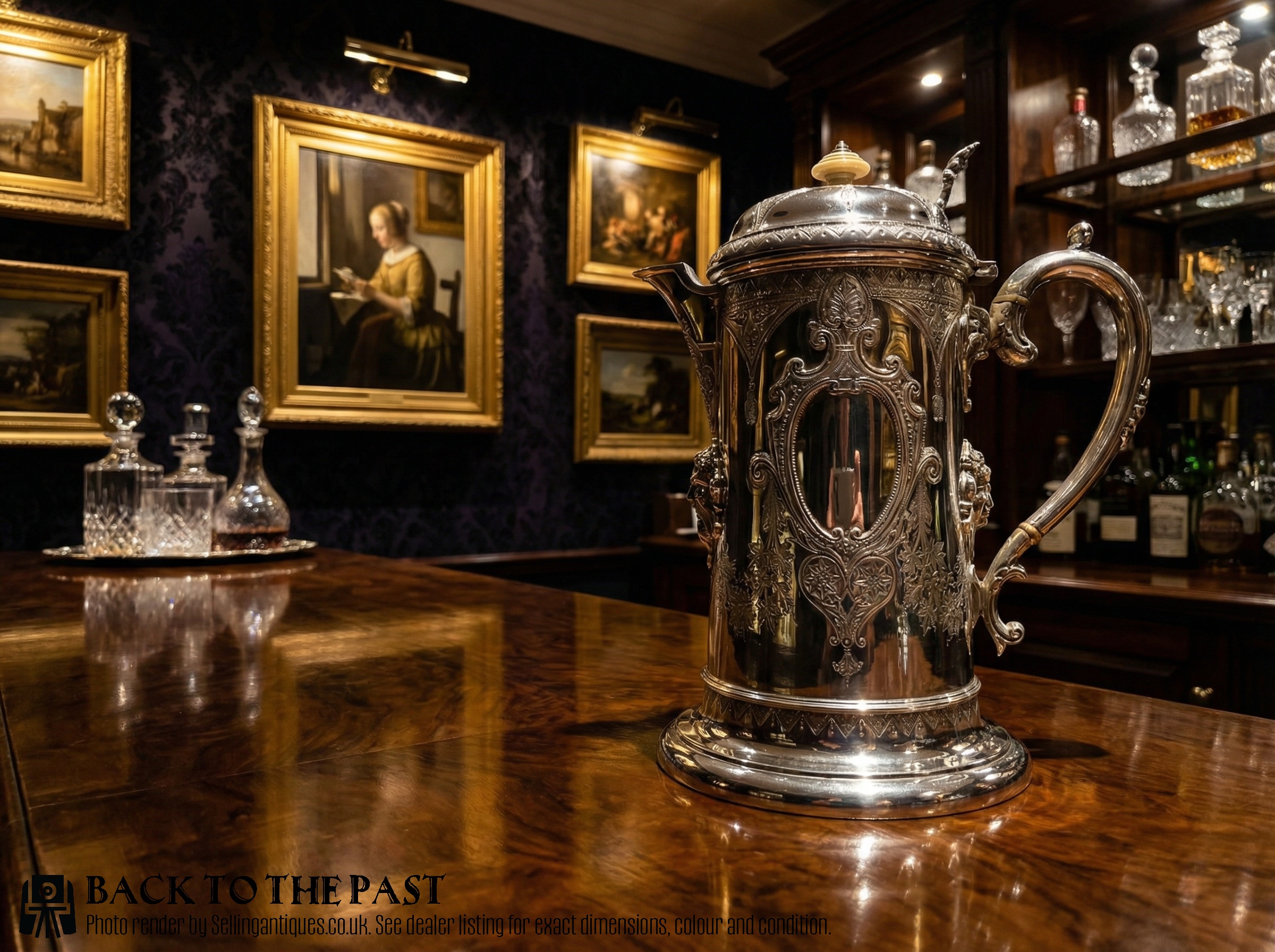
Engraved Silver Drinkware
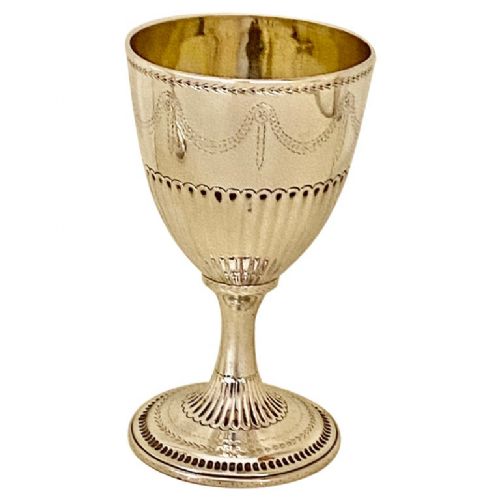
When you search for engraved silver drinkware, you enter a field defined by vessels for beer, wine, spirits and water. These pieces range from Georgian sterling silver goblets to Victorian silver plated mugs and tankards.
You are most likely to meet Victorian and Edwardian examples on this page, alongside earlier Georgian items and pieces from the early twentieth century. Common forms include tankards, mugs, goblets, spirit beakers and vodka cups.
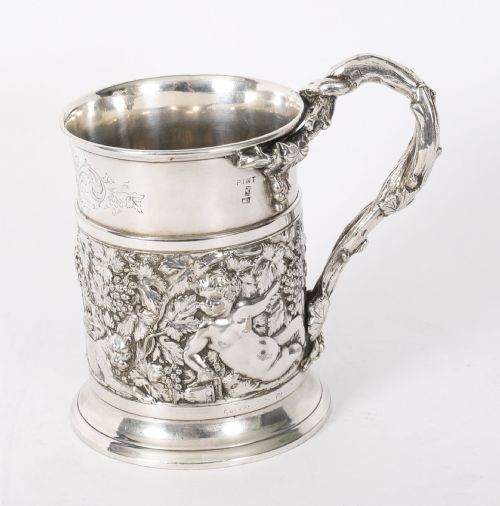
The objects combine practical utility with decorative surface work, featuring chased or engraved patterns that record personal presentation, family milestones or club prizes. Each piece carries the marks of its period, from simple nineteenth century handles to intricate imperial Russian work.
How they were made
Makers shaped sterling silver, Sheffield plate, copper and silver plate into sturdy vessels using traditional hammering, spinning and soldering techniques. Handles were cast separately and soldered securely to the body, often shaped with scrolls or thumbpieces.
Decoration relied on hand engraving, embossing and chasing to cut or push patterns into the metal surface. Interior gilding occasionally protected the metal from acidic contents like wine or beer.
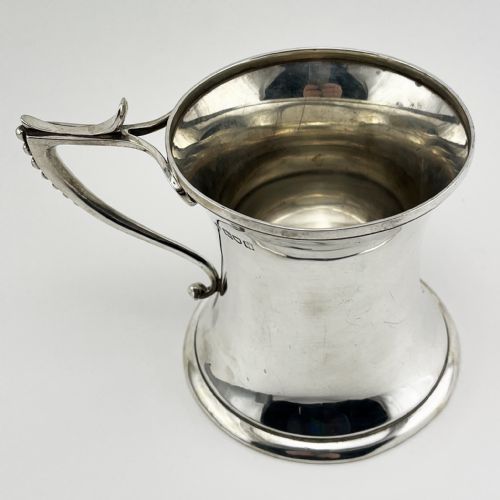
Victorian makers sometimes stretched their imagination into novelty pieces, turning sturdy drinking vessels into conversation starters with curious scroll handles.
What varies in quality
Quality rests on the weight of the metal and the crispness of the hand engraving rather than mere age or size. A well-balanced tankard with a thick gauge of silver or heavy plate holds its form better over generations.
The refinement of the handle attachment and the depth of the chased or engraved detail separate standard workshop output from exceptional pieces by named makers.
G R Collis·George Unite·Aleksandr Timofeyevich Shevyakov
The Engraved Silver Drinkware Glossary
- Sterling silver
- A standard alloy consisting of ninety-two point five percent silver and seven point five percent other metals, usually copper. This composition ensures the metal remains durable enough for daily service.
- Sheffield plate
- An early form of composite metal made by fusing a thin sheet of silver to a thicker copper base. It is identified by the subtle copper bleed visible along exposed edges.
- Tankard
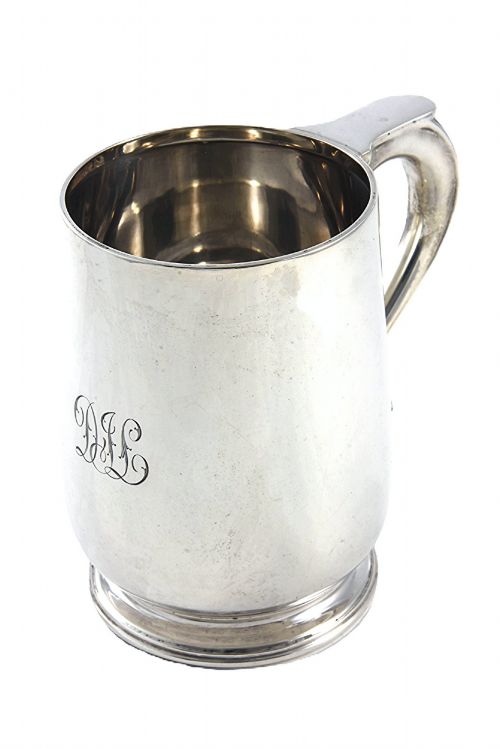
- A tall, cylindrical drinking vessel with a single handle, frequently fitted with a hinged lid for beer or ale. Victorian examples often expanded this form into cider jugs.
- Spirit beaker
- A small, handleless drinking vessel designed for serving concentrated spirits. They appear across nineteenth century British and Russian metalwork.
Engraved Silver Drinkware: Frequently Asked Questions
What is engraved silver drinkware?
Engraved silver drinkware encompasses historical vessels designed for consuming liquids, decorated with surface cutting or embossing. The category includes tankards, mugs, goblets, beakers and jugs.
These items were produced in sterling silver, silver plate and Sheffield plate across the Georgian, Victorian and Edwardian eras for both domestic service and special presentation.
How do I clean engraved silver?
Cleaning requires a soft cloth and a gentle silver polish formulated to avoid stripping thin plating or wearing down delicate hand engraving. Wash vessels in warm soapy water and dry them completely before storage.
Avoid abrasive pastes or harsh dips, which can permanently damage the surface finish and soften the chased details.
Can I drink from antique silver?
Most antique silver drinkware is safe for holding beverages, provided the interior is clean and free of heavy tarnish. Sterling silver and thick plate handle water, wine and beer without issue.
Check for interior gilding or previous repairs to ensure the vessel remains watertight and structurally sound before use.
How do I date a silver mug?
Dating relies primarily on hallmarks stamped into the metal, which record the assay office, the maker and the exact year of production. Stylistic clues like handle shape and engraving depth also help narrow the period.
Unmarked pieces, particularly silver plated items, are dated by comparing their construction methods and decorative motifs to documented examples.