
Antique Silver Christening Mug
An antique silver christening mug is a small, enduring gift spanning the Victorian, Edwardian, and George V periods.
The Form and Character of the Antique Silver Christening Mug
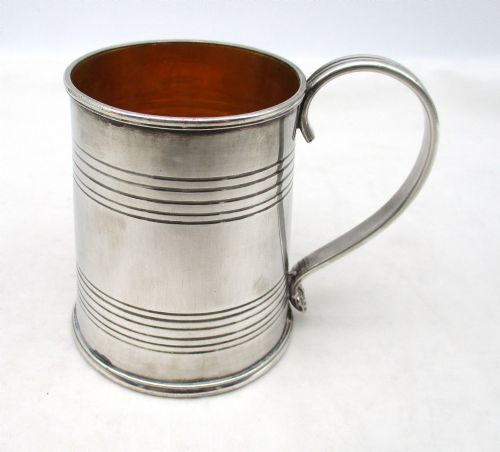
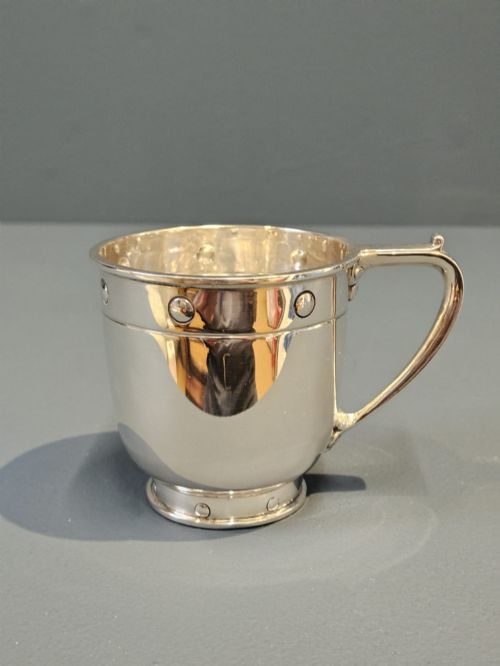
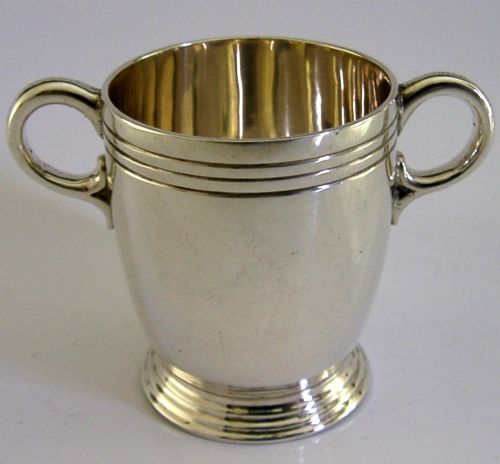
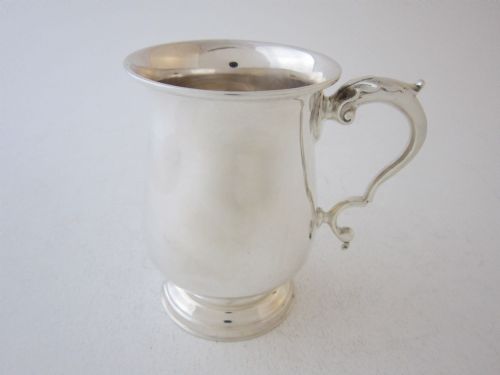
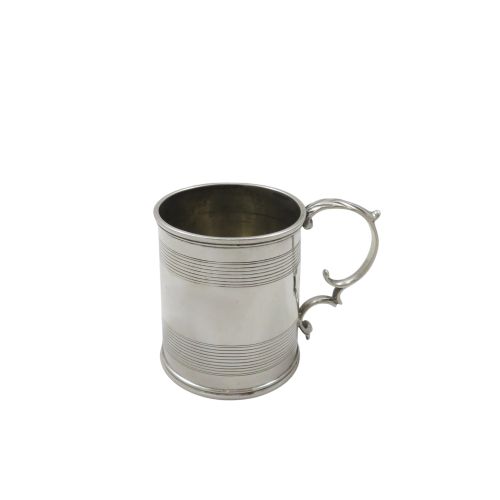
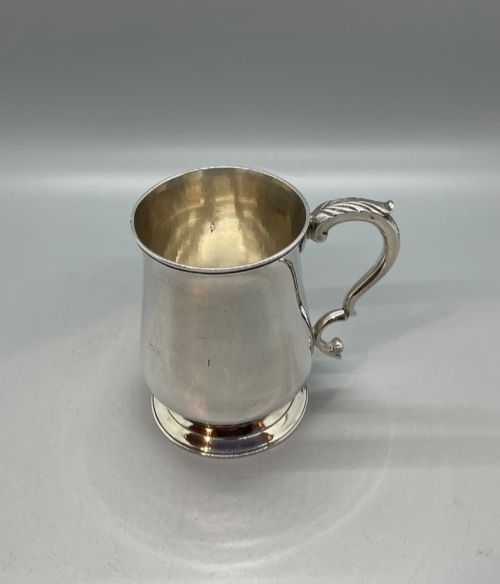
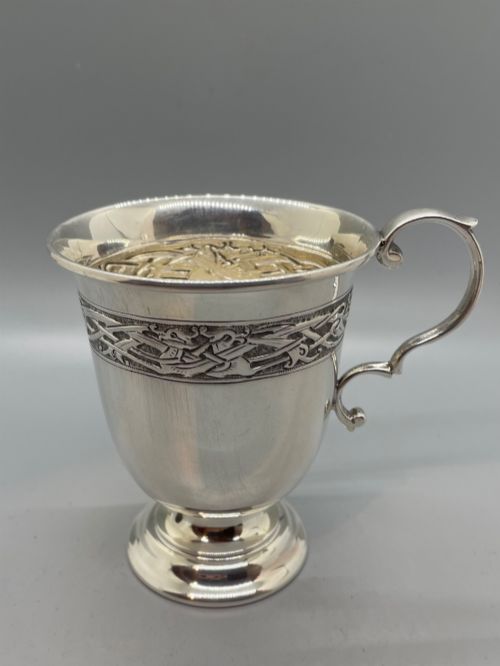
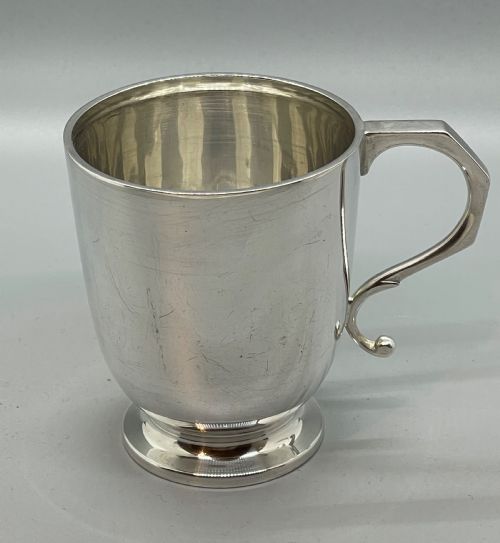
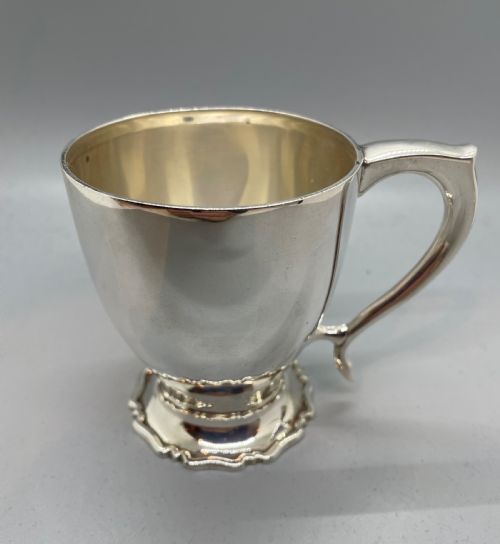
When searching for an antique silver christening mug, buyers encounter small drinking vessels and tankards shaped for a child's hand. These pieces emerge across the 19th and 20th centuries, taking cylindrical, barrel, and tankard forms.
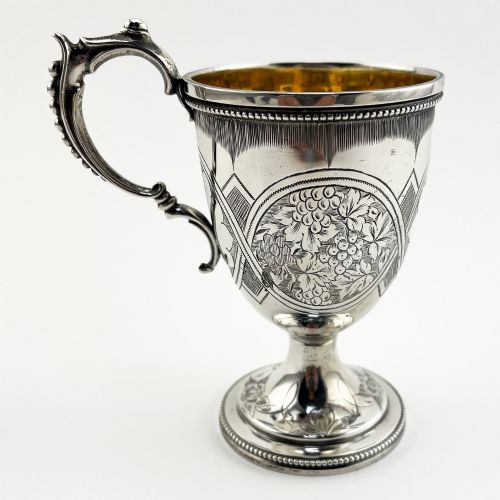
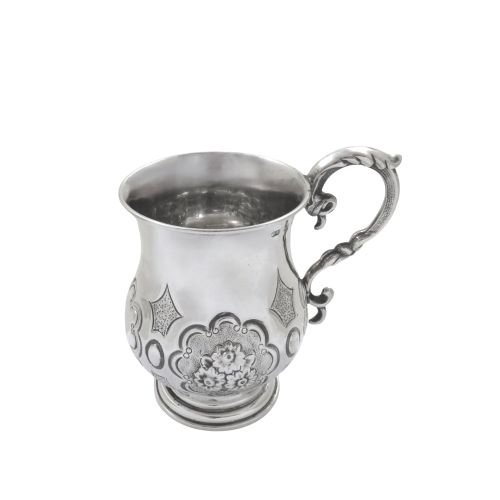
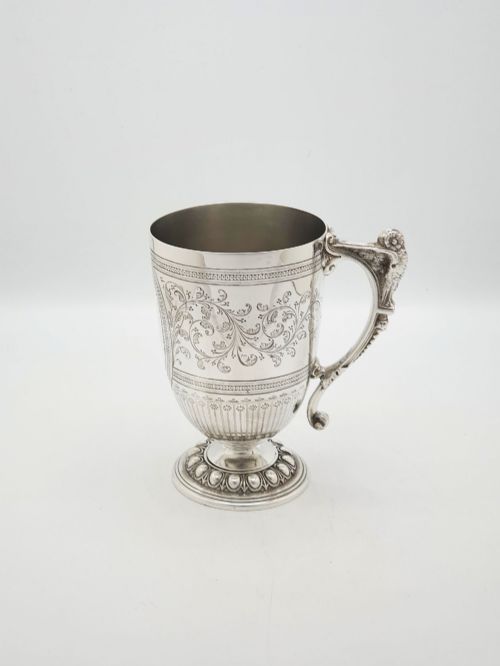
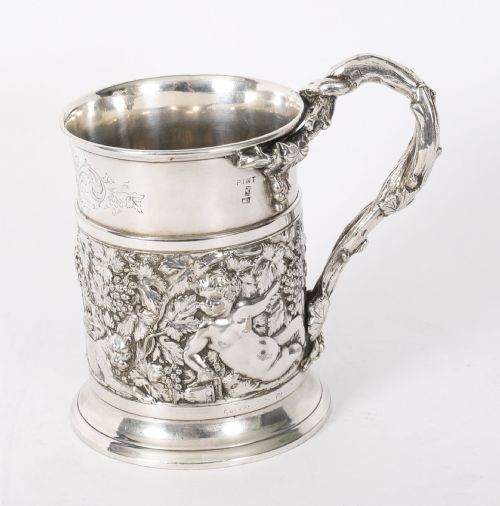
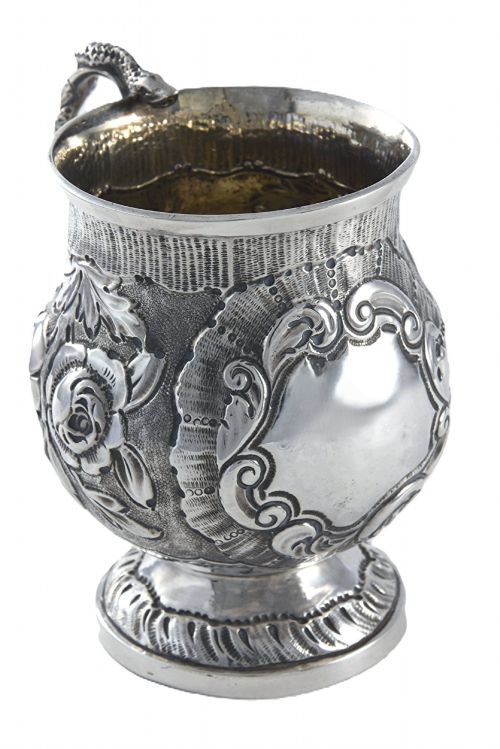
Many examples on this page date from the Victorian and George V eras, frequently recording specific years and assay offices. Makers often embellished these cups with hand-engraved flora, birds, cherubs, or nursery themes.
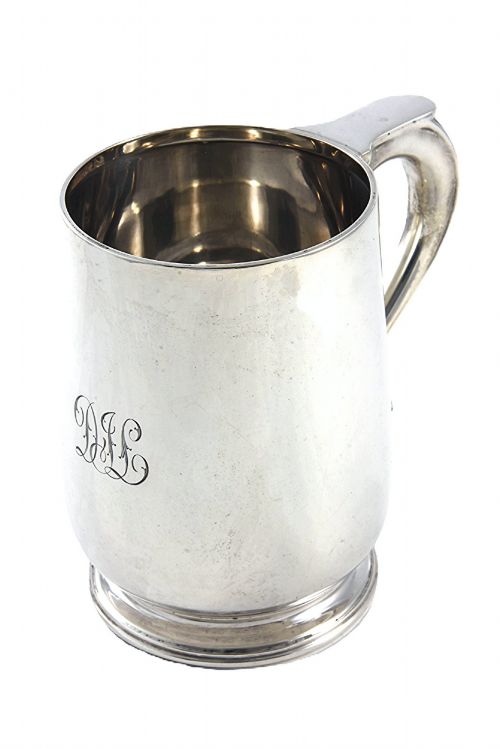
Several pieces survive in their fitted cases, indicating their original purpose as presentation gifts for infants. Plain sterling silver versions sit alongside decorated iterations and plated alternatives.
Materials and Construction Methods
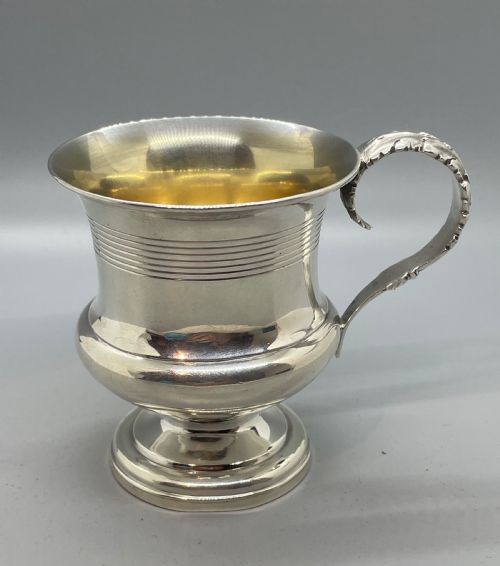
Silversmiths utilised solid sterling silver, Old Sheffield Plate, silver plate, copper, nickel silver, and gold gilt interior washes. Handles were frequently cast with scroll and leaf motifs, or shaped as novelties like owls.
Makers shaped bodies through raising or spinning metal, then applied hand engraving, repoussé scenes, or chased details. Hallmarks stamped into the silver record the assay office, date letter, and maker's mark.
Retail Price Guide 2026
Typical UK retail prices for silver christening mug, calculated from the Sellingantiques database of over a million retail prices indexed since 2003. This retail price guide relies exclusively on Sellingantiques data; no external sources or auction records are used, so the figures do not describe the wider market.
Listings span the 19th Century, Victorian, Edwardian, George V, and Mid-Century British periods, using sterling silver, Old Sheffield Plate, and gold gilt.
Judging the Range of Quality
Quality rests in the crispness of the hand engraving and the weight of the metal itself. Finer pieces display sharply defined motifs like birds or cherubs rather than worn surface patterns.
The sophistication of the handle attachment and cast elements separates standard production from superior work. Makers who integrated gilt interiors or retained original fitted cases elevate the piece's completeness.
R E Stone·William Comyns·Mappin & Webb·Joseph Angell·Garrards
The Antique Silver Christening Mug Glossary
- Sterling silver
- A silver alloy containing 92.5 percent pure silver by mass, forming the primary metal for most of these presentation mugs.
- Old Sheffield plate
- A composite material made by fusing a thin sheet of silver to a thicker copper base, found on earlier child's tankards.
- Gilt lined
- A thin layer of gold applied to the interior surface of the silver mug, often seen in cylindrical Victorian examples.
- Assay office
- An official body that tested precious metals and stamped marks onto silver items to guarantee their standard of purity.
Frequently Asked Questions
What were antique silver christening mugs used for?
These mugs served as traditional gifts given to infants to mark a christening or birth. Families often kept them as commemorative keepsakes rather than items for daily use.
Over generations, many remained stored in protective cases, which explains why so many survive today in clean condition.
How can I date an antique silver christening mug?
Dating relies on the hallmarks stamped directly onto the metal surface. These tiny symbols typically include a date letter, a standard mark, and a maker's mark.
Reference tables correlate these stamped letters with specific years of manufacture and regional assay offices.
What designs appear on these mugs?
Engraved decorations range from plain polished surfaces to elaborate scenes featuring birds, cherubs, floral scrolls, and nursery rhyme characters. Some pieces incorporate figural handles shaped like owls or decorative cast scrolls.
китайs and Chinese export silver also introduced distinct regional styles to the domestic British market.
Are all these mugs made of solid silver?
While the majority consist of solid sterling silver, some examples utilise alternative metals. Certain pieces are made from silver plate, nickel silver, copper, or Old Sheffield plate.
Marks on the base or rim usually clarify whether the item is solid or plated.