



Silver Plated Mug
A silver plated mug is a drinking vessel that brings substantial weight and bright metallic lustre to a desk, shelf or table.
Silver Plated Mug
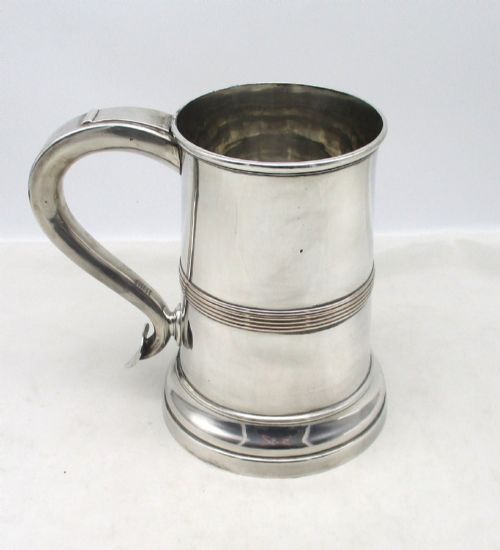
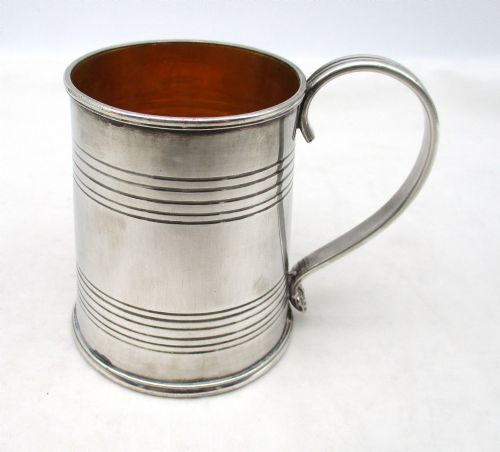
A silver plated mug spans several centuries of British drinking culture, taking the shape of pint tankards, quart tankards, christening mugs and loving cups. These drinking vessels serve multiple domestic purposes, from practical everyday beverage consumption to commemorative christening pieces.
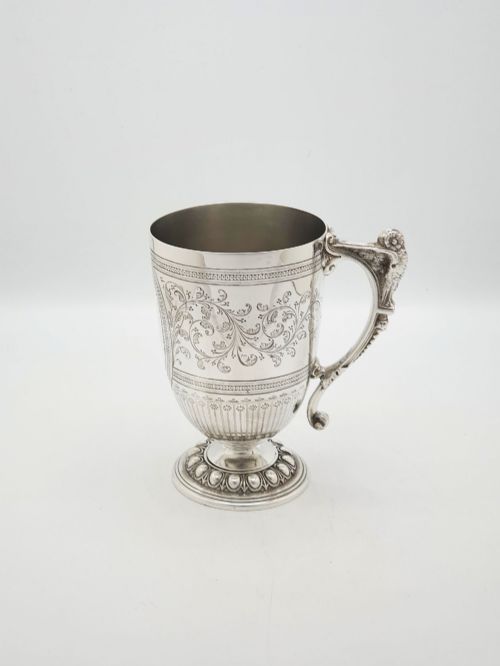
The 18th century and the Georgian period introduce substantial Old Sheffield Plate tankards, often made with generous proportions. Later Victorian and Edwardian examples shift towards smaller christening mugs, shaving mugs and decorative vessels embossed or engraved with floral scenes.
Materials and technique
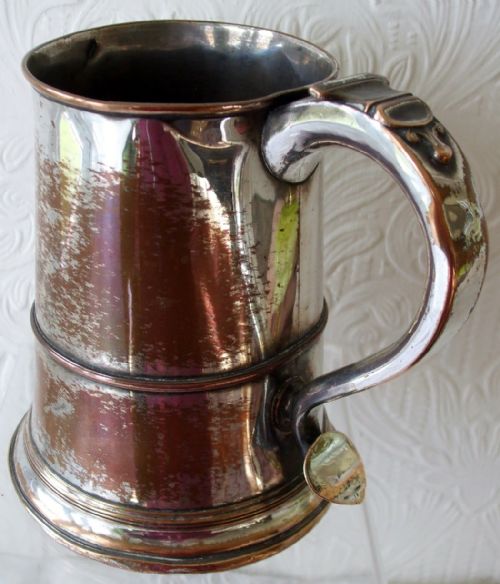
Old Sheffield Plate involves fusing a layer of silver to a thick copper core, a method that creates a durable material visible along exposed edges or wear points. Electroplated nickel silver relies on passing an electrical current to bond a thin coating of silver onto a base metal substrate.
Makers incorporate glass, oak and gold gilt alongside base metals, employing techniques such as casting, embossing, engraving and chasing. Handles take various forms, including bracket shapes, boars teeth and detailed animal figures like owls.
Some Victorian drinkers opted for a tankard handle fashioned from a real boar's tooth.
Judging the work
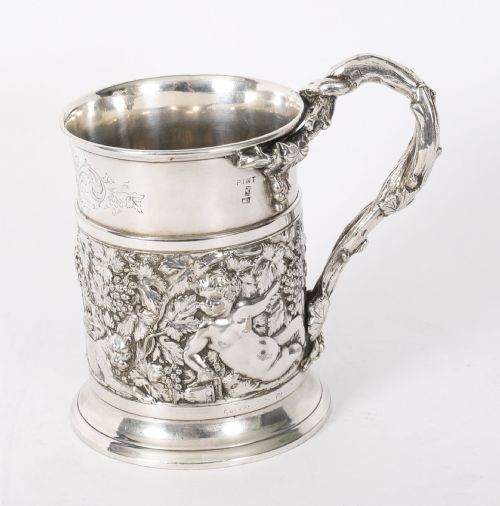
Quality rests in the crispness of the chased or embossed decoration and the structural integrity of the handle attachment. Pieces featuring deeply worked rococo foliage, detailed children playing or heraldic engravings demonstrate superior workshop execution.
The preservation of the fused silver layer on Old Sheffield Plate or the even coverage of electroplating dictates the visual longevity of the piece. Substantial metal thickness and well-balanced proportions separate standard utilitarian drinking vessels from fine display pieces.
G R Collis·Richard Morton·Thomas Bradbury·Walker & Hall
The Silver Plated Mug Glossary
- Old Sheffield Plate
- A method of fusing silver sheets to a copper ingot before rolling them into usable metal. This technique precedes electroplating and often reveals a reddish copper tint where the outer silver layer wears thin.
- Electroplated Nickel Silver
- A process using electrical current to deposit a coat of silver onto a nickel silver alloy base. This method replaced Old Sheffield Plate in the 19th century for mass production.
- Loving Cup
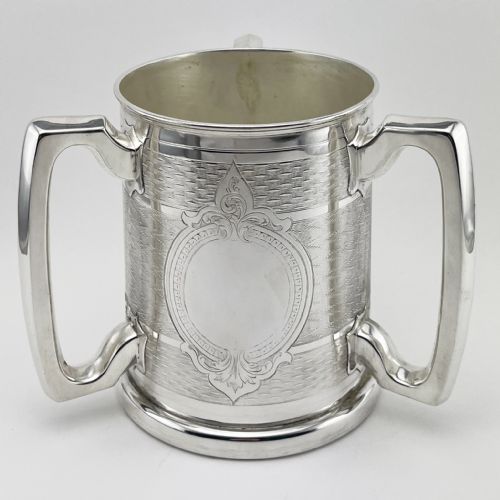
- A large drinking vessel featuring two or three handles, designed to be passed around a group. These cups frequently appear in Victorian collections.
- Stirrup Cup
- A small drinking vessel given to riders before a hunt. These cups often feature rounded or conical bases so they cannot be set down easily.
- Christening Mug
- A small presentation mug given to mark the birth or baptism of a child. Victorians frequently decorated these with floral cartouches and blank spaces for engraved names.
Silver Plated Mug: Frequently Asked Questions
How do I clean a silver plated mug?
Use a soft cloth and a specialised silver polish designed for plated items to remove tarnish gently. Avoid abrasive pads or harsh chemical dips that strip the thin silver layer.
Wash the vessel in warm soapy water and dry it thoroughly after polishing to maintain the bright finish.
Can I drink from an antique silver plated mug?
Most antique mugs remain functional for cold beverages like water or beer. Verify that the interior lining is intact and clean before use.
Avoid hot liquids, as older metals and plated surfaces react poorly to extreme temperatures and prolonged exposure to acids.
How do I tell Old Sheffield Plate from electroplate?
Examine the rims and edges for a faint reddish line where the underlying copper shows through the silver. Old Sheffield Plate displays this characteristic copper core edge.
Electroplated pieces show a white base metal beneath worn silver spots rather than copper.
What is a glass bottom tankard?
A glass bottom tankard is a drinking vessel featuring an inset glass base. This design supposedly allowed drinkers to keep an eye on companions or potential adversaries while drinking.
These pieces combine heavy metal bodies with thick glass bases, appearing frequently in late Georgian and Victorian drinking gear.