


Sheffield Plate Tankard
A sheffield plate tankard brings substantial Georgian drinking vessels into daily use, combining copper cores with fused silver surfaces.
Sheffield Plate Tankard
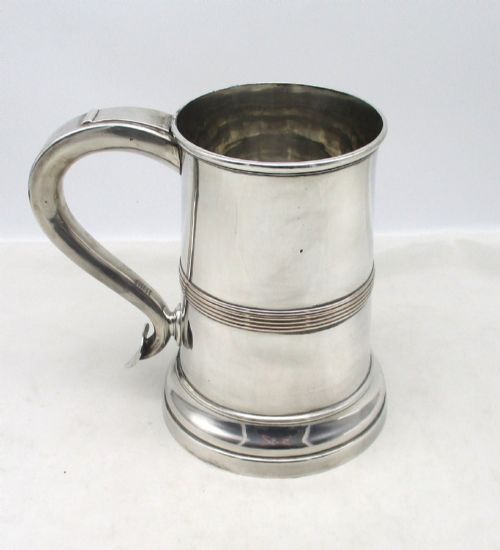
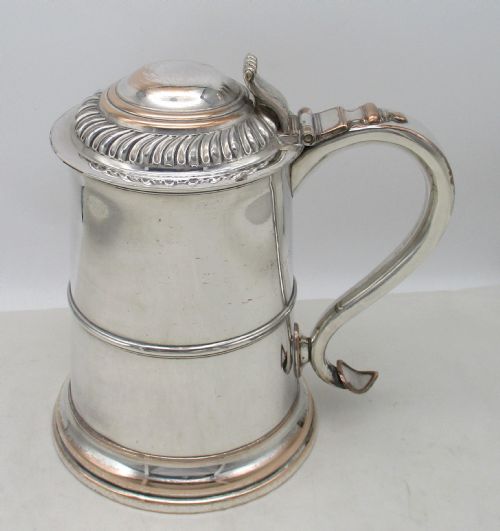
A sheffield plate tankard is a robust drinking vessel designed for beer, ale, or other barware, appearing frequently in pint, quart, and half pint capacities. These pieces date principally from the eighteenth century, the Georgian era, and the early nineteenth century, reflecting the early period of fused plate production. Buyers encounter lidded examples, open mugs, and loving cups alongside beer jugs and pitchers.
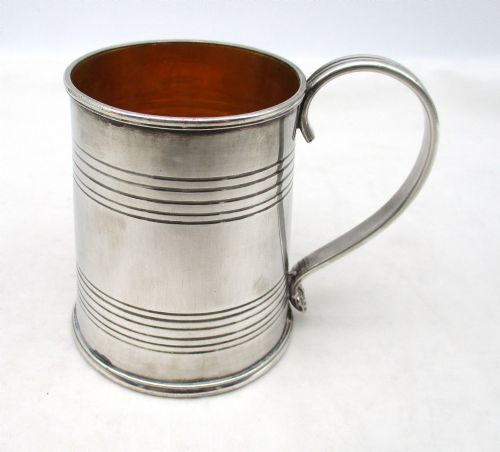
The forms span small child's tankards, standard pint and quart measures, and exceptionally large vessels, occasionally bearing crests or commemorative inscriptions. Most items originate from English workshops, with occasional Irish pieces appearing in the selections. These vessels demonstrate the traditional drinking scale of the Georgian period, from domestic half pint mugs to substantial tavern tankards.
How they were made
Makers fused a sheet of sterling silver to a thicker copper ingot through heat and pressure, rolling the combined metal into sheets for smithing. This fused metal allowed silversmiths to construct hollowware that possessed the appearance and utility of solid silver without the commensurate weight or cost. Artisans then shaped the plated sheets into cylindrical tankard bodies, soldering handles, rims, and bases into position.
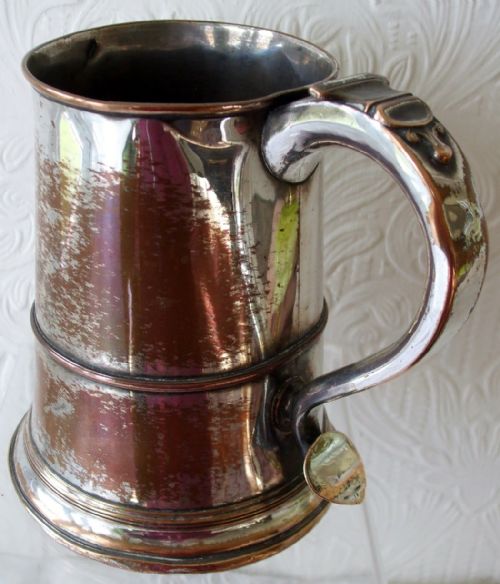
Interior surfaces sometimes received gold gilt application, and certain vessels incorporated glass bottoms or early maker marks stamped into the metal. The fusion technique created a durable composite material, though prolonged use over generations occasionally reveals the underlying copper beneath worn silver edges.
Sheffield Plate Tankard Retail Price Guide 2026
Typical asking prices for sheffield plate tankard among the pieces listed under this phrase on Sellingantiques today, from the lower quarter to the upper quarter. They describe what is for sale here now, not the wider market.
A baronet's crest or an inscription like Auld Lang Syne occasionally turns up on a tankard, proving past owners took their drinking songs seriously.
What varies in quality
Quality in a sheffield plate tankard rests upon the preservation of the original silver layer over the copper core, particularly on high-wear areas like rims, handles, and bases. Pieces retaining crisp early maker marks, engraved crests, or original lids demonstrate superior craftsmanship from the period.
Proportion and scale distinguish standard utility vessels from fine examples, such as heavy quart tankards or graduated pairs. The presence of applied wire mounts, intact hinges on lidded variants, and clean interior gilding separate utilitarian barware from finer cabinet pieces.
Richard Morton·N Smith·N Smith And Co
The Sheffield Plate Tankard Glossary
- Old Sheffield Plate
- A composite material made by fusing a sheet of silver to a copper ingot, developed in the eighteenth century. This method preceded electroplating and yields a deep, rich lustre.
- Quart Tankard
- A large drinking vessel holding a full quart of liquid, commonly produced in Georgian workshops for substantial ale consumption. These heavy pieces often feature secure hinged lids.
- Loving Cup
- A large two-handled drinking vessel used traditionally for shared toasts at banquets and celebratory gatherings. These pieces occasionally appear in old sheffield plate from the late eighteenth and early nineteenth centuries.
- Glass Bottom
- A transparent base inset into the bottom of a metal tankard, allowing the drinker to monitor companions or surroundings. This feature appears on select eighteenth-century drinking vessels.
Sheffield Plate Tankard: Frequently Asked Questions
What is a sheffield plate tankard?
A sheffield plate tankard is a drinking vessel created by fusing a thin layer of silver onto a thick copper core, originating primarily in the eighteenth and nineteenth centuries. These vessels served as functional barware for beer and ale in homes and public houses.
They replicate the appearance of solid silver through a distinct composite method developed before electroplating became common. Collectors value them for their historical weight and Georgian manufacturing techniques.
How do I date a tankard?
Dating relies on stylistic clues, historical form evolution, and any maker marks stamped into the metal surface during production. Georgian and early nineteenth-century pieces exhibit specific handle shapes and foot rims characteristic of their decade.
Examining the thickness of the plate and the construction of the lid hinge also helps place a vessel within the 1750 to 1845 range. Comparative study of archive listings provides further chronological reference points.
How were these tankards used?
These vessels functioned as everyday drinking mugs, pint measures, and quart tankards for malt liquors in domestic and tavern settings. Lidded versions kept contents covered, while glass-bottomed variants allowed drinkers to keep watch while drinking.
Larger quart sizes and loving cups played roles in communal dining and ceremonial toasts. Over time, many transitioned from active tavern service into display pieces.
How do I care for old sheffield plate?
Care requires gentle cleaning with non-abrasive silver cloths to preserve the thin silver layer over the underlying copper core. Avoid harsh dips or vigorous scrubbing that might wear through the plate.
Displaying pieces away from damp environments prevents corrosion of the base metals. Proper handling ensures the historic surfaces remain stable for future generations.