



Edwardian Silver Mug
These Edwardian silver mug examples offer solid craftsmanship and traditional form, ideal for collectors of early twentieth-century silver.
Edwardian Silver Mug types and origins
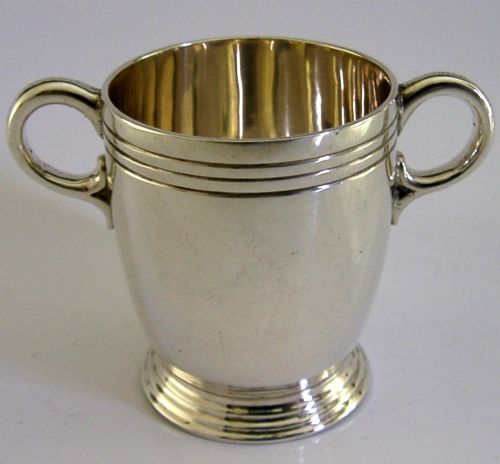
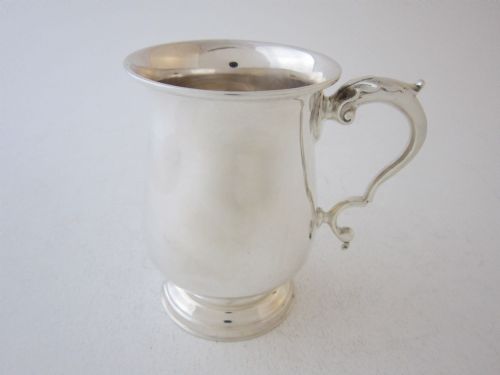
An Edwardian silver mug encompasses small child's christening cups alongside larger pint tankards and beer mugs produced during the Edwardian period. Most examples originate from assay offices in London, Birmingham, and Chester, reflecting the active British silversmithing trade of the early twentieth century.
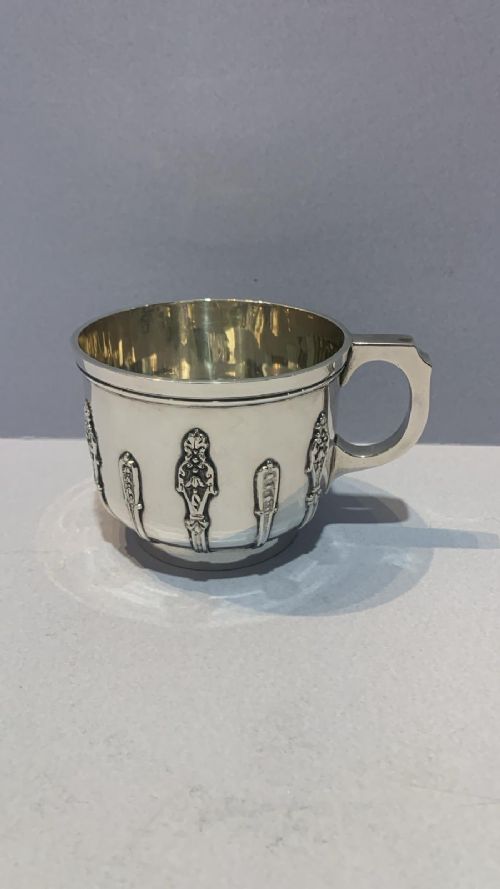
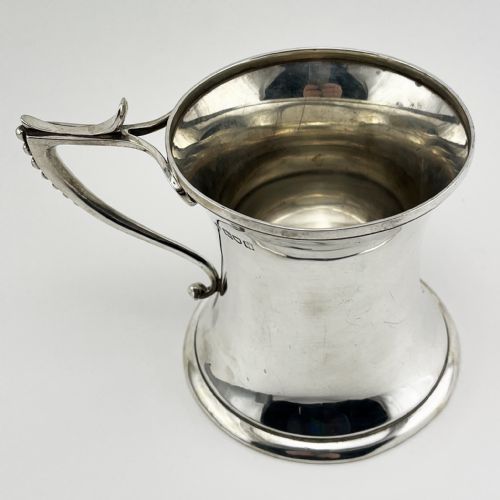
The domestic christening mug appears most frequently on this page, often taking the form of a small tankard or a cylindrical tapering body with a scroll handle. Larger pint-sized variants and loving cups also surface, occasionally featuring traditional baluster shapes or decorative animal handles.
Materials and construction
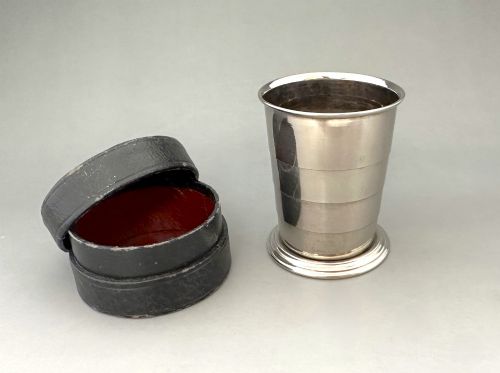
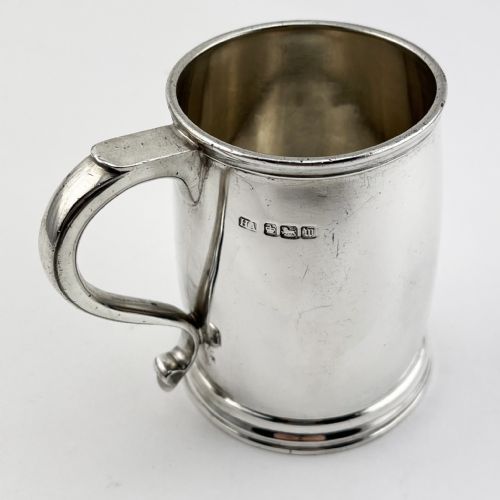
Makers utilised sterling silver, silver plate, and nickel silver to form these vessels, shaping the metal into cylindrical, tapering, or baluster profiles. Solid silver pieces frequently carry hallmarks indicating the specific assay year and city.
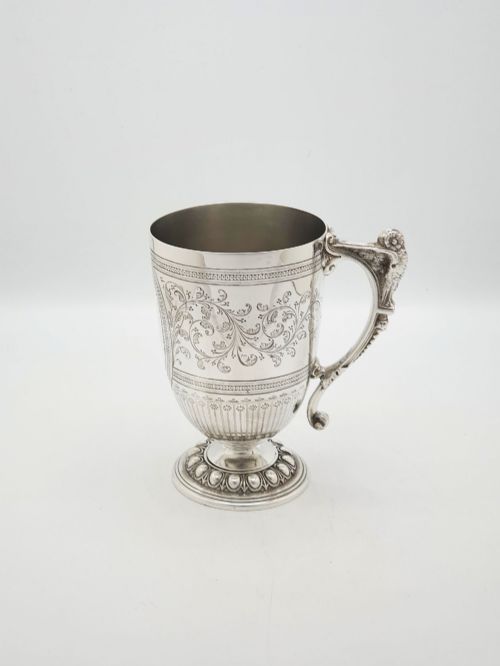
Decoration on the body was achieved through hand chasing, card cutting, spiral fluting, and hand engraving with floral and scroll motifs. Handles were typically cast in scroll shapes or whimsical forms such as owls, then soldered securely to the main body.
Listings for this phrase include items formed from sterling silver, silver plate, and nickel silver, originating primarily from the year nineteen hundred onwards.
Distinctions in craftsmanship
The difference between standard and superior pieces rests on the weight of the metal and the precision of the hand-chased ornamentation. Heavier solid silver gauges and crisp, deeply incised floral or acanthus leaf motifs elevate an item beyond plain or machine-stamped production.
The refinement of specialised elements, such as cast figural handles or interior silver gilt finishes, separates everyday utility ware from high-grade silversmith output by known firms.
Carrington and Co·Goldsmiths and Silversmiths·Wm Hutton and Sons·Barker Brothers
The Edwardian Silver Mug Glossary
- Sterling silver
- An alloy comprising ninety-two point five percent silver and seven point five percent other metals, mostly copper. This standard metal content is verified by official assay office hallmarks.
- Silver plate
- A base metal layer coated with a thin layer of pure silver. It provides the appearance of solid silver at a different weight and cost.
- Baluster
- A vertical architectural form with a swelling lower portion that tapers toward the top. This silhouette appears on several traditional mug bodies.
- Chasing
- A metalworking technique where the artisan pushes metal from the exterior using hammers and punches to create raised decorative designs. It differs from engraving, which removes metal.
- Silver gilt
- Sterling silver that has been coated with a thin layer of gold on the interior surface. This process was often applied to christening mugs to protect the metal from acidic contents.
Frequently Asked Questions
What are Edwardian silver mugs made from?
These vessels are produced in sterling silver, silver plate, and nickel silver. Solid silver examples typically carry hallmarks denoting the metal standard and the year of manufacture.
Assay office marks from London, Birmingham, and Chester frequently appear on the metal surface, identifying where the pieces were tested and legally stamped.
How were these mugs used originally?
Many smaller examples served as christening cups or child mugs, given as traditional gifts to commemorate a birth or baptism. Larger pint-sized variants functioned as beer mugs and tankards for adult daily use.
Interior silver gilt finishes on certain christening cups helped protect the metal surface when utilised for drinks.
What decorative styles appear on them?
Decoration ranges from plain cylindrical bodies to heavily ornamented surfaces featuring hand chasing, floral motifs, scrolls, and acanthus leaves. Some items display spiral fluting or card-cut detailing.
Handles also vary from simple functional scrolls to cast figural designs, including owl motifs.
How do I identify an Edwardian piece?
Dating relies heavily on official hallmarks stamped into the metal, which record the specific assay year within the Edwardian period of the early twentieth century. Stylistic markers such as florid hand chasing and specific maker marks also assist in identification.
The presence of structured maker stamps from known silversmith firms active during this reign provides further historical context.