
Antique Sterling Silver Cup
An antique sterling silver cup combines utilitarian drinking vessels and ceremonial presentation pieces forged across Georgian, Victorian, and Edwardian eras.
Forms and Origins
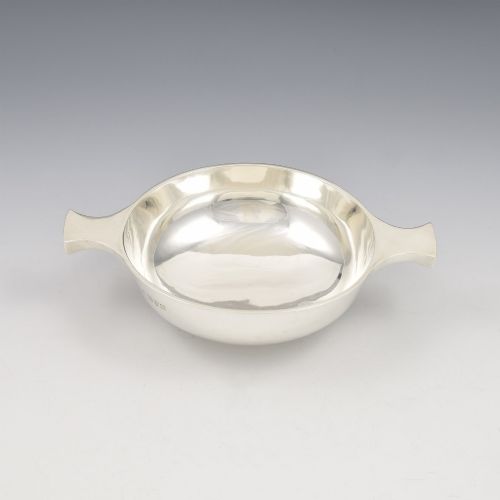
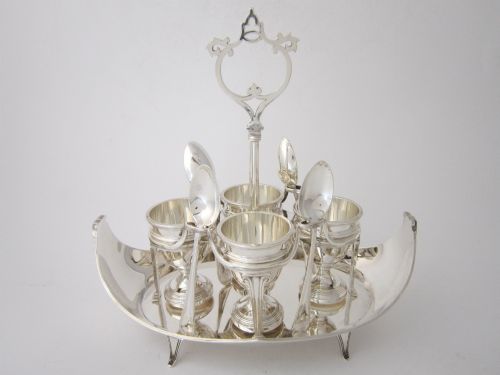
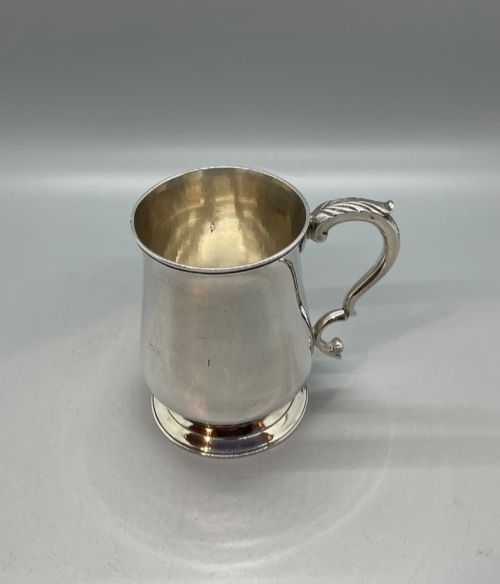
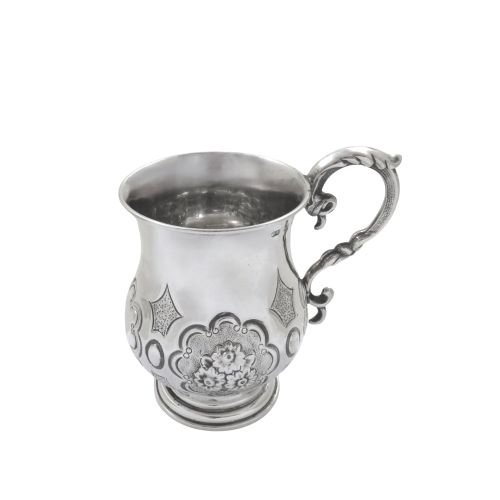
An antique sterling silver cup encompasses a diverse range of drinking and display forms, spanning from christening mugs and egg cups to substantial chalices, trophies, and quaichs. Pieces originate across the Georgian, Victorian, and Edwardian periods, reflecting shifting domestic and ceremonial uses.
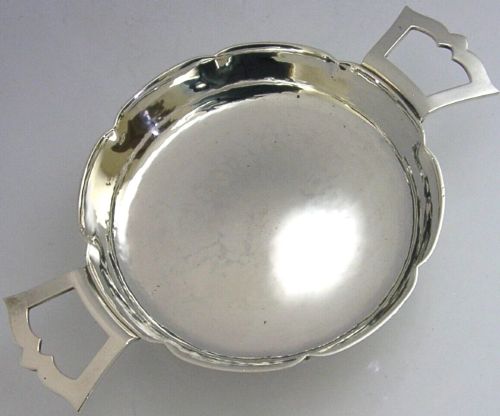
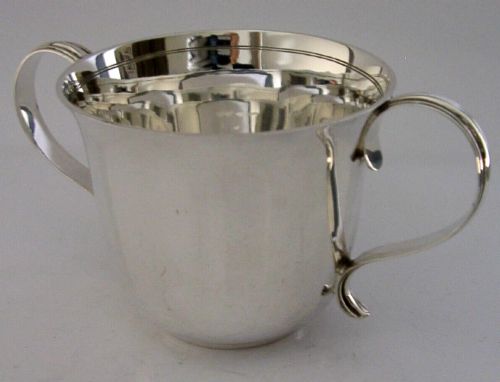
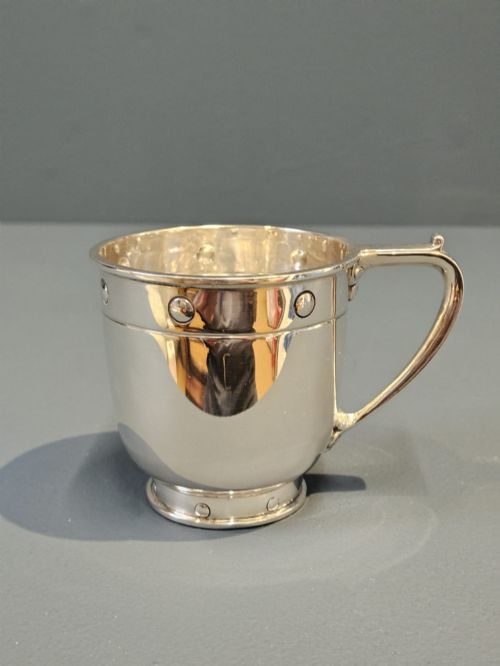
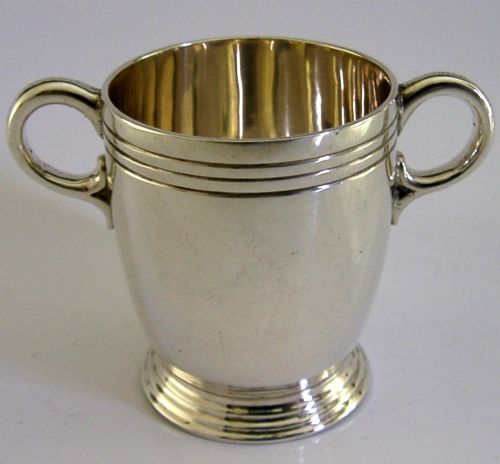
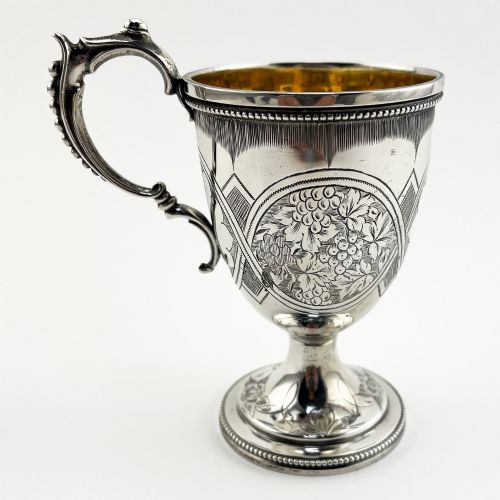
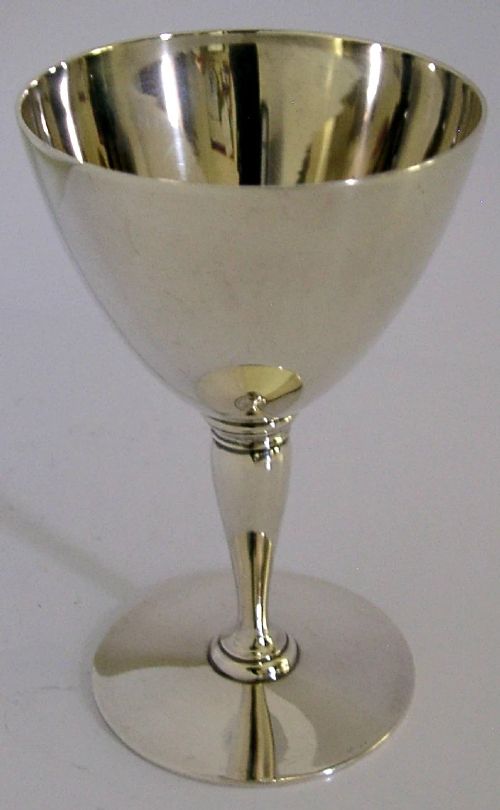
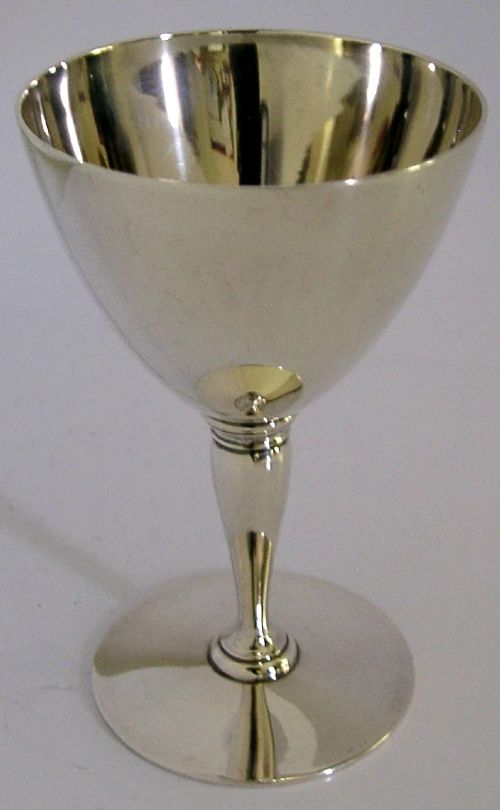
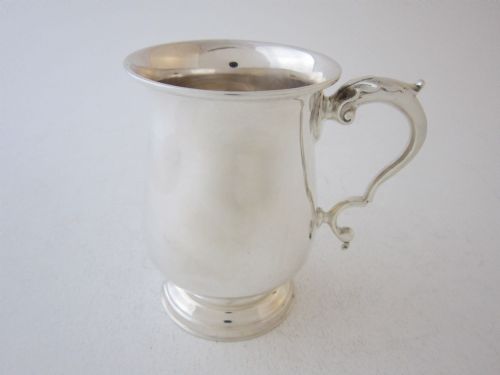
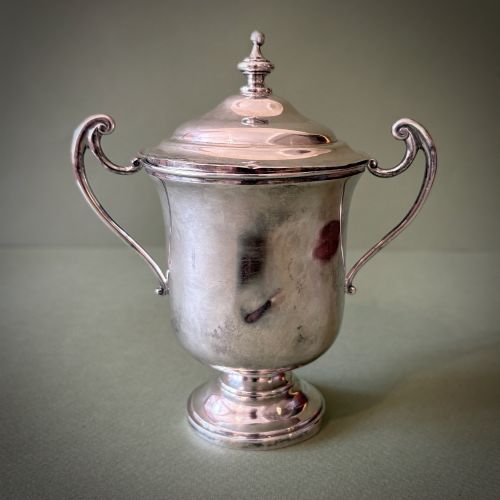
The most common formats met on this page include sturdy mugs with scroll handles, classical wine goblets with vase-shaped bodies, and low-slung porringer bowls. Specialised items such as collapsible travel beakers, coin-set vessels, and golf presentation pieces also appear.
Craftsmanship draws on British silversmithing traditions, with provincial assay offices alongside London workshops producing items for everyday dining, barware, and religious communion. Domestic forms sit alongside commemorative presentation pieces bearing family crests and presentation engravings.
Materials and Technique
Objects are formed from solid sterling silver, occasionally paired with organic elements such as wood, horn, or internal gilt finishes known as wash gilding. Construction methods combine traditional raising from flat sheet metal with cast handles, mounts, and applied coin insets.
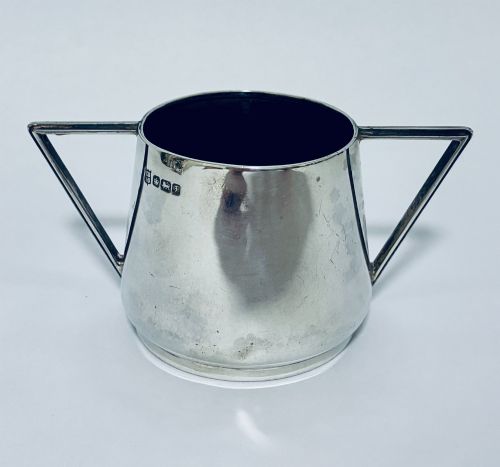
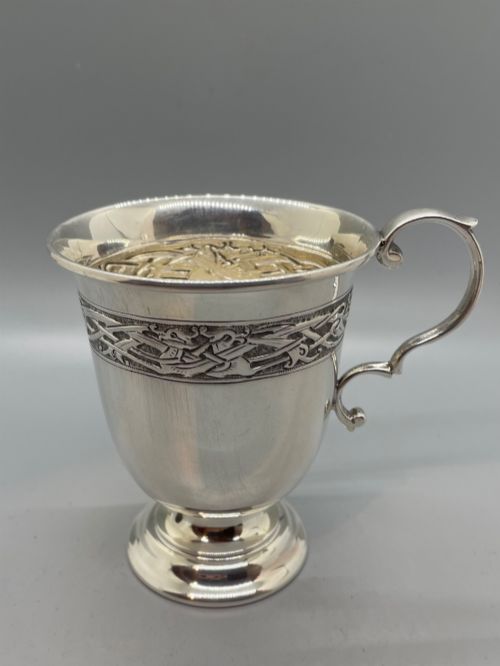
Surface decoration ranges from planar Arts and Crafts hammering to detailed repoussé relief work, family crest engraving, and cast scrollwork handles. Lidded vessels utilise fitted covers and finials, while collapsible pocket items employ telescoping concentric rings.
Retail Price Guide 2026
Typical UK retail prices for sterling silver cup, calculated from the Sellingantiques database of over a million retail prices indexed since 2003. This retail price guide relies exclusively on Sellingantiques data; no external sources or auction records are used, so the figures do not describe the wider market.
Several Victorian and Edwardian silversmiths incorporated antique coins directly into the bases of drinking bowls, letting drinkers toast history quite literally.
Craft and Proportion
Distinctions in quality rest upon the weight of the silver relative to capacity, the crispness of chased or engraved detailing, and the integrity of structural joins such as handles and stems. Substantial gauge metal resists denting and maintains structural rigidity over centuries of handling.
Design harmony separates standard production items from master smith work, where proportions balance stem, bowl, and foot precisely. Maker attribution to notable workshops or specific assay offices further distinguishes exceptional survivals from routine domestic wares.
William Hutton·Joseph Angell·Nathan and Hayes·Asprey·Payne Oxford
The Antique Sterling Silver Cup Glossary
- Sterling silver
- An alloy consisting of 92.5 percent silver by mass, with the remainder comprising copper or other metals to provide durability. This standard has served as the baseline for British silver plate and holloware for centuries.
- Porringer
- A two-handled bowl or cup used historically for porridge, broths, or liquids. Antique examples often feature pierced flat ears or scroll handles.
- Chalice
- A stemmed sacramental cup used for drinking wine during religious communion or ceremonial presentation. These pieces frequently exhibit deep bowls raised on knop stems and circular spreading feet.
- Vaphio cup
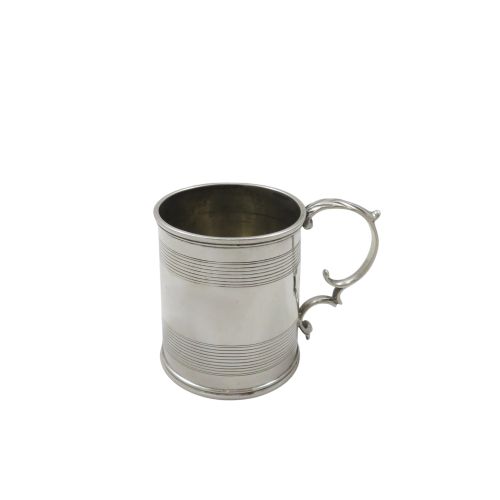
- A cylindrical or slightly bell-shaped cup derived from ancient Minoan archaeological finds, featuring an applied handle and characteristic horizontal ribbing. Edwardian silversmiths revived this distinct profile.
Frequently Asked Questions
What were antique sterling silver cups used for?
These vessels served diverse roles ranging from daily domestic dining and christening gifts to alcoholic barware and formal sporting trophies. Specialised forms functioned as travel beakers or religious communion vessels.
Commemorative pieces frequently marked marriages, military victories, and golf tournaments, often engraved with family crests or presentation inscriptions.
How do I date an antique silver cup?
Dating relies upon hallmarks stamped directly into the metal, which typically indicate the assay office, standard mark, and a specific date letter corresponding to the year of manufacture.
Stylistic indicators such as Georgian vase shapes, Victorian crest engraving, or Arts and Crafts hand-hammering provide additional chronological context.
How should I clean my silver cup?
Maintenance requires gentle washing with warm water and mild soap, followed by thorough drying with a soft cloth to prevent moisture spotting.
Harsh abrasive pastes should be avoided entirely to preserve delicate surface engraving, hallmarks, and original patination accumulated over generations.
Can I use an antique silver cup for drinking?
Solid sterling silver is food-safe and non-reactive with most beverages, making functional use entirely possible for cold drinks or ceremonial toasts.
Care should be taken with fragile handles, thin antique walls, or pieces featuring internal gilt washes that might wear away with heavy use.