


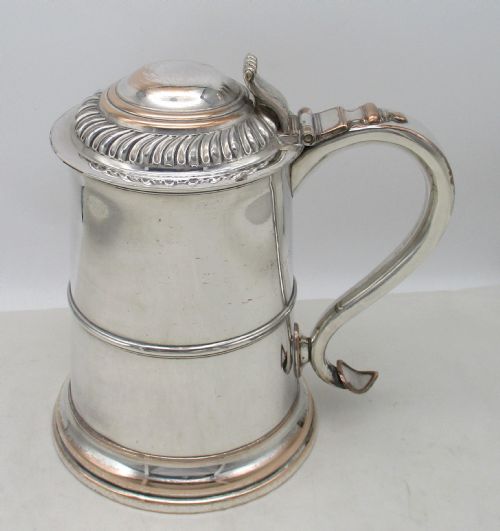


Silver Plated Lidded Flagon
These silver plated lidded flagon examples are substantial drinking vessels that bring historic weight and period character to any table.
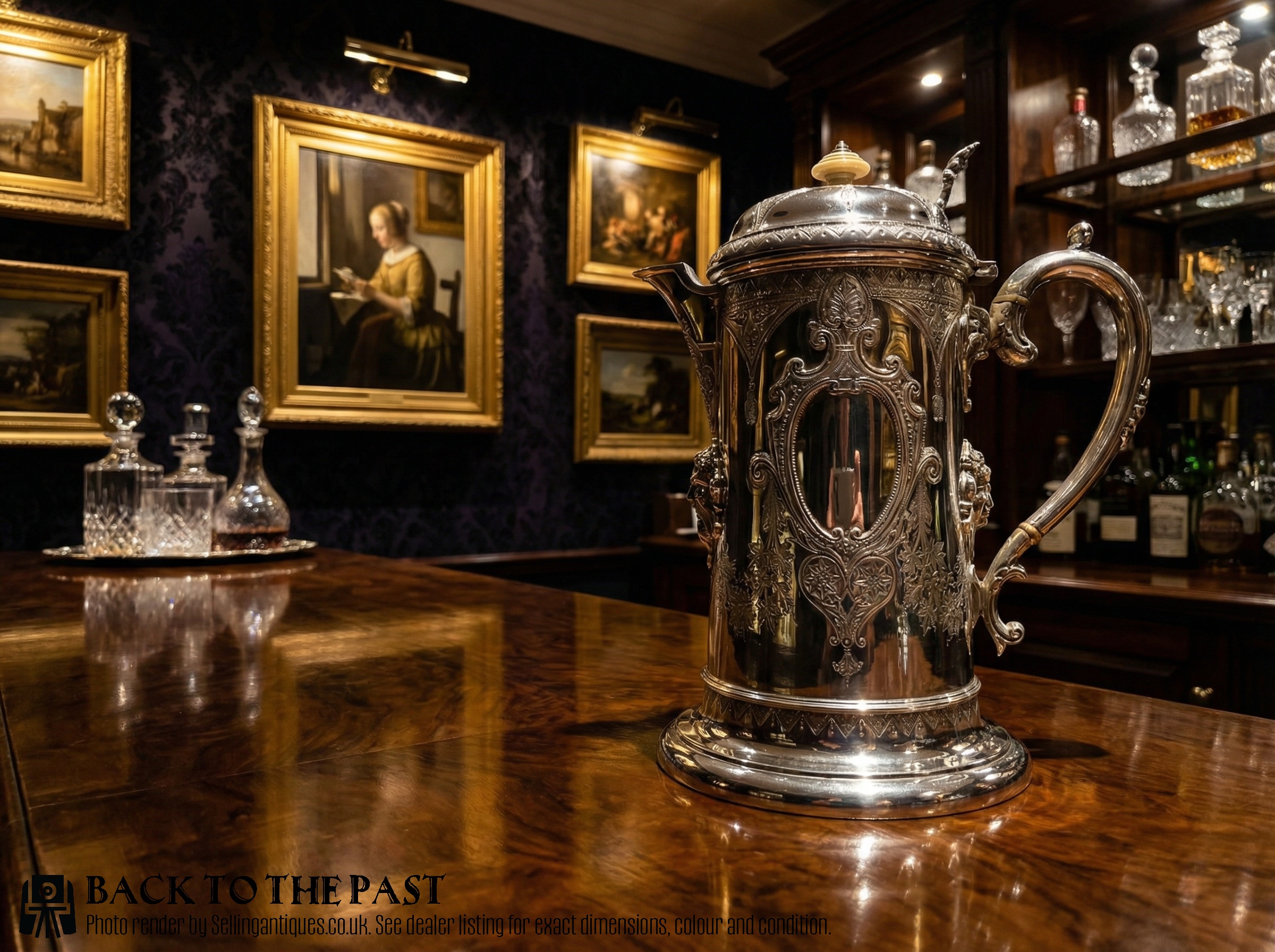
Silver Plated Lidded Flagon
A silver plated lidded flagon encompasses substantial drinking vessels designed for beer, cider, and communion use across several centuries. When you search for this phrase, you encounter robust forms intended for communal or table service, often styled as tankards, beer jugs, and quart vessels.
The versions you are most likely to meet on this page span the Georgian and Victorian eras, drawing on styles from Queen Anne Revival to Victorian Ecclesiastical and Rococo Revival. These pieces reflect the functional drinking culture of their periods, combining lidded security with generous capacity.
Materials and construction
Makers utilised Old Sheffield Plate and standard silver plate over base metals like copper and nickel silver, alongside combinations of glass and bone. The early Old Sheffield Plate pieces demonstrate the fused metal technique where a thin layer of silver is fused to a copper core.
Later Victorian items rely on electroplated nickel silver and standard silver plate, often paired with glass bodies and bone thumbpieces on the hinged lids. These methods dictate the weight, edge appearance, and structural durability of each vessel.
Listings span the eighteenth and nineteenth centuries, featuring Old Sheffield Plate, copper, glass, and bone elements.
Assessing quality and craftsmanship
Quality rests in the crispness of the revival style ornament, the balance of the handle, and the precise fit of the hinged lid. Superior examples display careful hand-raising of the body and clean solder joins where handles and mounts attach.
The preservation of the underlying copper or nickel silver beneath the plate layer distinguishes finer survivals. Pieces with early marks and substantial gauge metal show greater integrity than thinner, later electroplated counterparts.
The Silver Plated Lidded Flagon Glossary
- Old Sheffield Plate
- An early form of plate created by fusing a thin sheet of silver to a copper ingot before rolling.
- Flagon
- A large drinking vessel with a handle and a lid, historically used for ale, wine, or communion service.
- Electroplated Nickel Silver
- A base metal alloy of copper, nickel, and zinc coated with a layer of silver via an electrical current.
- Thumbpiece
- The small projection on the lid of a tankard or flagon that allows the drinker to lift it with one thumb.
- Quart Tankard
- A large drinking mug holding a quart of liquid, typically fitted with a hinged lid to keep contents covered.
Silver Plated Lidded Flagon: Frequently Asked Questions
How do I clean a silver plated flagon?
Wash the vessel gently using warm water and mild dish soap with a soft sponge. Avoid harsh chemical dips that strip the remaining silver layer.
Dry thoroughly with a soft cloth to prevent water spots. Store in a dry environment away from direct sunlight and damp conditions.
Were these used for beer or wine?
Historical evidence shows these lidded vessels served multiple beverages including beer, cider, and communion wine. The hinged lid kept contents covered during communal dining and gatherings.
Larger quart examples were built specifically for heavy table use and sharing. Smaller jugs accommodated individual service or specific household drinks.
How can I tell Old Sheffield Plate from later plate?
Old Sheffield Plate reveals a thin line of copper showing along cut edges where the fused silver layer wears thin over time. This technique predates nineteenth century electroplating methods.
Electroplated pieces display an even, uniform silver coverage without the telltale copper core edges. Early marks on Old Sheffield pieces also help establish eighteenth century origins.
Can I still drink from these antique vessels?
Many of these flagons remain structurally sound for serving drinks, provided the interior plating is intact and clean. Inspect the interior for any exposed base metal before use.
For pieces with worn plating or delicate glass components, display is often preferred over active service. Modern usage requires careful hand washing rather than automated dishwashers.