



Chased Silver Tankard
These chased silver tankard examples are substantial drinking vessels carrying deep ornamentation, sought after for their historic silverwork and domestic presence.
Chased Silver Tankard
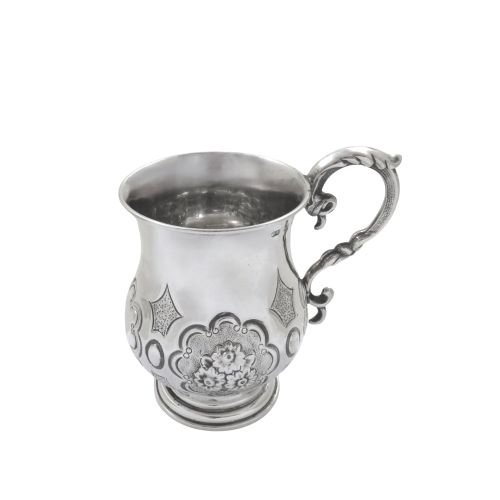
When you search for a chased silver tankard, you are looking at robust drinking vessels and christening mugs originating from Georgian, Victorian, Edwardian, and later periods. The selection spans standard drinking vessels, lidded beer tankards, cider jugs, and small christening cups intended for domestic use.
You are most likely to meet Victorian and Georgian pieces on this page, often bearing detailed embossed or chased decoration across sterling silver or silver plate. Forms range from heavy lidded pieces bearing London or provincial hallmarks to smaller commemorative christening mugs.
How they were made
Silversmiths formed these vessels from sterling silver, silver-gilt, or silver plate, sometimes incorporating bone elements for insulation on handles. Metals were hammered, raised, or cast into sturdy bodies before receiving their surface ornament.
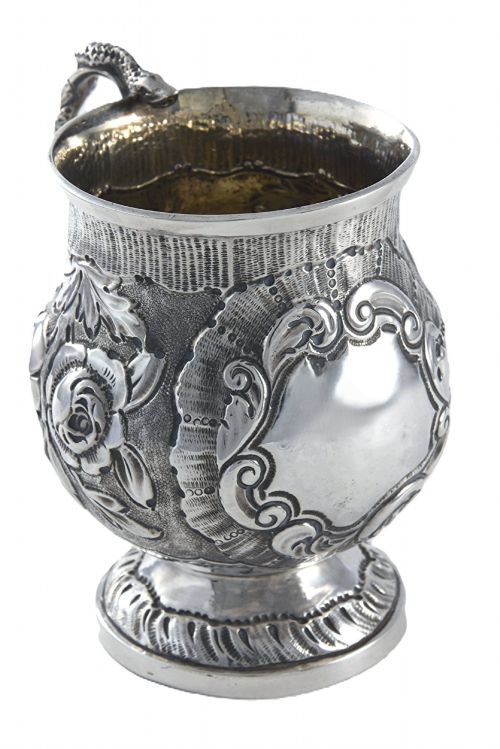
Decoration was applied through chasing and embossing, pushing the metal from behind and refining details from the front to create rich, textured floral or figural motifs. Pieces then received assay office hallmarks to certify their metal standard and year of production.
Listings span Georgian, Victorian, Edwardian, and later twentieth-century periods, utilising sterling silver, silver-gilt, and silver plate.
What varies in quality
The crispness of the chased relief work dictates the visual success of the piece, separating sharp, hand-tooled decoration from softened or worn surfaces. Depth of metal and structural weight also define the better examples, ensuring the vessel feels substantial in the hand.
The presence of clear hallmarks adds considerable authority, while well-preserved gilding on the interior of silver-gilt pieces elevates the overall standard of craftsmanship.
Martin Hall & Co
The Chased Silver Tankard Glossary
- Chasing
- The technique of hammering metal from the front to push details inward and create a low-relief design. It is often paired with repoussé work done from the reverse.
- Hallmark
- A series of official marks stamped on precious metals indicating the standard of purity, the assay office, and the date letter. These stamps provide a reliable guide to age and origin.
- Silver-Gilt
- Silver that has been coated with a thin layer of gold on its surface, frequently found on the interior of drinking vessels to prevent tarnishing from liquids.
- Sterling Silver
- An alloy of silver containing ninety-two point five percent silver by mass and seven point five percent other metals, usually copper. This standard has governed British silver production for centuries.
Chased Silver Tankard: Frequently Asked Questions
What is a chased silver tankard?
A chased silver tankard is a drinking vessel adorned with hammered or embossed surface decoration, produced in various sizes from small christening cups to large lidded flagons.
These pieces reflect the prevailing style of their period of manufacture, ranging from mid-eighteenth-century Georgian forms to Victorian revivals.
How do I date a silver tankard?
Dating relies primarily on the stamped hallmarks found on the metal, which record the assay office and a specific date letter corresponding to the year of assay.
Stylistic indicators such as handle shape, lid construction, and the style of chasing also help narrow down the period of production.
Were these tankards used for drinking?
Many larger examples served as functional drinking vessels for beer, cider, or ale, particularly those featuring sturdy handles and secure lids.
Smaller vessels appearing as mugs or tankards were frequently created as christening gifts rather than everyday tableware.
How do I clean chased silver?
Cleaning requires a soft cloth and a specialised silver cleaner that will not strip the fine details from the chased recesses.
Harsh abrasive dips or vigorous scrubbing should be avoided to protect the aged patina and the integrity of the embossed surface work.